A Marxist Glossary #1
To Simplify and Aid Political Learning
Contents
Capitalism
Capitalism is a mode of production, currently dominant in most parts of the world, in which the means of production (tools, machinery, factories, infrastructure etc.) are privately owned and used to produce commodities and services for profit, and not for use. The class of people who own the means of production are called the bourgeoisie/capitalist class, and the class who do not own the means of production are called the proletariat/working class.
As the proletariat do not own the means of production, they have to sell their ability to work (also called labour power) to the capitalists in order to survive, thereby becoming wage labourers. In return, workers receive a wage. However, the wages they receive are not equivalent to the value they produce while making a commodity or providing a service.
The value of a commodity is determined by the “socially necessary labour time” required to produce it. Even though it is the workers who produce the goods and services that generate value, they receive only a portion of that value in the form of wages. The remaining value, called Surplus Value, is appropriated by the capitalist and becomes the source of capitalist profit. For example, if a worker produces 2000rs worth of value in a day but receives only 500rs in wages, the extra 1500rs is the surplus value that the capitalist extracts from the worker.
Capitalism also expands beyond national borders, where powerful capitalist monopolies, backed by their own national bourgeois state machinery, extend their economic and political control over other oppressed countries to secure cheap markets, cheap labour and local raw materials. Lenin calls this ‘Imperialism’, the highest stage of capitalism. Imperialism is how capital expands and reproduces itself globally. It is also dominated by the export of finance capital.
Capitalism digs its own grave, as it is riddled with multiple contradictions such as overproduction, workers lacking the purchasing power to buy back the goods they produce, which further intensify class divisions.
Socialism
Socialism is the transitional stage between capitalism and communism in which the means of production are owned and controlled by the majority working class, and not by a minority capitalist class. Under socialism, production exists not for the accumulation of private profit but for the collective needs of society. It is a mode of production that emerges from the contradictions and limitations of capitalism.
Under capitalism, capitalists decide what to produce and how to produce it according to what generates the most profit, in spite of the terrible working conditions and the destruction of society and nature. It seeks infinite expansion of capital within a finite and limited world. But socialism puts an end to this capitalist-worker relation with the working class seizing the production (by any means necessary) from the capitalists. It is about changing who controls production and how economic decisions are made so that production benefits collective needs. Workers become decision-makers in determining what is produced, how it is produced and how the fruits of production are distributed. Socialism is seen as the lower stage of communism.
The specific way in which the working class overthrows the capitalist class and establishes socialism depends on the historical and material conditions of each country. Lenin, for example, adapted Marxism to Russia’s specific conditions and developed a revolutionary strategy centred on a vanguard party (a disciplined, politically advanced and organised section of the working class) that would lead the revolution, alongside an alliance with the peasantry. This resulted in the establishment of the USSR, the first state committed to building socialism.
Communism
Communism is the highest and final stage of societal development that follows socialism. Under socialism, class contradictions still exist, in the sense that the bourgeoisie and other counter-revolutionary forces (remnants from capitalism) seeking to restore capitalism continue to exist. However, as society and production become more organised under collective control, the class divisions slowly wither away, resulting in a classless society.
Under communism, the conditions that make classes and the state necessary, gradually disappear. As there is no capitalist class to suppress and no class conflict to manage, the state (which under socialism serves as an instrument of working-class political power) also becomes unnecessary and eventually withers away. Production is organised around collective needs and the development of human capacities, according to the principle of “from each according to their ability, to each according to their needs”. Communism is when the “government over persons is replaced by the administration of things and the direction of the processes of production.”
In simple terms, socialism is the process of transforming capitalist society, and communism is the classless and stateless society that this transformation aims towards.
Marxism
Marxism is the theory and practice of the revolutionary working-class movement propounded by the work of Karl Marx and Friedreich Engels. Marx and Engels did not invent the concept of Communism. The idea of emancipation had continued to exist in various forms and discussions, but Marx and Engels argued that these remained utopian insofar as they lacked a scientific analysis of the historical conditions and social forces capable of realising them. It was the two of them that critically engaged with German philosophy, British political economy, and French socialist thought and thus developed a scientific analysis of the historical conditions, social relations, and class forces through which society develops and transforms.
Grounded in Dialectical Materialism, Marxism understands the world as an interconnected and constantly changing process. It examines how material conditions, modes of production, and social relations shape human consciousness and social institutions, while recognising human beings as active participants in transforming their historical circumstances. Through Historical Materialism, it investigates the origins, development, and eventual transformation of social systems, paying particular attention to the contradictions within them and the class struggles arising from those contradictions. Marxism, therefore, stands as a comprehensive world outlook—materialist in philosophy, scientific in method, historical in analysis, and revolutionary in practice. It provides the theoretical basis for the struggle of the working class to attain a higher form of human society.
Marxism-Leninism
Leninism refers to Vladimir Lenin’s development and application of Marxism under the historical conditions of the late nineteenth and early twentieth centuries, particularly in the context of imperialism, the development of monopoly capitalism, and the emergence of the proletarian revolution. Lenin considered himself a Marxist and sought to develop Marxist theory in response to the changing conditions of capitalism and the revolutionary movement. Writing in a period when Russia was undergoing an uneven transition from a predominantly agrarian society to a capitalist one, Lenin examined the relationship between capitalist development, class struggle, and the possibilities of socialist revolution. His analysis extended to the international system of capitalism, which he understood as increasingly characterised by the concentration of capital, the growth of monopolies, the export of finance capital, and the division of the world among competing imperialist powers. In “Imperialism, the Highest Stage of Capitalism”, Lenin argued that imperialism represented the latest stage in capitalist development, fundamentally transforming the conditions of class struggle and the possibilities of proletarian revolution.
Lenin further developed Marxist theory on the questions of the revolutionary party, proletarian political organisation, the state, and the dictatorship of the proletariat. He emphasised the need for a disciplined revolutionary party or the Vanguard, capable of developing class consciousness, organising the working class, and providing political leadership in the struggle against the capitalist state. Drawing upon Marx’s and Engels’s analysis of the State and class antagonism, Lenin argued that the existing bourgeois state could not simply be taken over and used as is to establish socialism; it had to be overthrown and replaced by a state representing the political rule of the working class or the “Dictatorship of the Proletariat”.
Marxism–Leninism thus stands as a development of Marxism centred on the analysis of imperialism, the role of the revolutionary party, the revolutionary transformation of the state, and the establishment of proletarian political power.
Marxism-Leninism-Maoism
Marxism–Leninism–Maoism refers to the development of Marxism through the theoretical contributions and revolutionary experience of Karl Marx, Friedrich Engels, Vladimir Lenin, and Mao Zedong. It builds upon Marxism’s materialist conception of history and analysis of class struggle, as well as Lenin’s contributions concerning imperialism, the revolutionary party, the state, and proletarian revolution. It further develops these ideas through Mao’s analysis of the historical experience of the Chinese Revolution, in which the industrial working class was relatively small. While Lenin emphasised the role of the revolutionary vanguard party in organising the working class and forging an alliance with the peasantry, Mao further developed revolutionary strategy by recognising the peasantry as a principal force of revolution in China’s historical conditions.
In China, where the peasantry constituted the majority of the population, Mao argued that the agrarian question and the struggle against imperialism and feudal social relations were indispensable to the revolutionary process. This was then associated with the theory of New Democracy, a democratic stage that would establish the political and material conditions for the subsequent transition towards socialism, rather than immediately abolishing all capitalist relations of production. It was directed against imperialism and feudalism, and involved collaboration of the working class, peasantry, petty bourgeoisie, and sections of the national bourgeoisie.
Maoism also places considerable emphasis on the mass line, a method of political leadership expressed through the principle of going to the masses, learning from their experiences and ideas, synthesising these through revolutionary theory, and returning them to the masses as a developed political line for collective action. This conception treats the masses as the makers of history and stresses that revolutionary leadership must remain connected to the material conditions, practical struggles, and lived experiences of ordinary people.
Another major contribution concerns the problem of class struggle under socialism. Mao argued that the establishment of socialist political power and the transformation of property relations did not automatically eliminate class antagonisms or the possibility of capitalist restoration. He maintained that contradictions continued to exist within socialist society and that struggles over political authority, ideology, production, and the direction of social development could generate new forms of class differentiation. These concerns informed the Great Proletarian Cultural Revolution, an attempt to combat capitalist restoration and challenge bourgeois and revisionist tendencies within the Communist Party and the socialist state. In essence Marxism-Leninism-Maoism developed the Marxist thought further and rooted it in the historic conditions of a semi-feudal, semi-colonial nation suffering through the consequences of Imperialism. Mao’s contributions represent not merely an application of Marxism–Leninism to China’s particular circumstances, but a further stage in the development of Marxist theory with wider implications for proletarian revolution.
Read next
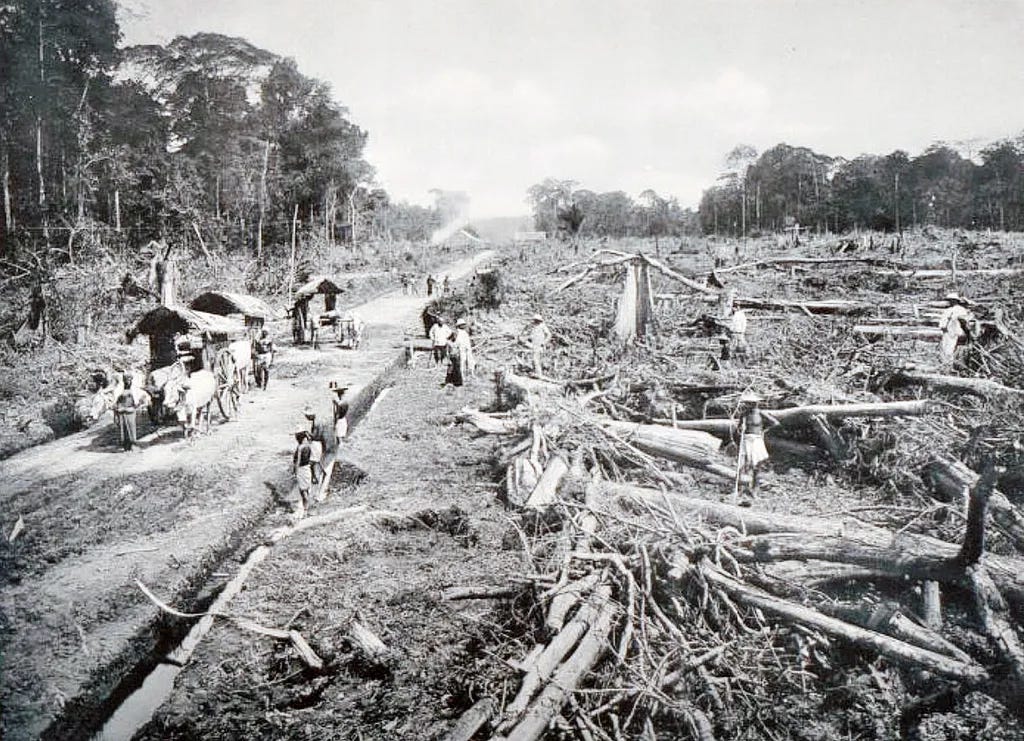
Climate Imperialism and Global South
Whose Responsibility? Whose Burden?
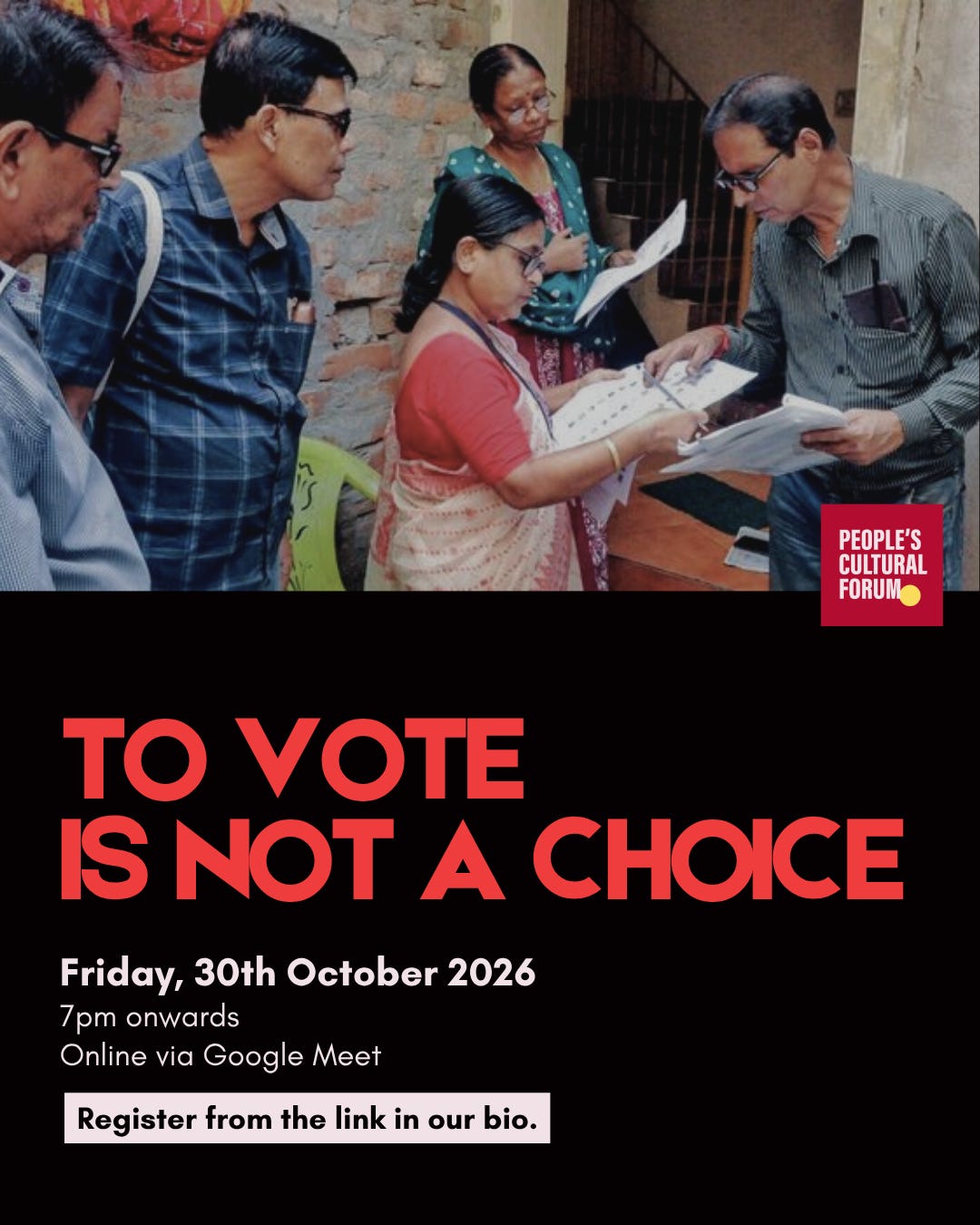
Online Reading and Screening| To Vote Is Not A Choice
Join us as we read, discuss, and collectively build clarity.

Online Reading and Screening| To Vote Is Not A Choice
Join us as we read, discuss, and collectively build clarity.