Whose Land? Whose Development?
How Capitalism and Colonialism Alienated Us From Land
Contents
The Indian state has been sanctioning unprecedented levels of tree felling and ecological destruction across the country for “mega-development” projects. Entire mechanisms of checks of balances have been compromised and unrestricted access to land and resources has been surrendered to the capitalists and industrialists. This narrative of economic development has been persisting in the country since beginning, with the question remaining the same: development for who? For every developmental project that has been allowed at the cost of ecological destruction, it has always been resisted by the Tribals and Adivasis. The matter of “Jal, Jungal, Jameen” is not merely a question of livelihood for them but something more sacred and existential.
Recent Ken Betwa and Odisha Protests
The Ken-Betwa project has been in news for the resistance it is facing from the tribals in Madhya Pradesh. On 8th April, 2026, hundreds of tribal farmers, led mostly by women, staged a chita andolan (pyre protest) sending the message that the project is akin to a pyre for them. The Ken-Betwa river linking project would lead to nearly 10 villages being completely submerged, and more than 20 villages being displaced. The project will submerge vast patches of precious forest land, including core areas of the Panna Tiger Reserve. The locals in the affected area are primarily Adivasis belonging to Gond and Kol tribes. The project poses an existential threat for these communities as it will push them away from their ancestral villages, forcing them to abandon their traditional means of livelihood, inseparably linked to forest and rivers.
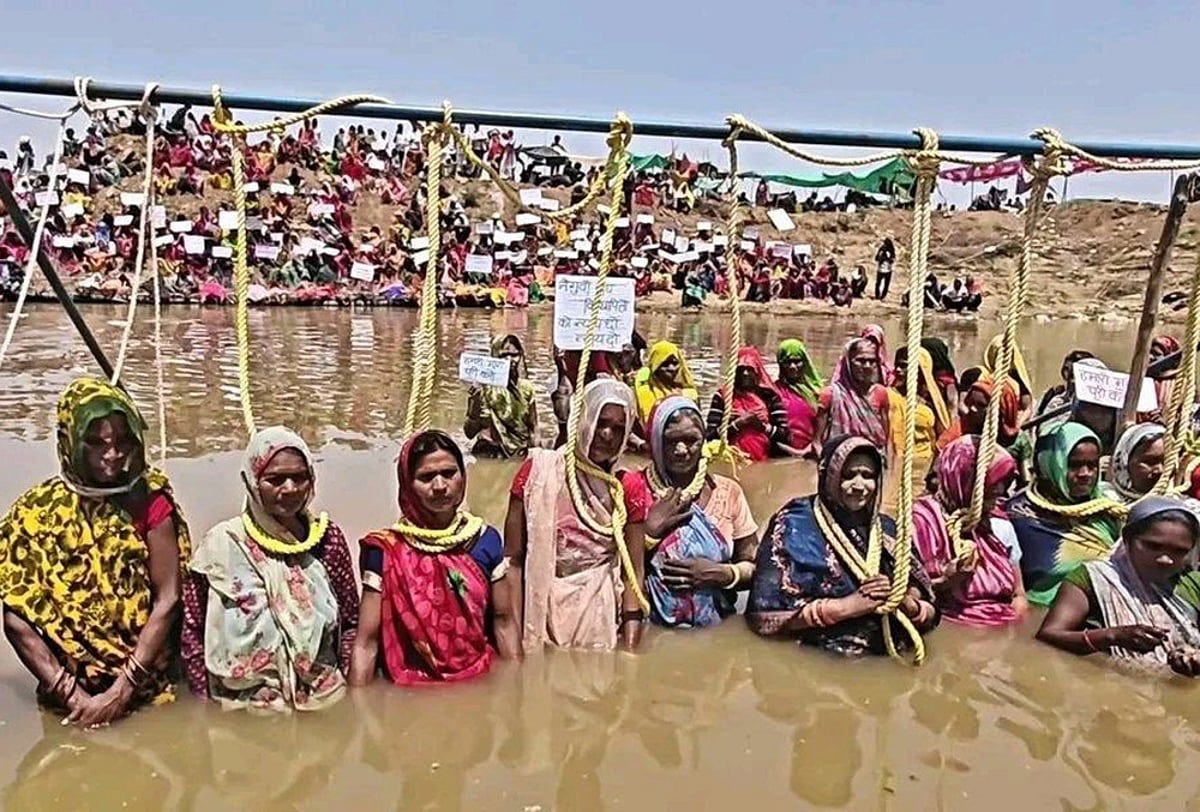
They have demanded “land for land” and “village for village” resettlement in the same habitat so that they can preserve their cultural and traditional ways of life. However, the government’s rehabilitation plan is majorly inadequate and leaves out several eligible villagers from compensation. The villagers are also anguished over the lack of transparency in informing them about the project, its impact, and its compensation. They even allege that gram sabha permissions were taken in an opaque manner. When these factors accumulated and led to the villagers protesting against the project, it was met with severe police retaliation, including the arrest of activists leading the movement.
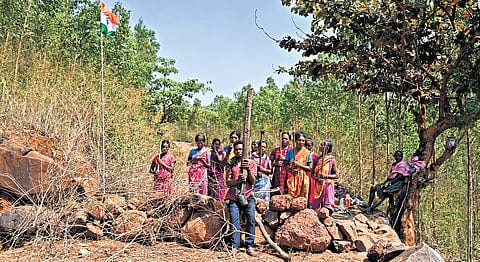
A similar story of people resisting development bulldozed upon their lives was seen in Odisha’s Rayagada and Kalahandi districts. Since 2023, locals protesting against London-based company Vedanta’s Sijimali bauxite mining project have repeatedly been facing state repression. A similar pattern followed where fake gram sabha consents were obtained using fictitious residents and forged signatures to divert forest land to Vedanta for bauxite mining. In April 2026, violence broke out when the locals were protesting against the construction of a road linking the project site to the state highway. A large team of armed police personnel was deployed to round up villagers opposing the road construction and arresting a local community leader. The bauxite mining project not only comes at a severe ecological cost but also poses an existential threat for the local tribal communities who fear for the traditional ways of lives dependent on these forest lands.
The Colonial Legacy
The story has been the same since pre-independence in these resource rich areas. The state aiding the capitalist class to extract and exploit land and resources belonging to the indigenous communities leading to their displacement, environmental degradation, and the loss of traditional livelihoods.
The idea of economic development as we see it today, has its origins in colonialism and capitalism. Colonialism as a system emerged and developed on the exploitation of land, resources, and people in distant territories. Natural resources in these colonies became fodder for industrialisation in Britain, France, and the rest of Europe, eventually leading to the rise of capitalism. The colonialists created and enforced the notion of development in these colonies, whereby development emerged as a universally beneficial phenomena. Across all colonies, it was the indigenous communities who were at the forefront, bearing the cost of these exploitations, and continue to do so in the present neocolonial age as well.
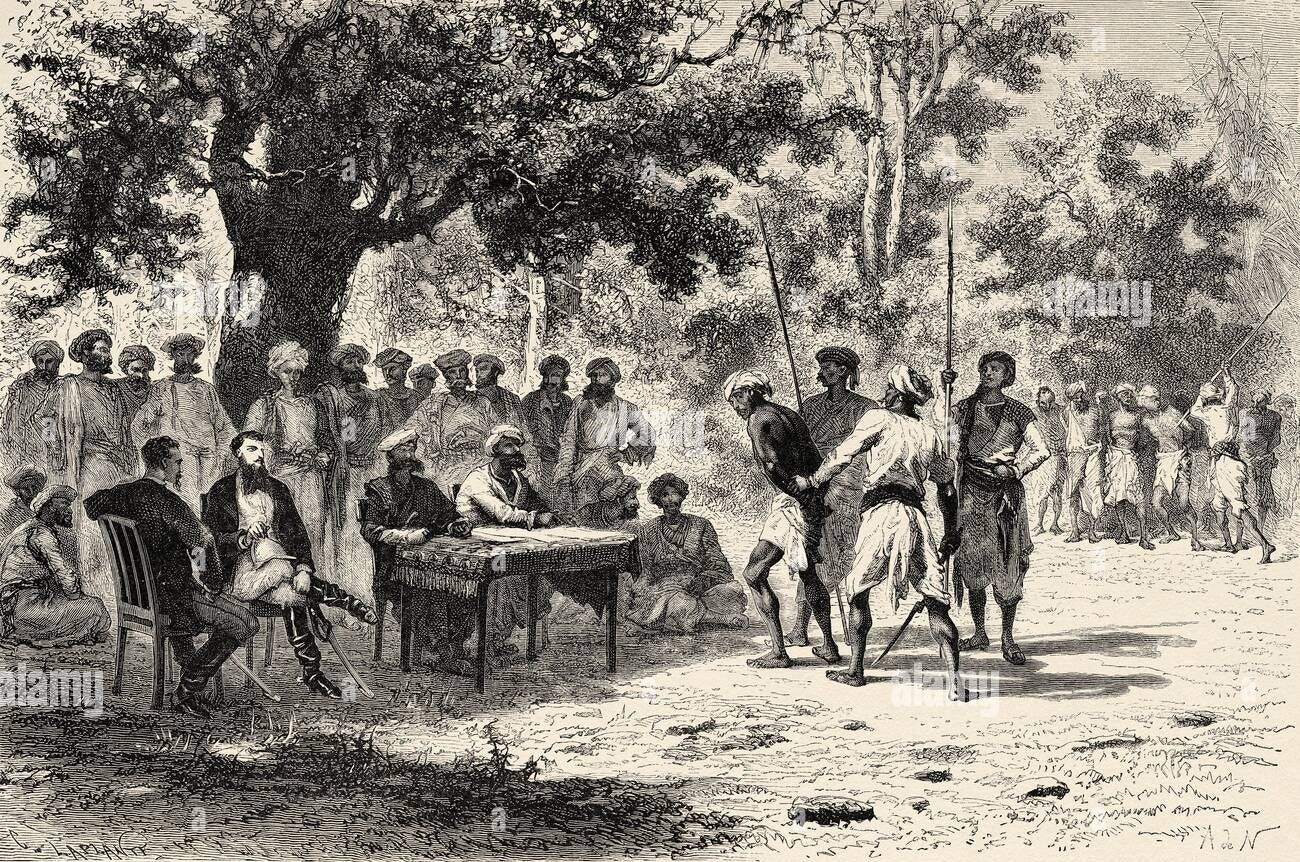
Indigenous communities across the world hold themselves as the first inhabitants of land. They don’t exert ownership over land but instead regard themselves as stewards of land. This leads them to have a non-transactional relationship where land for them is not a profit making commodity but rather a sacred entity central to their existence. Land, forest, and nature are the cornerstone of indigenous livelihoods, belief systems, identity, and ancestry. This is an antithesis to the colonialist and capitalist relation with land and nature which is more about private ownership and exploitation for profit. And thus development since colonial times has been an existential threat for indigenous communities, including the Adivasis and Tribals of India.
The imposition of ‘development’ was central to the legitimizing of a colonial system. Exploitation and destruction of all kinds during colonial times were “recognized and justified under the ambit of developmental projects” (Varughese and Mukherjee, 2024). All forms of power, from physical to institutional to administrative, were exerted by the colonizers to “civilize” their colonies. In India, one of the earliest major developmental projects was the railways. It was projected as the greatest collective good brought to India by the colonizer becoming the strongest legitimizer of the development narrative.
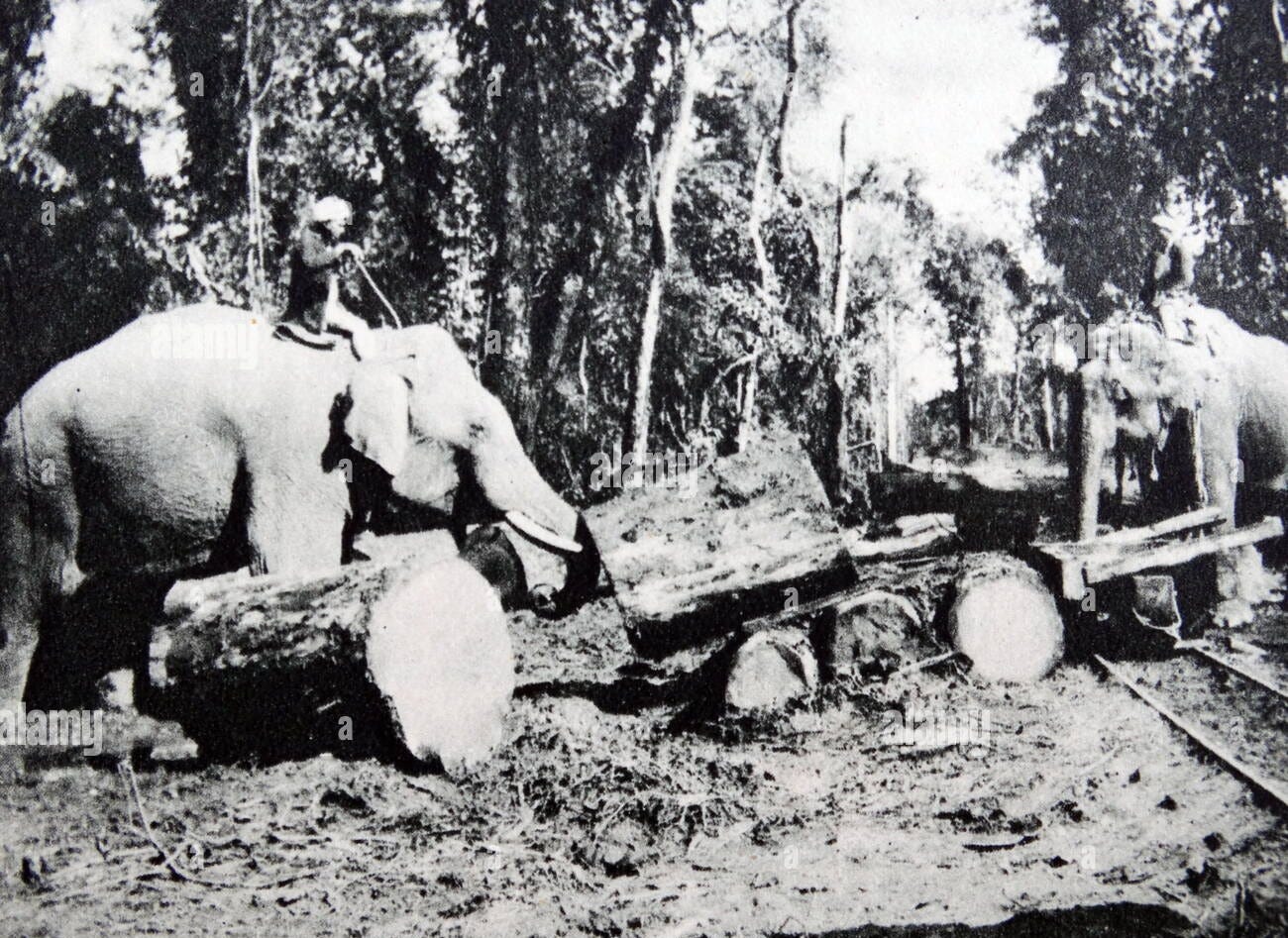
The creation and massive expansion of railways was the biggest driving force behind the depletion of forests in India. The colonial government created several laws and policies to have unrestricted access to forest areas primarily inhabited by the Adivasi community. And by design none of these laws and policies were in the favour of Adivasis. Such laws legitimised bypassing of ancestral claims to land, a legacy that continued in postcolonial India as well.
Post colonial India
As a newly independent country, economic growth became a key indicator of progress, and infrastructural development became the centre of this pursuit. A series of extractive mining, hydel power, and industrial projects were set up. Hydel projects came to the forefront, reinforcing the development narrative as ‘temples of modern India’. The postcolonial state continued to legitimize the discourse of development, which again alienated Tribal and Adivasi communities, perpetuating the colonial cycle.
The pattern that we notice in the recent Ken-Betwa project has remained the same throughout. Mega development projects get pushed despite threats of submergence of hundreds of villages and forced displacement of thousands of people without adequate rehabilitation and resettlement packages. Every attempt by the local Adivasi and Tribal communities to resist these development projects has been met with severe state brutality.
For instance, the Koel-Karo hydel project proposed to construct two dams along Koel and Karo rivers in Jharkhand. As per the surveys done by the locals, the project would have submerged 256 villages, 55000 acres of land, and 27000 acres of forest land. The local Adivasis opposed the project, for it not only meant a threat to their land and livelihoods, but would also submerge their sacred groves and ancestral burial places. Committees were formed by Adivasis to collectivize their protest and oppose the state. The strategy worked successfully to delay the project. But in 2001, the protest took a violent turn when police open fired on a peaceful gathering of more than 2000 Adivasis and Tribals. Eventually the project was shelved due to the sustained efforts of Koel Karo Jan Sangthan and the fierce resistance and sacrifice of Adivasis and Tribals.
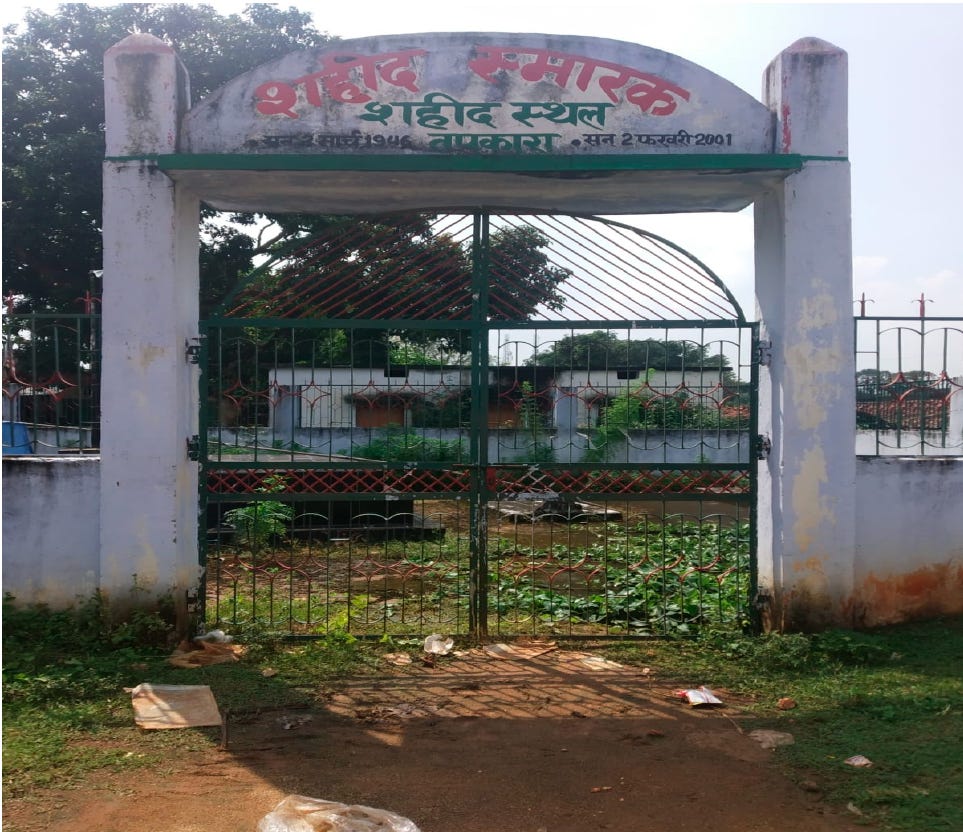
The imposition and bulldozing of development has been more perverse and blatant in the past few years. The human and environmental impact of such projects is severely overlooked while their projected benefits are overexaggerated. The biggest example can be seen with the Sardar Sarovar Dam, the most controversial development project. It was one of the biggest hydel projects in the world which was allowed without adequate environmental impact assessment and exaggerated benefits, eventually leading to nothing but ecological damage and massive human displacement.
Moreover the colonial legacy continues as the postcolonial state continues to use state apparatuses to sanction these projects that profit the capitalist class. A detailed analysis published in Article 14 reported that the National Board for Wildlife (NBWL), India’s apex wildlife body, approved 97% of developmental and commercial projects within protected Areas, ‘eco sensitive zones’ & wildlife corridors, most of which were granted in unconstitutional and illegal ways over 12 years. These clearances ignore voices of scientists and affected communities, threatening India’s remaining wild habitats and ecological security.
Most recently, The Great Nicobar Project represented the sharpest contradictions in answering the question of whose land and whose development. The mega infrastructure project is being pushed by the state with all might despite its potential to create irreversible biodiversity damage, including threat to several endangered species, while completely uprooting entire indigenous tribes. Scientists and experts are calling this project an ecocide, and yet despite all opposition the project is in the final stages of statutory clearances. Here again, the state applied its force by gagging scientists to give favourable reports for the project’s environmental clearance.
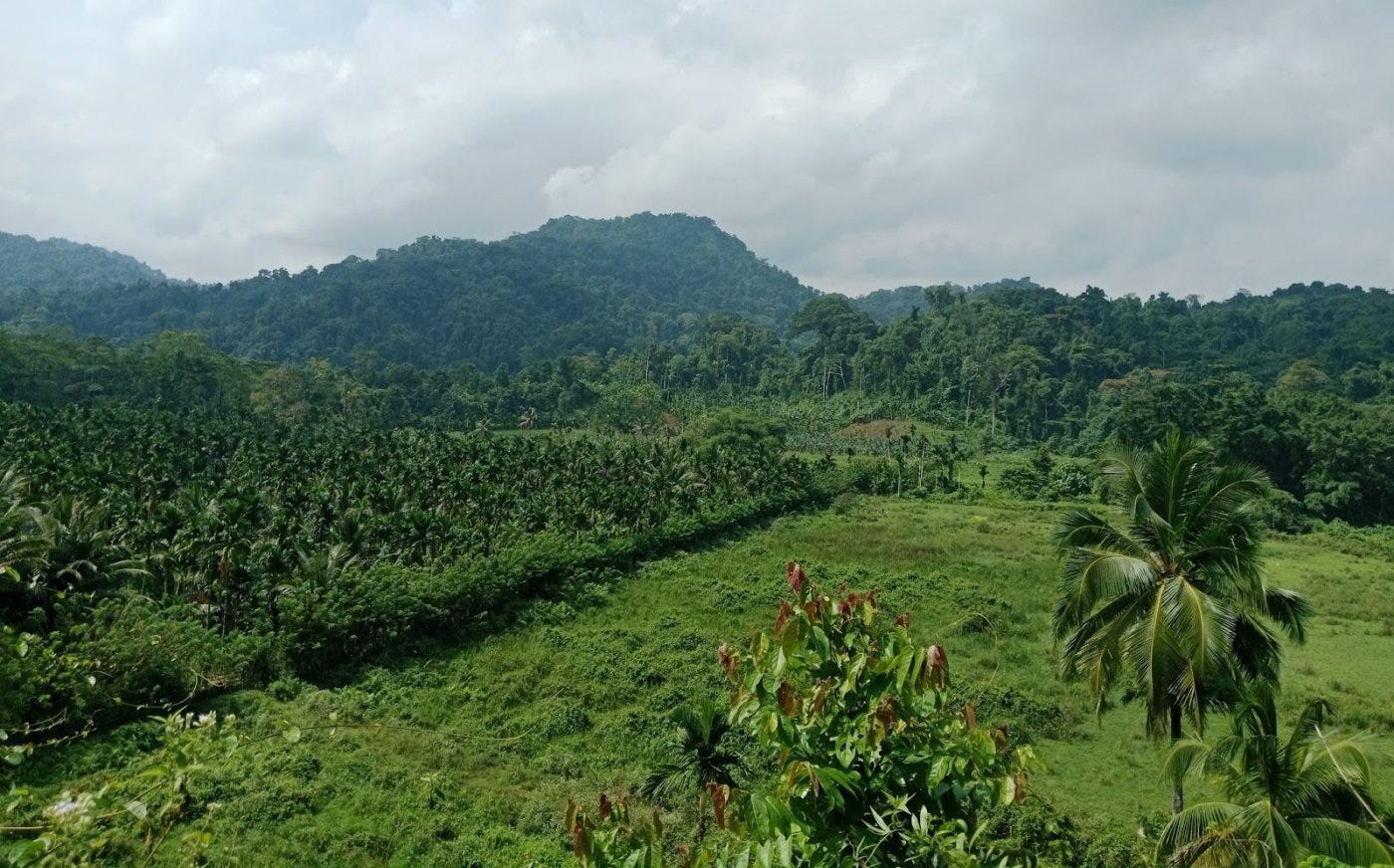
The Nicobarese tribe, one of the original inhabitants of the land, vehemently opposed the project, stating that they were misled by the administration to provide their consent. And yet the large parts of tribal reserves are set to be denotified. The Shompen tribe, another indigenous tribe, is at a far greater threat. With barely 230 members, they have largely remained uncontacted throughout history and with their limited interactions have expressed to remain undisturbed. This project could be a potential death sentence for them. Nicobarese tribals have argued that the so-called development project is disrespectful of indigenous knowledge systems, cultures, beliefs, practices, and tribal rights and laws that have ensured human nature coexistence for centuries.
Accumulation by Dispossession
Karl Marx in his theory of capitalism explained how force, theft, and appropriation of indigenous land and dispossession of indigenous communities was necessary to set the preconditions for capitalist accumulation. He defined this phenomena as “primitive accumulation”, calling it the “original sin” of Political Economy. Marx saw primitive accumulation as having three major aspects: the removal of peasants from the land by land enclosures and the abrogation of customary rights, so they no longer had direct access to or control over the material means of production; the creation by this means of a class of landless labourers, who became wage labourers under capitalism, and who migrated to the towns where they emerged as an industrial proletariat; enormous concentration and centralization of wealth as the means of production (initially through the control of the land) monopolized by fewer and fewer individuals (Foster and Clark, 2004). This can be observed through the example of Nicobarese tribals, who are currently at the risk of losing their ancestral land, and are forced to work as daily wage labourers.
Rosa Luxemburg in her The Accumulation of Capital, explains how capitalism would not have been able to survive without appropriation of “non-capitalist means of productions” making colonialism an inevitable step for capitalism’s survival: the expansion of market beyond home country, accumulation, exploitation, and appropriation of indigenous land and resources to find outlets for surplus. And so, accumulation by dispossession always remains a key feature of capitalism. David Harvey, another critical Marxist thinker, explained how mechanisms of accumulation by dispossession changed in a neocolonial system. Privatization of public services into profit-making enterprises: water, education, health care; the use of the international credit system (especially the IMF/World Bank) as a means of forcibly transferring wealth from the Global South to the economies of the North; the use of intellectual property rights to commodify what was once knowledge held in common (for instance, monopolization of seed banks); the displacement of locals from their lands for development projects.
Michael Levian, adds another layer to the process of accumulation by dispossession. He emphasizes the extra-economic character of this process. He calls the state a “land broker state” which employs coercive powers for forcible transfer of agrarian land to capital for industrial and commercial development (Levien, 2011). The history of development projects in India is a clear testament to this.
Conclusion
Capitalism and Colonialism has fundamentally changed human relation with land. Private ownership of land and privatized means of production not only turned direct producers of land, ones who safeguarded and nurtured the land for centuries, into wage labourers but also alienated them from their own land. For indigenous communities, the loss is not merely of their land, but also of their indigenous identities. Capitalism and Colonialism as systems of power managed to thrive by eradicating indigenous systems of knowledge and relations with land. This has been a violent and traumatic process for all indigenous communities across the world, including Adivasis and Tribals in India.
And that is why despite the continuous force towards alienation, Adivasis and Tribals have remained at the forefront of resisting these development projects as continued dispersal of their duty of safeguarding land. Capitalism turned land and nature from a sacred entity to a mere commodity for exploitation. The revolutionary proletariat has to merge the struggle against labour exploitation with struggle against land exploitation. For it is the land, the rivers, the forest, that sustain us, nurture us, and ensure our survival. And the answer to our alienation lies in our re-connection with land and nature. We’re not owners of land but mere custodians.
From the standpoint of a higher economic form of society, private ownership of the world by single individuals will appear quite as absurd as private ownership of one man by another. Even a whole society, a nation, or even all simultaneously existing societies taken together, are not the owners of the world. They are only its possessors, its beneficiaries, and, like good heads of the house, they must hand it down to succeeding generations in an improved condition.
– Karl Marx, Das Kapital, Volume 3
Further Readings
Development-induced dispossession: Adivasi existence in the milieu of contemporary Indian texts in translation
https://www.nature.com/articles/s41599-024-03166-3
Accumulation by dispossession
https://isreview.org/issue/95/accumulation-dispossession/index.html
Forest Rights Act Enables State Control of Land and Denies Most Adivasis and Forest Dwellers Land Rights
https://www.epw.in/engage/article/forest-rights-act-state-appropriation-land-rights
On the Great Nicobar island, why the future is fearful
https://scroll.in/article/1075116/on-the-great-nicobar-island-why-the-future-is-fearful
Adivasis as Ecological Warriors: Colonial Laws and Post-Colonial Adivasi Resistance in India’s Jharkhand
https://www.mdpi.com/2313-5778/8/4/130
Defying Courts, Ignoring Science—How India’s Wildlife Board Became A Rubber Stamp For Projects In Protected Areas
https://article-14.com/post/defying-courts-ignoring-science-how-india-s-wildlife-board-became-a-rubber-stamp-for-projects-in-protected-areas-69dc5ec8efdb8
Read next

Online Reading and Screening| To Vote Is Not A Choice
Join us as we read, discuss, and collectively build clarity.

Online Reading and Screening| To Vote Is Not A Choice
Join us as we read, discuss, and collectively build clarity.

“Vote Chori”, SIR and Current Outburst
Where is the Movement Headed and What Must We Do?