What is the Naxalbari Movement?
Contents
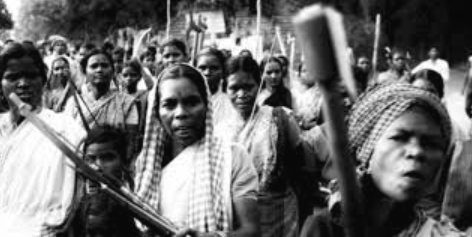
In May 1967, the rural village of Naxalbari in West Bengal became the site of a major armed peasant uprising. Landless tribal peasants, led by local communist cadres, refused to accept feudal land relations and launched a militant revolt to seize land from jotedars (rich landlords/peasants) and redistribute it. The revolt escalated after landlord goons attacked a tribal sharecropper. The peasants retaliated, and in the clashes that followed, a landlord was killed. The police counter-attack led to the death of 11 villagers, including women and children. On May 25, 1967, police opened fire on protesting peasants, marking a turning point that spurred the uprising, as survivors like Dhaneswari Devi later recounted: “We fought for our land, our dignity”. What followed was not just a local rebellion, but the beginning of a revolutionary movement that would influence Indian politics for decades.
History of Exploitation
The rebellion did not emerge out of nowhere. It was the result of decades of semi-feudal oppression. Under the Zamindari system, abolished legally in 1951 but still practiced in reality, landlords (zamindars and jotedars) retained control over vast areas of land and exploited tribal and poor peasant labour. The sharecropper (bargadar) would receive only half (in most cases, less than half) of the produce, while the rest went to the jotedar. This exploitation intensified during World War II and the 1943 Bengal famine. The Tebhaga Movement (1946–47), in which peasants demanded two-thirds of the produce, had already revealed growing discontent. By the 1960s, approximately 70% of West Bengal’s agricultural land was controlled by just 10% of landlords, perpetuating stark inequality that fueled peasant unrest. So, Naxalbari was not an isolated incident, it was part of a continuum of rural class struggle.
The Leaders that Led the Movement
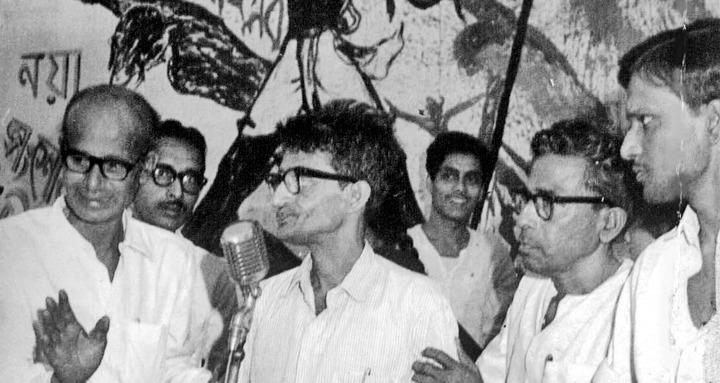
The uprising was spearheaded by three prominent figures: Charu Mazumdar, Kanu Sanyal, and Jangal Santhal. Charu Mazumdar, a long-time communist activist, had grown increasingly critical of the CPI(M)’s focus on electoral politics. His writings, later known as the Historic Eight Documents, laid out a strategy for armed agrarian revolution modelled on Mao Zedong's Chinese revolution. Jangal Santhal, a Santhal tribal organiser, played a key role in mobilising the peasants. Kanu Sanyal led delegations and articulated the demands. These leaders rejected parliamentary means and called for direct action and armed resistance to achieve a classless society.
Why Armed Struggle?
The decision to take up arms was not impulsive. The peasants of Naxalbari had faced generations of exploitation, eviction and repression. When a police officer assaulted a pregnant tribal woman and the villagers retaliated, it was a response to decades of state-backed feudal violence. Charu Mazumdar argued that, in India, where the state protects landlords and industrialists, the working masses must form armed squads to seize land, resist evictions, and fight state repression. Armed resistance was seen as the only viable strategy in the face of systemic failure, broken promises, and betrayal by the CPI(M)'s electoral path. Post-independence land reforms, like the 1951 Zamindari Abolition Act, failed to redistribute land effectively, with only 1.2% of surplus land reallocated by 1967, leaving peasants no choice but armed struggle to reclaim their rights. As Mazumdar said, “To think of seizing power without arms, is nothing but an idle dream.”
The Ideological Foundation: Maoism
“A revolution is not a dinner party, or writing an essay, or painting a picture, or doing embroidery; it cannot be so refined, so leisurely and gentle, so temperate, kind, courteous, restrained and magnanimous. A revolution is an insurrection, an act of violence by which one class overthrows another.”
Maoism adapts Marxism-Leninism to agrarian societies. In countries like China and India, where the industrial working class was small but the peasantry was massive, Mao argued that revolution must begin in the countryside. Unlike traditional communist parties focused on urban trade unions and elections, Maoists organised people’s war, built base areas in rural zones and relied on the armed power of the landless poor. The Naxalbari movement followed this model. For the Naxalites, the ballot had failed and the bullet was necessary. The movement replicated Maoist tactics: land seizure and armed struggle. The peasants at Naxalbari were not “misguided”; they were following a strategic line based on class analysis. Specific tactics included “annihilation of class enemies” (targeting oppressive landlords) and forming “red defense squads” to protect villages from landlord and police retaliation, directly applying Mao’s guerrilla warfare model.
Repression and Martyrdom
The Indian state responded to the Naxalbari Movement with systematic and brutal repression. Police and paramilitary units raided villages, conducted fake encounters, tortured peasants, and jailed thousands of activists. The scale of repression was immense, with over 8,000 arrests and 1,400 deaths in West Bengal between 1967 and 1972. The movement's leadership was targeted. Charu Majumdar was arrested on July 16, 1972, and died in custody twelve days later, marking a major blow to the movement’s momentum. However, the state's violence also exposed its class character. The repression revealed how the Indian state functioned as an instrument of the ruling class. The movement may have been militarily suppressed, but it was politically unbroken. Mazumdar’s death, under suspicious circumstances with allegations of torture, became a rallying point for Naxalites, cementing his status as a martyr.
From CPI(M) to CPI(M-L)
The CPI(M), formed in 1964 after a split with CPI, initially argued for a more radical communist politics. However, when the Naxalbari uprising broke out in 1967, the CPI(M) condemned it. This betrayal caused deep rifts. The Naxalbari revolt exposed the contradictions of a party that claimed to be revolutionary but acted to defend the landlord class. This disillusionment led to the formation of the CPI (Marxist–Leninist) in 1969, which broke entirely with the electoral path and committed to revolution through armed struggle. The CPI(M-L)’s radical stance, rooted in armed agrarian revolution, later led to its splintering into factions; some, like CPI(ML) Liberation, later embraced electoral politics, while others remained Maoist. Today all three mainstream communist parties—CPI, CPI(M), and CPI(ML) align in coalitions like the INDIA alliance with Congress, reflecting a complex and ironical evolution.
Legacy of the Naxalbari Movement
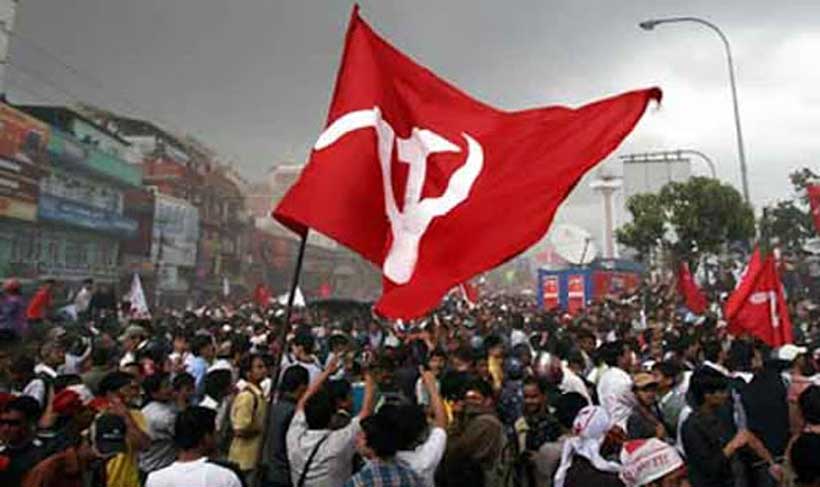
Though the Naxalbari uprising was defeated militarily, its impact was far-reaching. It forced the Indian state to accelerate land reforms in West Bengal. In 1977, the CPI(M)-led Left Front came to power with land reform as a central promise, ironically echoing the very demands it had once repressed. The movement was also the first to completely reject the legitimacy of post-colonial India’s parliamentary institutions, exposing them as mechanisms of class dominance. Naxalbari also ignited a cultural fire, inspiring revolutionary art, literature, and theater, and drew urban youth to rural struggles, sparking similar movements in states like Andhra Pradesh, Bihar, and Odisha.
A Lasting Call to Action
“India has been turned into a base of imperialism and revisionism, and is acting today as a base of reactionary forces against the people struggling for liberation. That is why the Naxalbari struggle is not merely a national struggle; it is also an international struggle. This struggle is difficult, and the path we have chosen is in no way easy or smooth. The path of revolution is difficult, not smooth or easy, and difficulties, dangers and even retreats will be there. But the peasants who are fired with the spirit of the new internationalism have defied all this and refused to submit.”
—Charu Mazumdar, One Year of Naxalbari Struggle
Why Study Naxalbari Today?
Naxalbari is not just a historical event, it is a method of analysis and a question of strategy. Land inequality, rural exploitation, state violence and caste oppression still remain part of everyday life for millions. So, it forces us to ask: can the state built by capitalists and landlords ever deliver justice to workers and peasants? Can elections solve structural oppression? Or must revolution be the only answer? Naxalbari teaches us that armed struggle is not terrorism; it is class war.
Read next

Online Reading and Screening| To Vote Is Not A Choice
Join us as we read, discuss, and collectively build clarity.

Online Reading and Screening| To Vote Is Not A Choice
Join us as we read, discuss, and collectively build clarity.
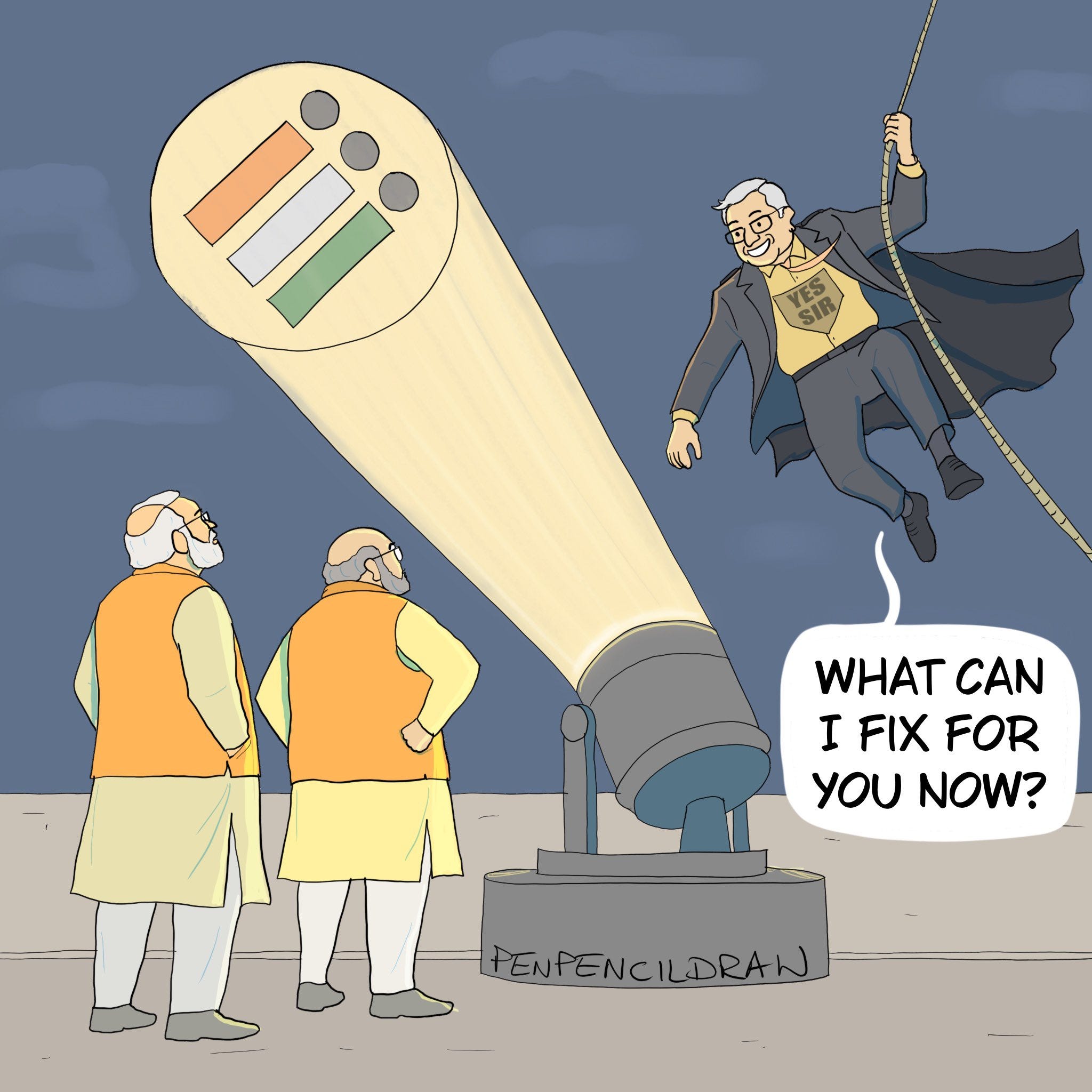
“Vote Chori”, SIR and Current Outburst
Where is the Movement Headed and What Must We Do?