What is Operation Kagar?
A guide to understand the plight and resistance of Adivasis in Central India
Contents
The era we are living in is the era of the rule of capital — an era marked by deep inequality. On one side, a tiny minority fills its belly, and on the other, a large toiling mass has nothing but its labour, with even the fruits of that labour being stolen away.
This is, in every sense, an era of injustice — an era that goes against everything humanity stands for, all for the profit of a few.
In search of profit, the capitalist settles everywhere. It uproots cultures and displaces people. All it looks for is ways to increase its profit — to hoard more and more of what could otherwise belong to all of humanity, for the benefit of all.

In this process, it also shapes our sense of morality — what we see as just or unjust. We hear of only a few injustices, and that too after enormous efforts by the people suffering them. Even when something does come to light, it is distorted and twisted. Narratives are built against the oppressed. The violence of the oppressor is erased, and the resistance of the oppressed is labelled as violence.
A similar case is unfolding in India. Yet many people either remain completely unaware or, if they do know, dismiss it as senseless violence — accepting the dominant narrative without question. Yes, we are talking about the massacres of tribal people in India, a violence that has been going on for centuries.
Historical Context of Adivasi Struggles
The struggle between Adivasis and settlers for profit in India is not something recent. It has its roots in colonial times itself, when tribal leader Birsa Munda in 1899 launched the “Ulgulan” Movement (which was a tribal uprising in the Chotanagpur plateau) against the Britishers.
After independence, the attitude of the State towards the tribals did not change much. Adivasis constituted 5.29% of the population at the time of independence, having inhabited mineral and resource-rich regions such as Jharkhand, Odisha, Madhya Pradesh, Maharashtra and Chattisgarh for centuries.
These lands were soon thrown open for capitalists, both domestic and foreign, to exploit and build their castles. While the process is often described as involving proper rehabilitation, employment opportunities, and development for the people, the reality has been quite different.
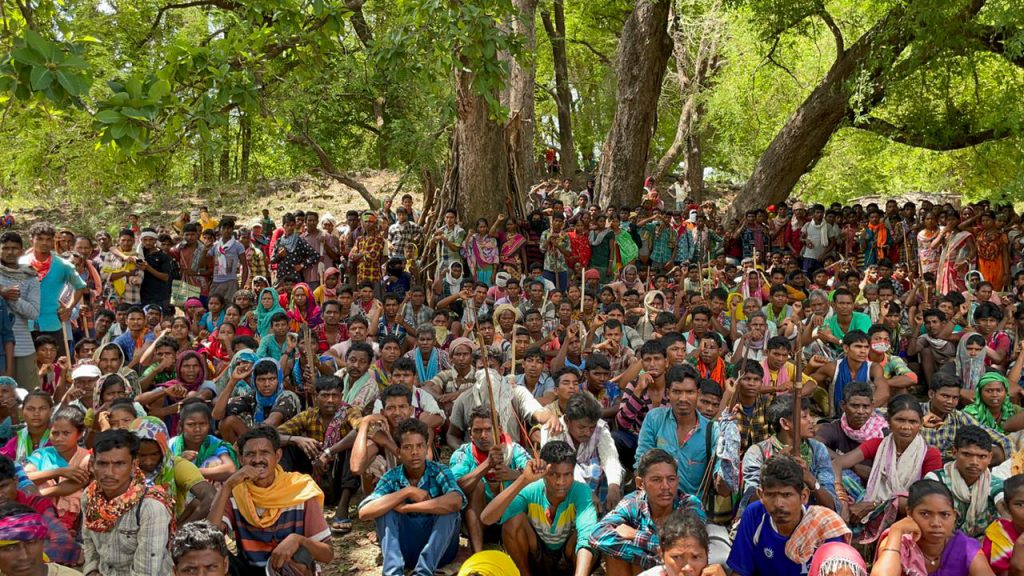
In regions where there is no hospital for miles, no bridge to cross a river even during emergencies, and no proper roads, there are 8-lane highways. Where it takes days to reach by normal passenger train, there are goods trains running — connecting these regions to ports, from where the plundered resources are exported.
The ruthless exploitation of nature also stands as an environmental concern — with indiscriminate mining of land and hills, pollution of rivers — harming, on one hand, the long-standing relationship between tribals and nature, and on the other, adversely affecting their lives.
Corporate Exploitation
In a capitalist setup, billionaires and not workers are portrayed as the drivers of the economy. Many are worshipped for the development, job opportunities and charity. However, much of it is just a facade to mask their ruthless exploitation of the resources that belong to all of us for their individual profits. This can be showcased from three case studies of this century itself.
Tata Steel Kalinganagar Firing
On January 2, 2006, in Kalinganagar, Odisha’s Jajpur district, police fired on Adivasi protesters opposing the construction of a boundary wall for a Tata Steel mega steel plant. The firing resulted in the deaths of 14 tribals, including three women, and injured many others. The plant, intended to produce six million tonnes of steel annually, required 3,200 acres of land, displacing approximately 5,000 Adivasis from their ancestral homes. The protesters, organized under the Visthapan Virodhi Jan Manch, were resisting forced displacement and the loss of their livelihoods. Reports indicate that over 700 armed policemen were deployed to facilitate construction activities, including a common corridor road to serve the Tata Steel.
Vedanta’s Niyamgiri Hills Bauxite Mine
In Niyamgiri Hills in Odisha’s Rayagada and Kalahandi districts, home to the Dongria Kondh and Kutia Kondh tribes, Vedanta Aluminium Limited, through its subsidiary Sterlite Industries, sought to mine 72 million tonnes of bauxite for its Lanjigarh alumina refinery. The hills, worshipped by the tribal community as Niyam Raja, the tribes’ deity, are ecologically essential, supporting over 30 streams and two rivers critical to regional water systems. In 2003, Vedanta signed an MoU with the Odisha government for a MTPA refinery and a MTPA open-pit mine, but the project faced fierce resistance from the Dongria Kondh, who opposed the environmental destruction. Despite initial clearances in 2008, the Supreme Court’s landmark 2013 ruling, based on the Forest Rights Act, mandated gram sabha consent.
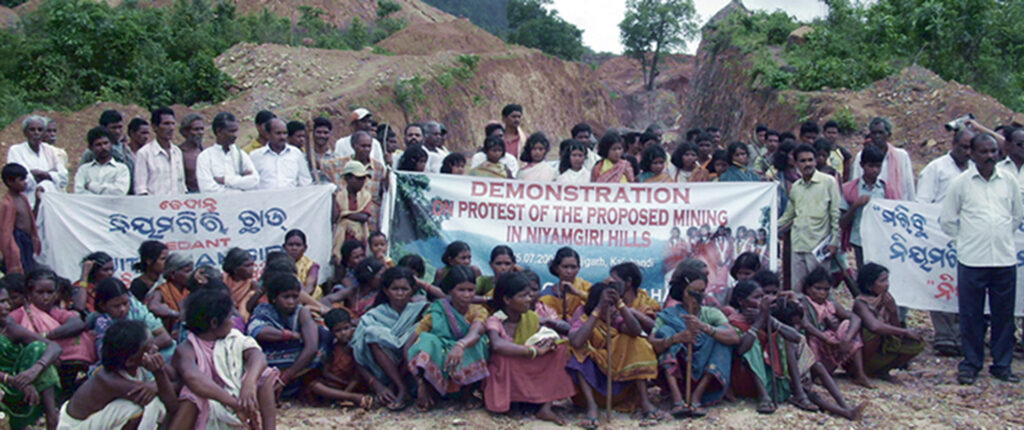
All 12 affected villages unanimously rejected the project, halting mining operations. However, Vedanta’s refinery, built prematurely, has operated at reduced capacity, sourcing bauxite from distant locations, while causing pollution through red mud waste and river contamination. The victory was a global symbol of Adivasi resistance, supported by organizations like Amnesty International and Survival International, but Vedanta continues to pursue alternative bauxite sources, such as the Tijmali Hills, maintaining its oppression.
Adani’s Parsa Kente Coal Projects
In Chhattisgarh’s Hasdeo Arand forest, one of India’s largest contiguous forest tracts, the Adani Group operates the Parsa East and Kanta Basan (PEKB) coal mine and has two additional mines under development, Parsa and Kente Extension. These projects threaten the biodiverse Hasdeo forests, a critical habitat for endangered species and a lifeline for Adivasi communities. The PEKB mine, operational since 2013, has already forcibly displaced hundreds of Adivasis and cleared vast forest areas. The Parsa and Kente Extension mines, approved despite widespread protests, are expected to displace thousands more and fell over 200,000 trees, leading to environmental degradation and disrupting water systems vital to local agriculture. Adivasi resistance, led by groups like the Hasdeo Aranya Bachao Sangharsh Samiti, has highlighted violations of the Forest Rights Act (FRA), including forged gram sabha consents and inadequate environmental clearances. For instance, in 2022, protests in Kete village revealed how Adani’s operations manipulated community consent to acquire land. The environmental impact includes air and water pollution, with coal dust and mine runoff affecting rivers like the Hasdeo, threatening both human and ecological health.
These projects exemplify how corporate interests, backed by state support, override Adivasi rights and environmental protections.
History of Resistance
The Adivasi population is one of the most oppressed communities in the country. However, oppression that stems from this system also links different oppressed classes and communities together. With the oppression of the tribals, the oppression of workers and peasants also has remained a prominent part of the functioning of this system.
And where there is repression, there is resistance. One such resistance movement began right after Indian Independence. From 1946 to 1951, peasants and tribals in Telangana, then part of Hyderabad State, revolted against feudal landlords and the Nizam’s oppressive rule. Armed with basic weapons, they formed village communes to redistribute land, challenging systemic exploitation. Despite brutal suppression by the Razakars and later the Indian State, the movement inspired future struggles for land and justice.
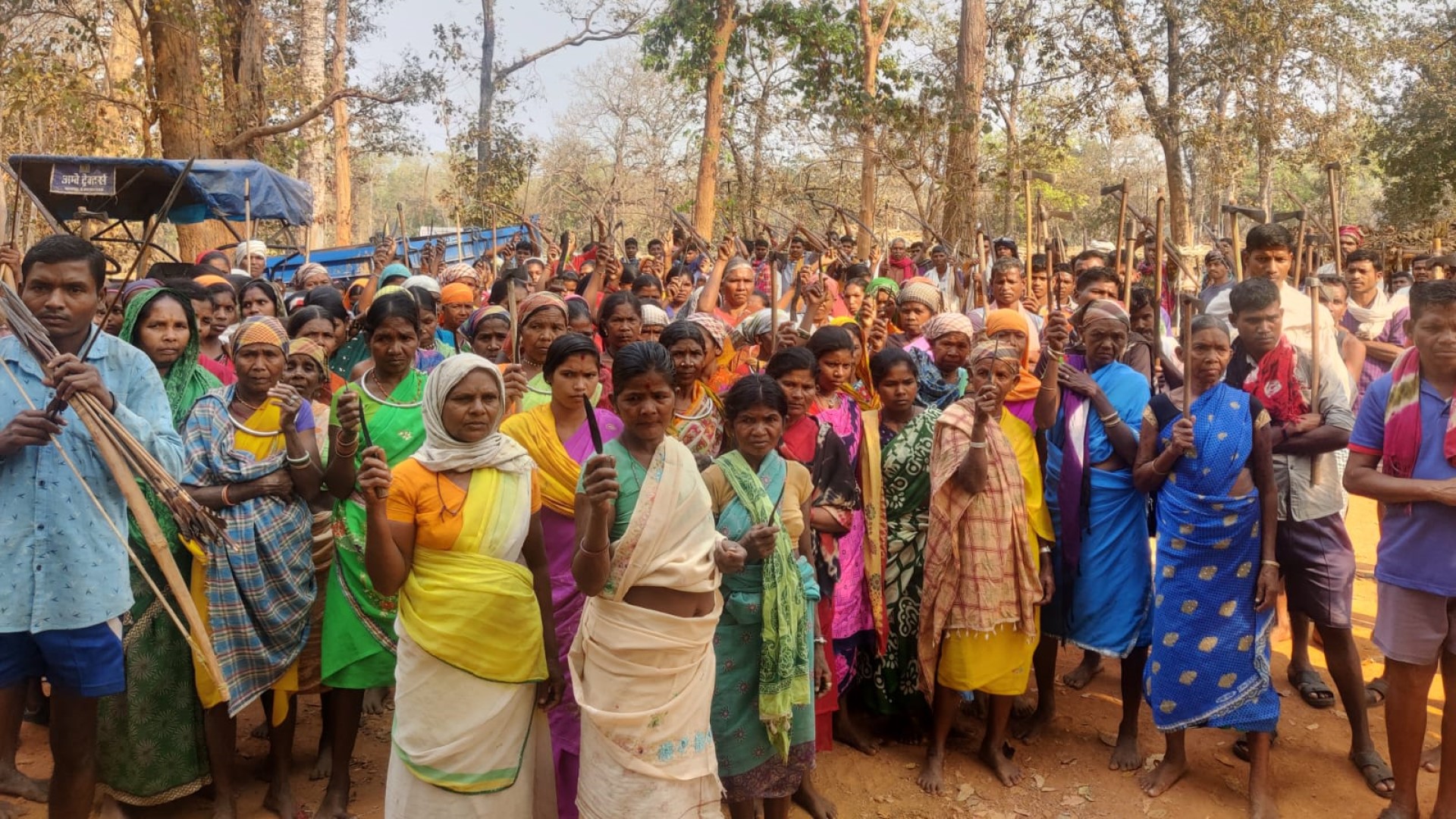
The ghost of Telangana returned to haunt the capitalist and feudal forces when in a small village called Naxalbari in West Bengal, the peasantry population which would often be oppressed by the landlords and the State took charge. In 1967, led by activists Charu Majumdar and Kanu Sanyal, tribal peasants and sharecroppers seized land and arms from landlords, igniting an armed uprising. The movement, though crushed by police, sparked a revolutionary ideology that spread across India’s marginalized regions.
By the 1970s, Naxalism took root in Bihar’s feudal heartlands, mobilizing landless Dalits and tribals against upper-caste landlords. Groups like the Maoist Communist Centre (MCC) organized violent resistance, targeting exploitative landowners and state forces. In response to the growing voice of the labourers non-state upper-caste militia, though largely backed by state, like Ranvir Sena were formed. They targeted Dalits, landless laborers, and Naxal sympathizers, leading 29 massacres between 1995 and 2000, killing over 300 people, mostly Dalits, in incidents like Bathani Tola (1996, 21 killed) and Laxmanpur Bathe (1997, 61 killed).
In 2000, first Jharkhand and then Chattisgarh was carved out of Bihar in what is called as a state tactic to fragment Naxalite strongholds, isolating tribal areas rich in minerals. This division aimed to weaken the unified resistance of Adivasis and peasants across the region. However, it failed to curb Naxalism, as grievances over land and resources persisted.
In 2004, the merger of the People’s War Group and Maoist Communist Centre formed the Communist Party of India (Maoist), consolidating Naxalite factions into a unified force. It intensified guerrilla warfare, aiming to overthrow the state through a people’s war.
State Response and Operations
In 2006, Prime Minister Manmohan Singh labeled Naxalism as India’s biggest internal security challenge, citing its spread across 70-180 districts in Central and East India. The Red Corridor, spanning states like Chhattisgarh, Jharkhand, Maharashtra, Odisha and Andhra Pradesh, saw many clashes between the Maoists and the Indian State. In 2009, the Indian government banned CPI (Maoist) declaring it as a terrorist organisation under Section 41 of the Unlawful Activities (Prevention) Act (UAPA).
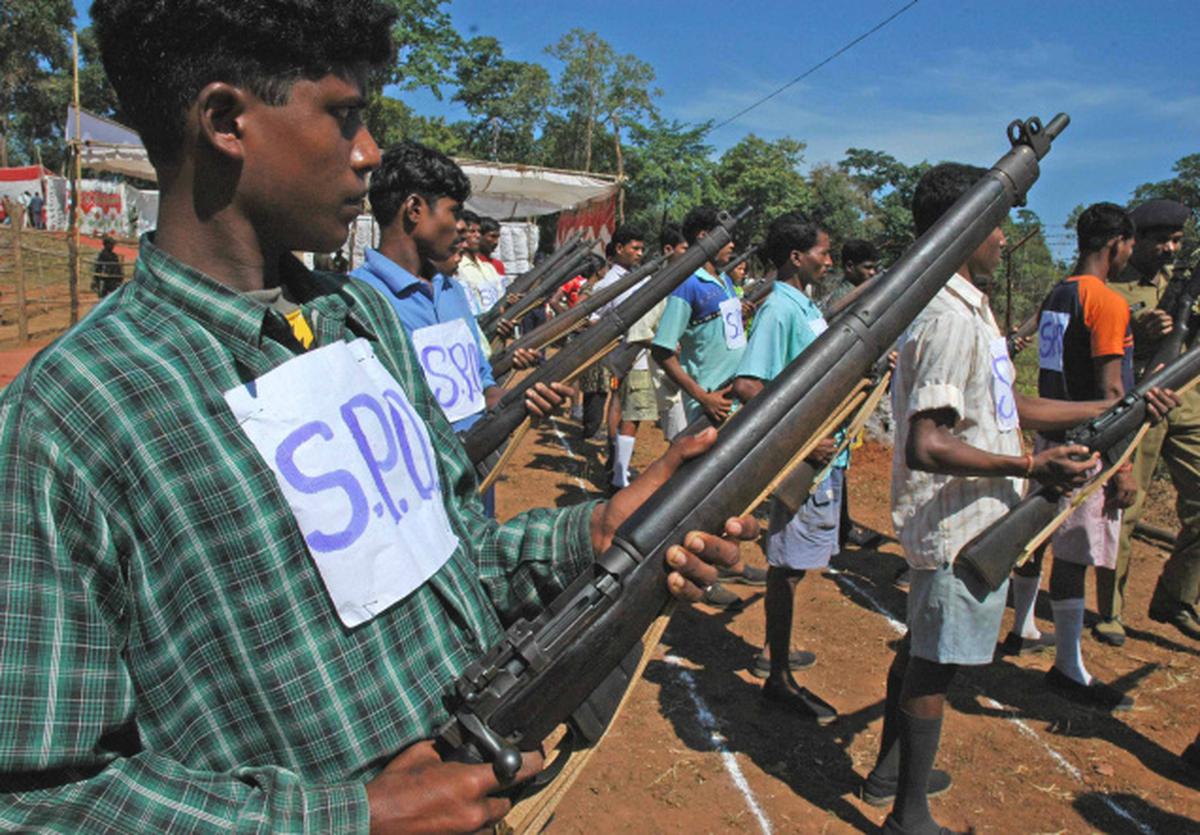
Further, concerned with the growing grip of these movements, the Indian State launched a series of operations in order to curb their strength. In 2005, Salwa Judum (2005-2011) was launched in Chhattisgarh to counter Naxalite violence by arming tribal youth as Special Police Officers, supported by the BJP-led Chhattisgarh government and the Congress-led UPA central government. It aimed to create a civilian militia to fight Maoists and secure mineral-rich areas for industry. However, it displaced over 150,000 Adivasis, razed 640 villages, and was banned by the Supreme Court in 2011 for human rights violations.
In 2009, Operation Green Hunt (primarily 2009-2014), was initiated under the Congress-led UPA government which deployed over 80,000 paramilitary forces across the Red Corridor to eliminate Maoist insurgents. However, as per several reports, it mainly facilitated corporate land grabs, with 700 MoUs signed for mining and industries, displacing 250,000 Adivasis and devastating ecosystems, during its course, also accounting for over 500 civilian deaths. Again, Operation Anaconda (2011-2012), launched in 2011 by the Congress-led UPA government, targeted Maoist bases in Jharkhand’s Saranda forests to secure mining areas. It established 24 security camps, displaced Adivasi communities, and enabled corporate exploitation, but Maoist resistance persisted.
Operation SAMADHAN-Prahar (2017-present), started in 2017 by the BJP-led NDA government uses lethal force and development initiatives to combat Maoists. It established 250 fortified police stations but has been criticized by many human rights organisations for targeting Adivasi protesters, with incidents like the 2021 Silger killings of four Adivasis. Surajkund Scheme (2022-present), launched in October 2022 by the BJP-led NDA government at the Chintan Shivir in Surajkund, Haryana, expands SAMADHAN-Prahar with drone-based aerial bombings on Adivasi peasants, enhanced powers for NIA and ED, and targets communists, religious minorities, oppressed nationalities, and castes. It makes Bastar the epicenter of corporate-driven militarization.
Operation Clean (2024-present), launched in July 2024 by the BJP-led NDA government, aims to suppress Maoist influence in Jharkhand’s Kolhan Division by establishing forward operational camps. It has led to intermittent firing on protesting Adivasis in Lovad and Lipunga, escalating state violence and displacement.
Operation Kagar and Peace Talks
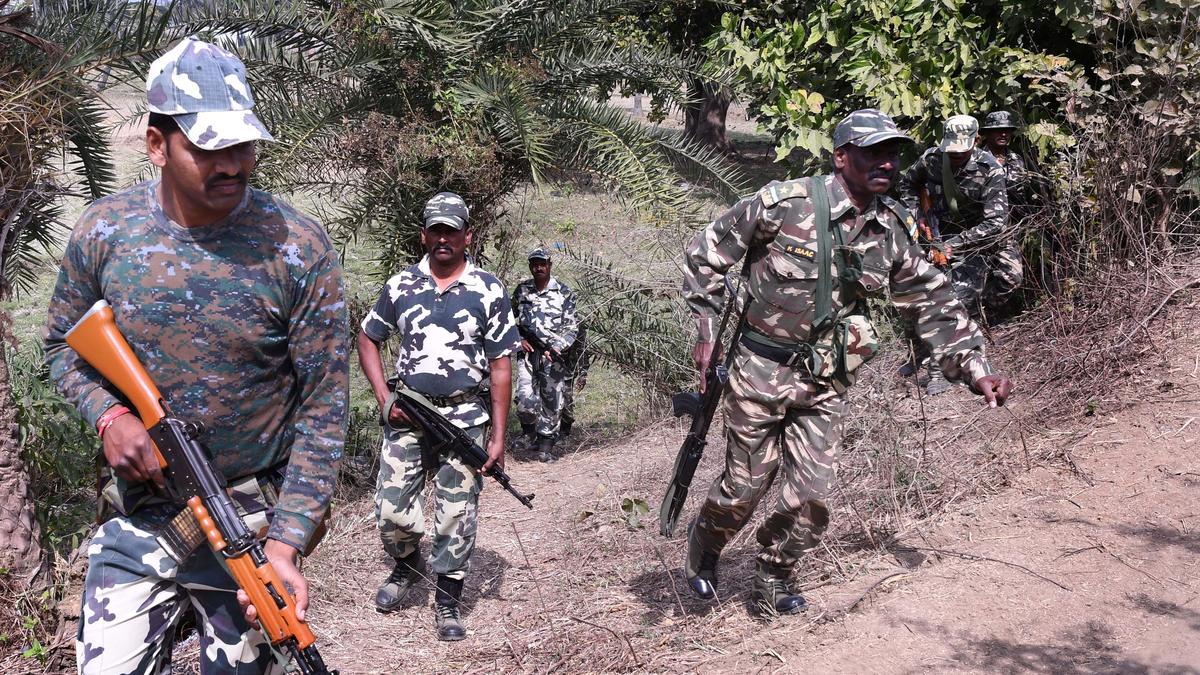
In 2024, the Indian Government launched Operation Kagar with the goal of eradicating Maoist influence by March 2026. Operation Kagar deployed over 100,000 paramilitary forces, including CRPF, CoBRA, and state police, across Chhattisgarh, Jharkhand, and Maharashtra, using drones, AI, and satellite imagery. It killed over 287 cadres of CPI (Maoist) in 2024 and 150 in 2025, established 280 new security camps, and saw 33 surrenders in Sukma. While hailed as a successful strike against the Maoists, it has been noted that Operation Kagar has led to killings of innocent Adivasis, with 400 deaths, including one-third civilians, reported in 15 months. The CPI (Maoist) and activists claim it enables corporate land grabs and militarizes forests, violating tribal rights and fueling resentment.
On April 25, 2025, CPI (Maoist) Central Committee spokesperson Abhay announced readiness for peace talks, demanding security guarantees for a committee of Central and Special Zonal Committee members and a one-month ceasefire to facilitate dialogue. The party issued multiple ceasefire appeals, including three press releases, with orders to its PLGA forces to halt armed actions. Their demands include halting Operation Kagar, withdrawing security forces from tribal areas, and ensuring non-interference in talk zones. The Central government, however, has rejected conditional talks, offering only the 2025 Naxal Surrender Rehabilitation Policy.
On April 22, 2025, in an interview to Bastar Talkies, Rupesh from CPI (Maoist) condemned ongoing Adivasi killings despite ceasefire appeals, and highlighted how the government’s surrender policy is inadequate, and urged a conducive environment for talks to address root causes like mining and displacement. However, despite the proposals of peace, the region has not seen a day of it. Despite a unilateral ceasefire, violence has continued, with 18 Maoists killed in April and over 400 deaths by May 2025, including civilians, as reported by tribal activist Soni Sori, who highlighted bombings killing Adivasis, including children, during the recent Karregutta Hills operation.
On May 21, 2025, Nambala Keshava Rao, the general secretary of the banned Communist Party of India (Maoist), was killed in a high-profile encounter in Chhattisgarh’s Narayanpur district, alongside 26 other Maoists. The encounter of a 68 year old strategist is being lauded as a “landmark achievement,” however, conveniently ignores the context of ceasefire offers and peace talks.
Conclusion
While of course, to an average person consuming mostly the mainstream media, would see Operation Kaagar as a success. It would believe that such operations are justified and necessary and it is these “extremist” forces in the region that are terrorising the people. But reality is often more nuanced than what mainstream offers us. For years these forces have been able to fight the Indian State, a battle where one side is disproportionately weaker in every sense- capital, armoury, resources, command on the narrative and so on. The tribal population too itself has stood in many of these movements, sometimes directly being part of the forces and the other times as an independent body pleading to stop its indiscriminate killings and militarization of the region.
Operations such as these give such a free hand to the State for indiscriminate exploitation. Further, through its control over information, education and media, the narratives are built in such a manner that the people hail these operations instead of ever going into any deeper details as to why there have stood such movements, what are the problems that the tribals have been facing, who benefits from their oppression and so on.
Effectively, these operations are not simply about eradicating an armed rebel force but also to displace the tribal population from these regions where the interests of the capitalist class lies. The extent to which money and efforts are invested in these operations make it clear how the State in a capitalist system serves as a tool for the ruling class to fight against its own people, to clear the lands, to mine them, without paying any heed to rights of the humans and environment.
Nevertheless, one must remember that oppression never stays home, it starts in one region, hollows it and moves to the next. If today we do not raise our concerns about the situation in these regions, the wildfire of oppression is also going to spread and reach us, as it is already reaching us in some and many forms.
Read next

Online Reading and Screening| To Vote Is Not A Choice
Join us as we read, discuss, and collectively build clarity.

Online Reading and Screening| To Vote Is Not A Choice
Join us as we read, discuss, and collectively build clarity.

“Vote Chori”, SIR and Current Outburst
Where is the Movement Headed and What Must We Do?