What is Neoliberalism?
Contents
If we observe the past couple of decades, it is quite easy to come to the conclusion that, globally and locally, jobs have become highly insecure, labour unions have weakened, and access to healthcare, education and housing has become more expensive. At the same time, wealth continues to concentrate in fewer hands while ordinary people are told that success/failure depends entirely upon their individual effort. Collective forms of organisation have declined and hyperindividualism is strongly shaping the way people understand themselves and society. But why is this happening?
The first step in understanding these problems is to understand that these are not isolated issues. They emerged from a new political and economic approach adopted by capitalism during the final decades of the 20th century. They are, however, explained as unfortunate consequences of globalisation. But in reality, they are part of a broader transformation in global capitalism, called neoliberalism. To understand neoliberalism, however, we must first understand the historical development of capitalism itself.
From Liberalism to Neoliberalism
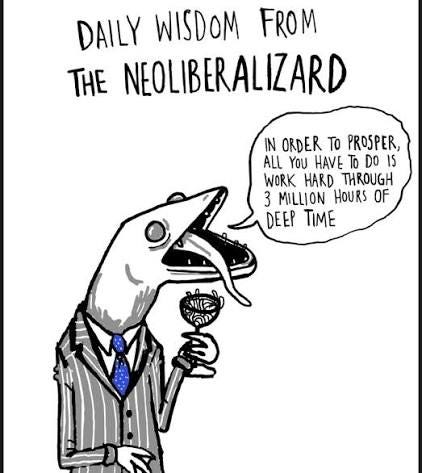
Every mode of production, whether it is feudalism or capitalism, creates its own political and ideological forms that help sustain it. Just as feudalism relied upon hereditary privilege, monarchy, the divine right of kings and so on, capitalism relied upon liberalism, an ideology that was all for private property, individual liberty, equality and freedom (for both the individual and the market). People like Thomas Hobbes and John Locke solidified these principles and provided the philosophical foundations for the emerging bourgeois class. Because, liberal ideas, which were very revolutionary at the time, were required to dismantle feudal restrictions on trade and property, and to bring about the smooth transition to the capitalist modes of production.
As capitalism developed, the intense competition led to the concentration of capital, where bigger companies bought out or crushed smaller ones, leading to the rise of giant monopolies that controlled entire industries. At the same time, banks and financial institutions became increasingly powerful, and both industrial and financial capital began expanding beyond their own countries in search of cheaper labour, raw materials, new markets and higher profits. In ‘Imperialism: The Highest Stage of Capitalism’, Lenin says that this was capitalism at its most developed stage. Instead of simply selling goods abroad, capitalist countries increasingly exported capital itself by investing in and controlling industries, resources and infrastructure in other countries. As a result, competition was no longer just between individual businesses, but also between powerful capitalist states and monopolies competing to dominate markets, resources and territories across the world.
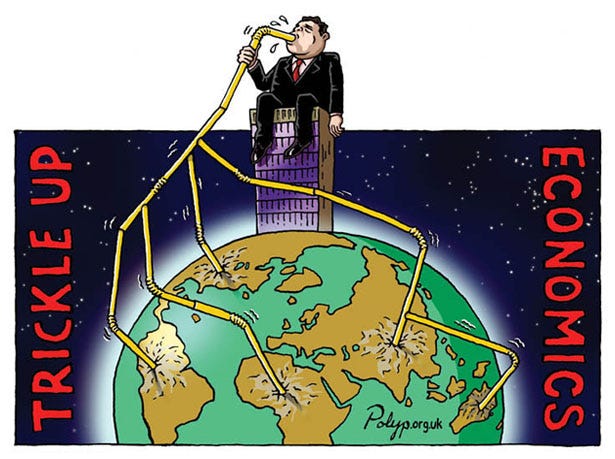
Neoliberalism relates closely to this historical stage of capitalism. It emerged as an ideological and economic strategy through which imperialist capitalism sought to overcome one of its deepest crises and restore the power and profitability of capital. ‘Neo’ in neoliberalism distinguishes it from a simple return to classical liberalism. Liberalism arose during capitalism’s revolutionary phase, helping the bourgeois overthrow the feudal order and establish capitalist society. However, neoliberalism emerged with the purpose of preserving the crumbling imperialist capitalist system. It revived liberal rhetoric about free markets and individual freedom but increasingly centered on the need of productivity and individual success. But what factors led neoliberalism to emerge in the 20th century?
History of Neoliberalism
Between 1950 and the early 1970s, capitalist economies in the West experienced what is often called the “Golden Age of Capitalism”. This was a period of unusually high growth, high profits and rising mass consumption after years of economic depression and devastating wars. Western capitalist countries also focused on public healthcare, education, housing and social welfare. But of course, it did not happen because capitalism is loving and generous. They were political concessions forced upon the capitalist class by an unprecedented international balance of class forces.
For the first time in history, socialism had emerged as a global alternative to capitalism. The Soviet Union defeated Nazi Germany and emerged as a superpower. Socialist governments were successfully established across Eastern Europe, and further the Chinese Revolution of 1949 brought hundreds of millions under a new democratic society, Cuba overthrew a US-backed dictatorship in 1959, anti-colonial and communist movements spread throughout Asia, Africa and Latin America. At the same time, labour unions were strong and workers across the capitalist world organised militant struggles for better wages and conditions.
Faced with the growing appeal of socialist experiments across the world, the capitalist states could no longer rely solely on direct violent repression. They adopted welfare measures to contain class conflicts, and to keep revolutionary movements under the radar. Universal healthcare, public education, subsidised housing, full employment policies and stronger labour protections were therefore not gifts from the capitalist class but concessions that were inevitable due to the strong working-class struggle and the existence of a credible socialist alternative.
This post-war adjustment, represented a temporary compromise between capital and labour. The state intervened extensively in investment, production and welfare, because maintaining social stability had become essential in an era when socialism appeared capable of replacing capitalism altogether. At the same time, a way was needed to continue imperialist exploitation of other countries, without the need of direct colonial control. So, capitalist-imperialist state machines such as the US and Britain built a framework for global ‘economic stability’ through the 1944 Bretton Woods Agreement, which created the IMF and World Bank as institutions to manage international finance and debt.
After the boom, from 1974 to 1982, the capitalist world again experienced two severe recessions alongside a longer-term crisis of profitability. Inflation, collapsing investment and currency instability hit simultaneously, and most importantly, profit rates declined across nearly every major capitalist economy. Along with the emergence of the socialist states, a significant share of this profit decline resulted from the strengthened bargaining position of labour during the post-war decades. Rising wages, expanding welfare systems and powerful trade unions restricted the share of surplus value available to capital.
So, the very concessions that had once protected capitalism against socialism now appeared as obstacles to profit accumulation. Hence, neoliberalism emerged as the capital’s answer to this crisis. The capitalist class wanted to restore its dominance by dismantling the institutions that had strengthened labour. The state also became an active instrument for reconstructing class power through privatisation, deregulation, attacks on organised labour, financial liberalisation and the global expansion of capital. In other words, neoliberal ideology and neoliberal policies represented the reorganisation of the state and society in the interests of monopoly and finance capital during the imperialist stage of capitalism.
According to David Harvey, Neoliberalism proposes that individuals, and by extension society, function best when markets are given greater freedom and barriers to capital accumulation are removed. It calls for an institutional framework characterised by “strong private property rights, free markets and free trade”, along with state deregulation. If a market does not exist, it must be created, and all human actions must be brought into the domain of the market.
John O’Connor in his ‘Marxism and the Three Movements of Neoliberalism’ identifies three movements that made neoliberalism possible:
Movement One: Recasting the Balance of Class Forces
The first major neoliberal strategy was a direct attack on the power workers had accumulated during the post-war period, and this was enabled by the reconstruction of mass unemployment. During the so-called ‘Golden Age’, full employment and welfare protections had weakened the disciplinary threat of joblessness, where workers had some sort of bargaining power. Neoliberal policies reversed this deliberately, abandoning full employment as a policy goal in two waves, in the early 1980s and early 1990s, in order to rebuild what Marx called the “reserve army of labour”. Unemployment rose from 30 million people across the OECD countries in 1983 to 35 million in 1993.
The previous system of Keynesian fiscal management, where “government intervened through public policies to achieve full employment and price stability”, gave way to monetarism, which prioritised crushing inflation even at the cost of mass unemployment. Conservative parties advocating a free-market system won elections across OECD capitalist countries such as the US, UK, France and Canada, and began implementing this agenda.
The second mechanism was what the political theorist Leo Panitch calls the “New Imperialism”, a renewed assertion of American military and ideological power. This had both a territorial dimension, with intensified Cold War confrontation and military interventions in Lebanon, Libya, Bolivia etc., to suppress revolutionary movements, and a non-territorial dimension, with the global promotion of free-market capitalism through what became known as the ‘Washington Consensus’. Acting through the IMF and World Bank, this consensus pressured nations worldwide to open their economies to global investment and cut social spending.
The third mechanism was industrial downsizing, the restructuring of production methods that reduced manufacturing’s share of total OECD employment from 28.7% in 1970 to 21.8% in 1990, eliminating large numbers of low-skill manufacturing jobs in the name of efficiency.
The fourth was the systematic liberalisation of capital flows. Between 1991 and 1999 alone, there were over a thousand changes to laws governing foreign investment worldwide, the vast majority of which reduced restrictions on capital. Capital became freer to move across borders in search of higher profits; and if workers demanded better wages or governments attempted to increase taxes on corporations, businesses could threaten to move their investments elsewhere. The result was that governments became more concerned with keeping investors satisfied than responding to the demands of workers. The recent example can be seen in Kerala, with the ‘Invest Kerala Global Summit’ initiated by the CPI(M)-led government to posit the state as an “investor-friendly” place that does not disrupt the international and national capital flow. Thus, the possibility of capital flight became a powerful weapon against unions and labour movements.
Ideologically too, American military and economic dominance, especially following the collapse of the Soviet Union, foreclosed the possibility that an alternative to capitalism could even exist.
Movement Two: Remaking the Mode of Production
The second neoliberal strategy was a transformation in how capitalist economies produce, appropriate and reproduce value.
Under the post-war system, large-scale Fordist production methods were followed, with factories relying on relatively stable workforces and fixed production systems. Under neoliberalism, this became “lean production”, where companies sought to reduce costs by moving different stages of production across different regions and countries. Instead of maintaining a stable workforce, they depended upon temporary workers, contractors and precarious forms of employment. This “lean production” eliminated any worker behaviour that did not directly generate value while distributing the production process across multiple firms and countries through subcontracting, making it far harder for workers to identify a single employer to organise against.
In terms of how profit is appropriated, the major shift was financialisation. As industrial investment became less reliably profitable, capital increasingly sought returns through speculative financial activity such as stock markets, bonds and debt rather than production. By 1995, international currency transactions reached roughly 1.2 trillion dollars a day and only about 5% of that volume was connected to actual trade or long-term investment. The remaining 95% was pure speculation. The growing importance of finance also transformed everyday life, where housing, education and consumption became tied to debt, and economic life became organised around credit, loans and financial markets.
Since capitalism depended on people buying goods, with reduced wages and rising unemployment, many could no longer afford to consume. And the capitalists’ solution to increase the consumption was the massive expansion of consumer credit. This materialised in the form of credit cards and easier access to loans etc., and allowed people to keep spending even when their incomes could not support it. So, debt became the only way that allowed the working class to survive.
Private sector debt as a share of GDP rose sharply across the G7 countries during this period. In Germany, private sector debt increased from 87% of GDP in 1985 to 100% in 1995, while in Japan it rose from 99% to 124%.
Of course, this debt-driven ‘brilliant’ model, just like every other capitalist endeavour, violently collapsed and resulted in the global financial crisis of 2008.
Movement Three: Reorganising Capital Accumulation
“During state-led monopoly capitalism, the circuit of capital was linked to one particular state, with investment, production, and consumption embedded in the institutions of a domestic economy. With neoliberalism, the circuit of capital is integrated into the world market in differing degrees.”
Instead of investment, production and sales taking place mainly within individual countries, businesses operated across borders, sourcing labour, materials and markets wherever profits were highest. As a result, the world economy became far more interconnected and dependent on global trade and investment.
This created a new kind of competition, not simply between firms, but between nation-states themselves, each restructuring its domestic institutions to attract mobile capital. Investment subsidisation shifted from nationalisation towards privatisation and tax incentives designed to attract foreign capital. Financial systems were deregulated and central banks were granted greater independence from elected governments specifically to prioritise fighting inflation over maintaining employment, a change implemented in Belgium, France, Germany, Italy, Japan, the Netherlands, Spain, Sweden and the UK during this period. Employment relations were restructured through the deliberate decentralisation and weakening of collective bargaining, with union density across the OECD falling from 46% in 1980 to 40% by the mid-1990s. Taxation systems were also restructured to shift the burden away from capital and onto labour, with the average top marginal income tax rate across OECD nations falling by over 12% points between 1986 and 1997, while consumption taxes increased.
So, in this manner, neoliberalism helped reconstruct the balance of power between capital and labour in capital’s favour.
Neoliberalism-Neoimperialism Nexus
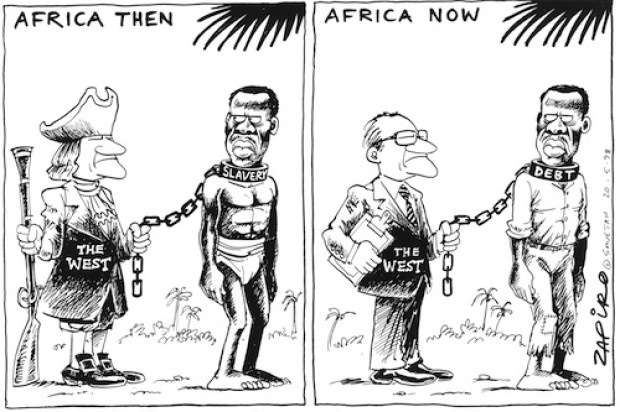
Of course, neoliberalism, from its inception, was an international project. And its global imposition relied on a renewed and reorganised form of imperialism. As Michael Parenti argues in ‘Against Empire’, imperialism did not disappear after decolonisation. It merely changed its form. This move, away from direct territorial empire resulted in neoimperialism. Formal political independence was granted to erstwhile colonised nations, but economic control strongly remained in the hands of Western capitalist countries through debt, trade agreements, financial institutions and access to resources. Basically, the “flag stays home, while the dollar goes everywhere.”
This system relied on the ‘comprador class’, composed of local political and economic elites who opened their countries to foreign capital in exchange for wealth, power and external support. This class of local capitalists, military officers and political leaders became the domestic enforcers of neoliberal restructuring, even while sometimes publicly denouncing imperialism in their rhetoric.
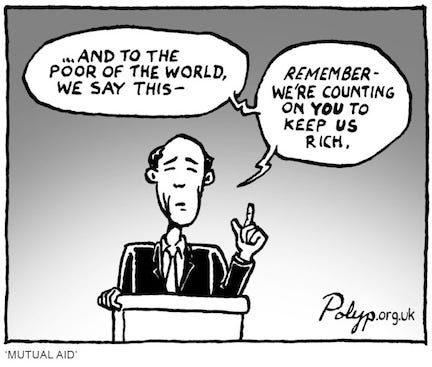
Debt also became an important mechanism of control. By the 1990s, Third World debt had reached nearly $2 trillion. Countries trapped in debt were forced to accept IMF and World Bank terms and conditions in exchange for new loans, including wage freezes, cuts to public services, privatisation and tax concessions for foreign investors. In some cases, such as Paraguay, debt servicing consumed up to 80% of export earnings. The result was a continuous transfer of wealth from the ‘Global South’ to international finance capital.
This restructuring is also not non-violent. When the ‘Global South’ governments attempted to pursue alternative socialist paths of development, they frequently faced economic sanctions, political destabilisation or direct intervention. The toppling of the socialist Salvador Allende in Chile, years-long sanctions on Cuba and violent attacks on Iraq and Libya are among the most prominent examples.
As neoliberalism expanded, this imperialist coercion became less visible. Rather than large-scale military occupations, imperial power operated through proxy wars, debt dependency and international institutions. Organisations such as the World Trade Organisation (WTO) represented the culmination of this process. Rules that once had to be imposed through debt pressure or military intervention became embedded within global trade agreements themselves.
Neoliberalism in India
In the Indian context, the reforms commonly known as LPG (Liberalisation, Privatisation and Globalisation), introduced in 1991, are identified as the moment when the state was incorporated into global neoliberalism. Then Prime Minister P. V. Narasimha Rao and Finance Minister Manmohan Singh rolled them out as the solution to the balance-of-payments crisis. Decades of state-controlled economic policies, increased public spending, and reliance on short-term foreign loans were cited as the reason for this crisis. A sizable emergency loan was taken from the IMF, to mitigate it.
Import and export tariffs were lowered along with interest rates, and the Indian rupee was floated and allowed to be market-determined, exposing domestic industries and agriculture to global market volatility. The state also deregulated heavily controlled sectors such as telecommunications, mining and banking, while Foreign Direct Investment (FDI), now subject to far fewer restrictions, became central to the financialisation of the economy.
The reforms also weakened labour protections and accelerated the replacement of permanent employment with contractual and casual labour across sectors such as manufacturing, mining, construction, service sector and telecommunications. Sectors such as commerce, hotel, transportation, money exchange, insurance, real estate, social and personal service are collectively known as the service sector. Today, this sector is majorly made up of the delivery service workers for various digital platforms in urban centers. Workers performed the same high-intensity labour for lower wages, without benefits and with little job security. The transition depended upon maintaining cheap and flexible labour to attract foreign investment and sustain competitiveness within global markets.
Trade liberalisation exposed Indian farmers to global competition and collapsing commodity prices, particularly in crops such as cotton and coffee. At the same time, state policy encouraged a shift from traditional food crops towards export-oriented cash crops dependent on expensive seeds, pesticides, fertilisers and water-intensive cultivation. Crop failures, fluctuating global prices and rising debt pushed many farmers into financial ruin, contributing to the widespread agrarian distress. About 2,50,000 farmers have been recorded to have committed suicide up until the year 2012. The National Crime Records Bureau states that roughly 11,000 farmer suicides continue to be reported annually.
The political climate of the period that followed the reforms resulted in unstable governments, which triggered religious riots and the rapid ghettoisation of muslims. This instability and consequent violence is not a coincidence but it is a direct result of the implementation of neoliberal policies in India. The 1996 general elections produced a fractured mandate leading to 3 different governments and Prime Ministers in less than 2 years. Coalitions, which had become the norm, were weak due to infighting. Election campaigning and party propaganda saw a heavy rise in Hindutva identity politics for public mandate and repeated elections in a few years intensified tensions.
How Neoliberalism Affected/Affects the Working Class
Neoliberalism transformed the market into a model for organising all aspects of life, not merely the economy. Workers came to be treated like commodities, while protections such as unions, welfare and job security were weakened in the name of the globalisation project. Public services such as healthcare, education and housing became privatised, turning citizens into consumers who could access these services only if they could afford them. Public goods were either privatised or commercialised.
To put things in perspective, in the United States, CEOs earned roughly 30 times more than the average worker in 1970. By 2000, they were earning nearly 500 times more. During the same period, the top 0.1% of the US population tripled its share of national income between 1978 and 1999 during the neoliberal turn.
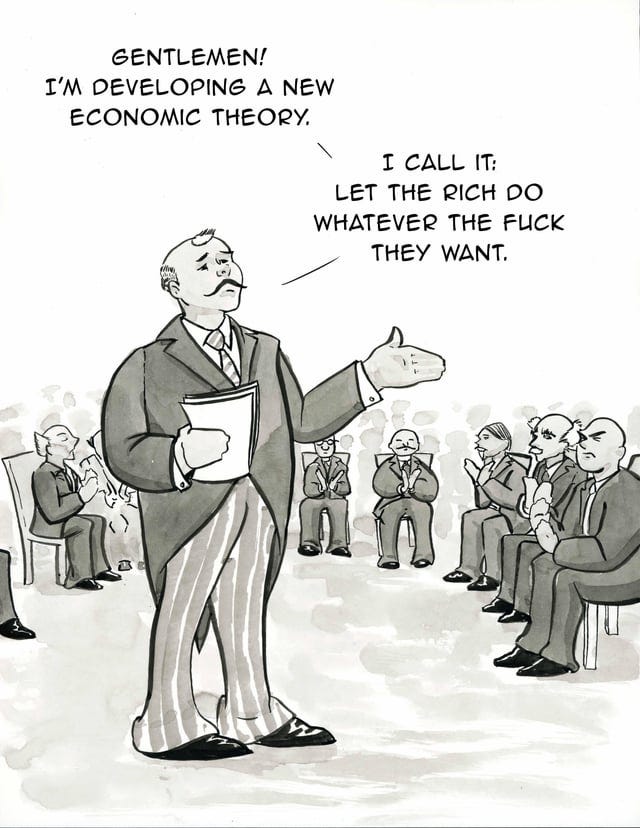
According to Masao Miyoshi, neoliberalism also reshapes how people think by making competition seem natural, celebrating winners as superior and blaming those who struggle as personally responsible for their conditions. As inequality grows and collective institutions weaken, many people turn elsewhere for belonging and support, often through religion or other social groups, not realising that capitalism is the root cause.
David Harvey documents how the proliferation of evangelical Christianity in America, the explosion of religious sects in rural China after economic liberalisation and the growth of gangs and informal economies across Latin America were all consequences of neoliberal restructuring.
Neoliberalism also infiltrated feminist movements by shifting attention from structural inequality to individual representation. For instance, it is a given that “the top 10 richest men in the world own more than the combined wealth of the bottom 3.1 billion people”. Yet, within a neoliberal feminist framework, the concern becomes placing more women among the billionaire class rather than challenging a system where wealth and power remain concentrated through the exploitation of workers, including women.
This is also why corporations are often eager to promote identity politics while sidelining class politics. Unlike race and gender, class consciousness differs because the goal of class struggle is ultimately to remove class divisions altogether. People do not seek to erase their racial or gender identities, but class politics aims to abolish inequalities rooted in economic divisions. Because of this, discussions are frequently diverted towards race and gender while class receives almost no attention. The ruling class benefits from this silence, which is why corporations often support token diversity initiatives while constantly exploiting the workers. Rainbow capitalism during the pride month is also another example.
Conclusion
Capitalism, neoliberalism and imperialism survive not simply through markets, debt or imperial power, but because they convince people that there is no alternative. Breaking that ‘common sense’ is therefore the first task of any revolutionary movement. By studying capitalism, imperialism and class struggle, and by building collective political consciousness among workers, students and the oppressed masses, we seek to transform dissent and frustration into organisation, organisation into resistance, and resistance into the struggle for a new socialist world. Every act of political education is therefore a step towards transforming isolated individuals into a force capable of changing society.
Read next
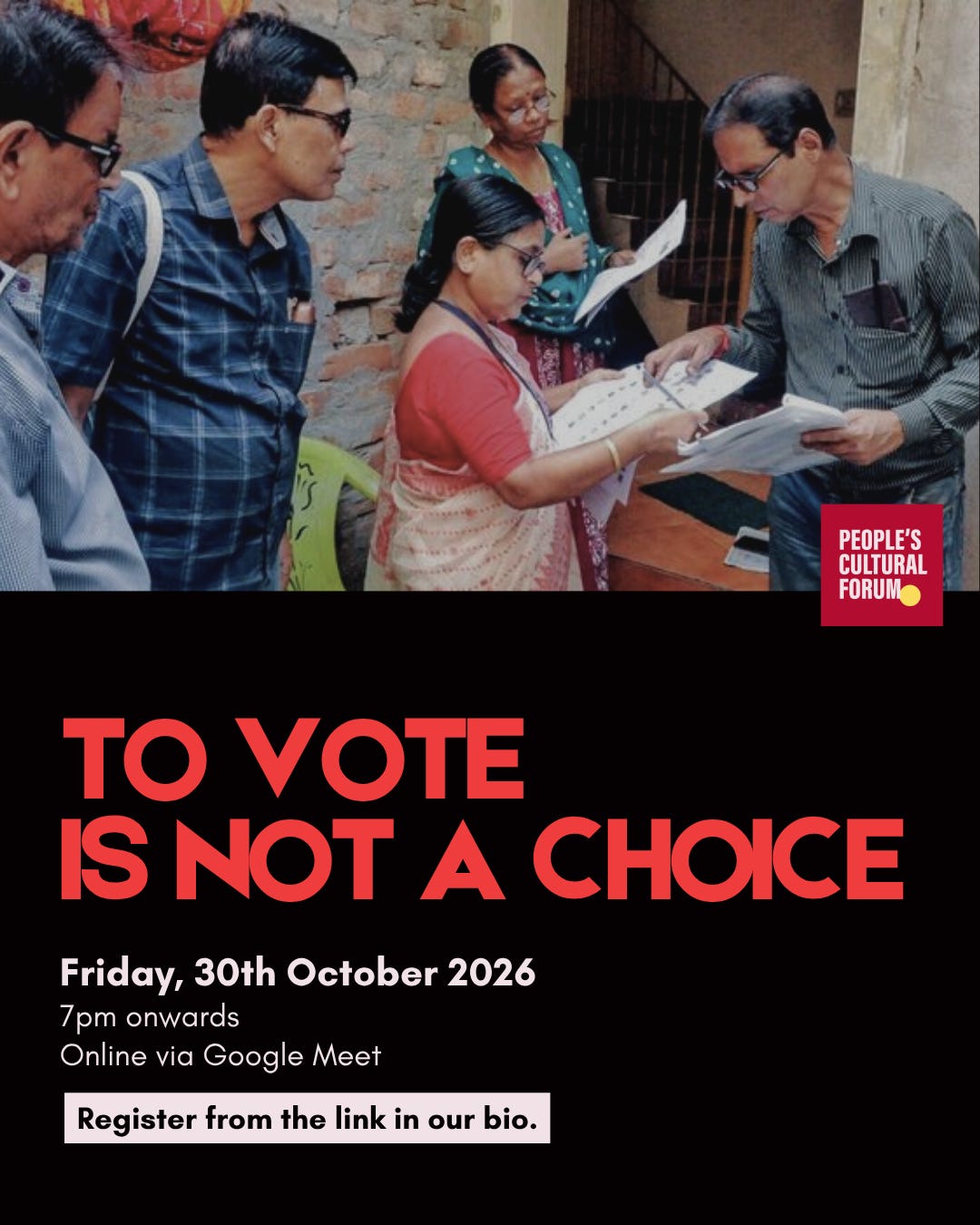
Online Reading and Screening| To Vote Is Not A Choice
Join us as we read, discuss, and collectively build clarity.

Online Reading and Screening| To Vote Is Not A Choice
Join us as we read, discuss, and collectively build clarity.
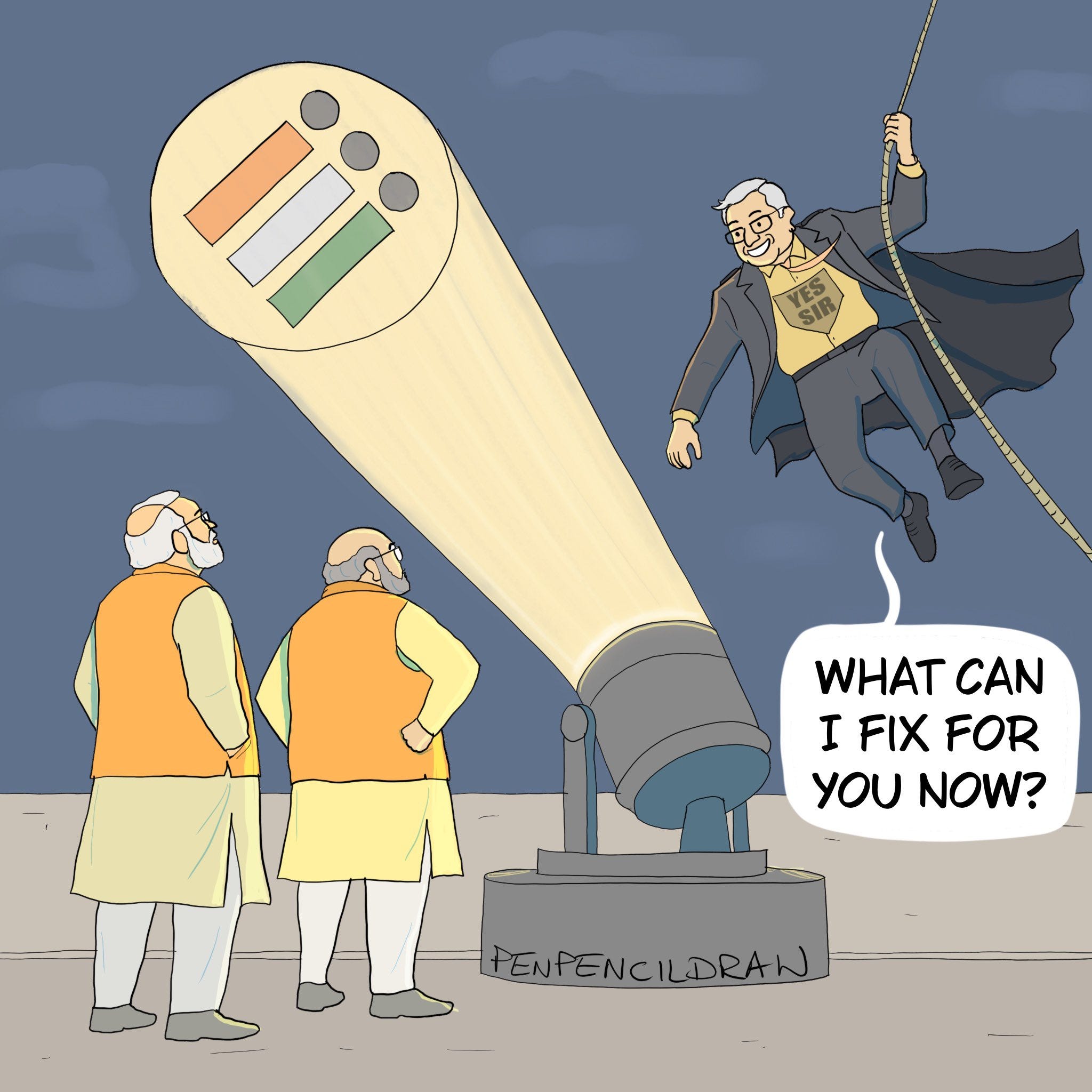
“Vote Chori”, SIR and Current Outburst
Where is the Movement Headed and What Must We Do?