Understanding The State
Of the ruling class, by the ruling class, for the ruling class
Contents
What is a state? The word comes up in all our discussions about any social or political matter. Is it a singular entity or a being? Is it the government? Or the various agencies of government? Is it a political party? The politicians? The question of state is central to socio-political understanding of society. The state lives and breathes among us in our everyday lives. It is not just through explicit individuals or institutions that the state interacts with us but also through the implicit beliefs, values, and norms that we collectively uphold as a society.
Vladimir Lenin said that the “doctrine of the state serves to justify social privilege, the existence of exploitation, the existence of capitalism”. Thus, it becomes crucial to scientifically understand the theory and doctrine of state: what it is, how it came to be, its evolution over time, and how it operates in various forms and ways.
In a fundamental sense, the state exists to enforce a class division in society. State is a historical system through which one class of people decides to set apart and exert control over other classes using means of coercion and violence. As social hierarchies got complex and rigid over time, leading to the concentration of power in society, the tools and mechanisms of the state evolved to normalise these hierarchies and their consequent exploitation. As long as there exists a division of society, and conflicts between classes, the state will exist as a system of control to maintain the interests of the ruling class.
Historical Evolution of State
All stages of development of human societies are essentially characterised by their productive forces and relations of production. Productive forces of society consist of the various instruments of production across history that have been used by people to produce material value using the experience and expertise they possess. Thus, the various epochs of human development are distinguished not by what was produced but rather by how material wealth was produced. From primitive stone tools to modern day factories, the productive forces reflect the relationship of people to the objects and forces of nature used for the production of material wealth.
The productive forces also come to determine production relations, i.e., social connections and relations formed between people in the process of the production of material wealth. Who owns the means of production (land, raw materials, instruments of production, etc.); what is the position of the various social groups in the production process and their mutual relationship; and how is the material wealth of this production process distributed among people.
The productive forces and and the production relations together constitute a society’s mode of production. Each mode of production forms the economic base of society, the real foundation, from which rises the legal, social, and political structures which govern the forms of social consciousness of that epoch.
In primitive societies, the productive forces were exceedingly low, and the implements of production were extremely primitive, requiring a more collective form of labour. Means of production were collectively owned by small communities and their subsequent material wealth was equally distributed. This meant that there were no classes as such. Power was decentralised in these primitive societies. Order was maintained through customs and traditions, general ties to the community itself, discipline, and authority of the clan elders including men and women. All members of the society in turn exercised practically all its functions.
“The state is a product and a manifestation of the irreconcilability of class antagonisms. The state arises where, when and insofar as class antagonism objectively cannot be reconciled. And, conversely, the existence of the state proves that the class antagonisms are irreconcilable.”
– Vladimir Lenin, The State and Revolution
The gradual improvement of instruments of production led to production of more surpluses. With the advent of cattle-breeding, large scale agriculture, and systemic farming, a shift began from communal ownership to private ownership. The widespread production and trade of surpluses created a demand for additional labour, leading to the creation of the earliest class division – slaves and slave owners. Slavery became the dominant mode of production. The class of slave owners owned the means of production and slaves were considered a part of it. Slavery emerged as the earliest form of exploitation of humans by fellow humans for surplus production. It was during this epoch that the state first took shape as a mechanism of oppression and exploitation due to the division of society into irreconcilably hostile classes.
A small section of society took over the exercise of functions that were once collectively performed. Kinship was replaced with law, consensus with force, and communal governance with earliest forms of monarchy. Earliest examples of the state’s emergence and functioning can be found in ancient slave owning societies of Rome and Greece. The state developed as a special apparatus that held its power over and above the society to enforce class divisions using violence and subjugation. Territorial control, standing armies, police, prisons, tax authorities, as arms of the state began to emerge.
With increasing development of productive forces, feudalism emerged as the new form of class exploitation for surplus production. It emerged from the disintegration of slave owning society and the break up of village communities. Means of production were now in the hands of feudal lords who then distributed them among their serfs. The exploitation of the peasant serf was the basis of production relations of feudal society. Unlike slaves, peasants had their own lands to work on but still had to work extra to generate surplus for the feudal lords and pay him what can now be seen as an earliest form of rent.
In order to maintain and strengthen their power over the peasants, the landowning class of feudal lords had to rely on the organs of state. Military leaders began to concentrate power, eventually becoming kings-monarchical rulers. Thus emerged the monarchical state with the special power of force and subjection to maintain class antagonisms in this epoch. The peasant had no political right and had to work under the feudal lord for safety and protection in return.
Towards the end of the feudal age, the increasing development of trade and commodity exchange, invention of minted money, and commodification of mode of production ushered in the epoch of capitalism. Now, not only the products of labour, but labour power too became a commodity. Economic power shifted from the landowning class of feudal lords to the new class of capitalists who had consolidated increasing land and wealth during the feudal times.
Older class divisions disappeared and all were regarded equal before the law – but the law protected the private property of the ruling class. This was the period when many of the institutions, such as judiciary, parliament, banking system, that form the part of modern states began to take shape.
Over time, the monetary needs of the modern state became much greater and were being fulfilled by the capitalists who therefore demanded complete service of the state in return. This class nature of the modern bourgeois state can be easily discerned. For example, in most Western countries where parliamentarism was instituted, only the landowning class had the right to vote and represent a population. Even after universal suffrage was brought in under modern democracies, a closer look at how parliaments function in these countries in terms of who the laws are made for and who benefits from such laws – reveals the close bond between the ruling class and the state.
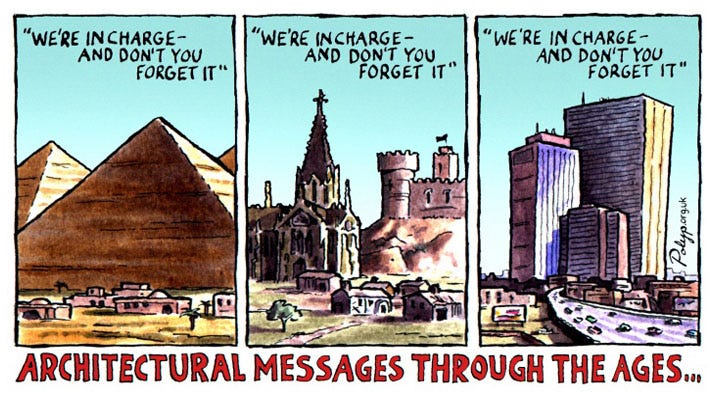
The illusion of liberty, equality, and freedom prevailed in modern societies. Unlike the feudal era, anybody now could own land. Everybody had to go through the same bureaucratic systems. Everyone was equal in the eyes of the law and would be held equally accountable for breaking the laws. And yet countless examples from everyday lives clearly reveal the contradictions between the inherent bourgeois nature of the state and its constant attempt to position itself as a state representing all.
“The methods of violence changed, but whenever there was a state there existed in every society a group of persons who ruled, who commanded, who dominated and who in order to maintain their power possessed an apparatus of physical coercion, an apparatus of violence, with those weapons which corresponded to the technical level of the given epoch.”
– Vladimir Lenin
Modern Nation-State
“The bourgeoisie keeps more and more doing away with the scattered state of the population, of the means of production, and of property. It has agglomerated population, centralised the means of production, and has concentrated property in a few hands. The necessary consequence of this was political centralisation. Independent, or but loosely connected provinces, with separate interests, laws, governments, and systems of taxation, became lumped together into one nation, with one government, one code of laws, one national class-interest, one frontier, and one customs-tariff.”
– Karl Marx and Frederick Engels, Manifesto of the Communist Party
With the overthrow of feudalism, and the rise of capitalism and nationalism during the 19th century, the state being granted legitimacy by divine right changed to the state gaining legitimacy by representing a population with a shared ethnic, linguistic, or historic identity. This led to the rise of modern nation states that developed more complex mechanisms to maintain their legitimacy and continue to uphold class divisions and exploitation in society. These institutions and systems indoctrinated a sense of loyalty and subjugation within the subjects of the state who accepted their own exploitation by the ruling class.
One example can be that of Israel. It claims to represent Jewish people using the holocaust as a justification for its existence. When the Israeli state’s borders and legitimacy is threatened because it is a state built on stolen land it reacts in a genocidal manner. It uses media propaganda to victimise themselves and demonise the Palestinian people. The reason the Israeli state is allowed to do what it wants is because it creates surplus value for US and global corporations.
There also exists countries like India, whose people are diverse and have multiple nations within it. To gain legitimacy, the Indian state had to create its identity around its constitution and political framework. Being an Indian is more of a civic identity than a universal one. In a state like this, there are groups of people who challenge the capabilities of the legal and political framework of the state to represent them. Perhaps the clearest example can be found in Kashmir. When Kashmir became part of India, its people did not trust the Indian state to represent them. People of Kashmir have repeatedly questioned the Indian state’s rule over it. The Indian state has always responded to it with force and violence, using every state apparatus to legitimise its rule: through military occupation, abolishing article 370, demonising people of Kashmir through media, and much more.
To understand how the modern Nation-State controls and legitimizes its rule over a population we need to understand the various mechanisms used by the state. Every component of the state exists to increase surplus value for the ruling class. Some of these components include:
• Border: A territory that demarcates an area for the state’s jurisdiction where its authority is absolute.
• Population: A permanent population that creates surplus value within the state borders.
• Central Government: A centralised governing body that creates laws and interacts with other states to create internal and external order.
• Sovereignty: The internal laws, systems, and processes that are independent of foreign state interference.
• Recognition: States recognise each other on the world stage to get into commerce with each other.
• Monopoly of Violence: Only the state has the right to enact violence through apparatus like the police and military.
• Nation: Many nations can exist inside a state. Nation is a cultural and social group of people bound together by shared language, history, and ethnicity. The state chooses to recognise in its laws the nation of people who hold the most public power and appease those people to show that it represents them as a whole.
State apparatus
The state exercises power through the state apparatus, a tool of coercion. These apparatus by means of violence and propaganda convince the working class to agree to their own exploitation. It is hardly noticed because the state is seen as an organisation above society, which makes the coercion invisible and unbiased. State apparatus exist in two forms: ideological and repressive.
Ideological state apparatuses (ISA)
As mentioned earlier, the economic mode of production in a society forms the base upon which the social, legal, political superstructures emerge that shape the social consciousness of that society. These superstructures are controlled by the state to maintain class divisions. This is where the ideological wing of the state comes in. It operates to convince the people of the state’s legitimacy.
Louis Althusser, in his attempt to build on the existing Marxist theory of state proposed the concept of ISA to emphasise on the role of ideology in state apparatus. While some state apparatus, like police, function in the public domain, ideological apparatuses function to maintain the power of the ruling class in the private domain. The principle of repression remains the same, either through physical force or ideological domination.
Apparatuses like education, media, religious institutions, family, legal and political system, dominant cultures, create obedient workers out of the population. They inculcate compliance, discipline, and subjugation by constantly normalising the ideology of oppression by the ruling class as status quo.
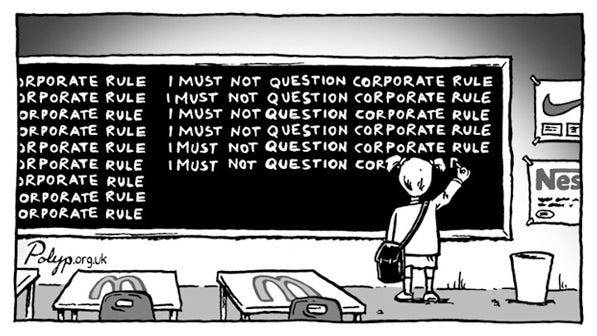
The indoctrination of ruling ideology begins the moment a child is born in this society. Heteronormative gender roles are imposed at the get go that end up dictating the confinements of how children will be raised.
Family and Education
ISA dominate the earlier stages of building obedience, subjugation, and conformity. Allegiance to the family, respecting the authority of the elders, being faithful to the family name, and always choosing family relations over other personal relations.
Later, education institutes become places of respecting the authority of teachers. Institutional education devoid of any criticality further reinforces obedience and following the rules. Textbooks lack historicity and politics, never letting students build the ability to question. Ruling ideology permeates in our daily lives through several normalising narratives. In India, meritocracy is one such prominent one. By masking the ideological nature of institutions under the guise of neutrality, we’re made to believe that if we work hard enough, perform well enough, we will be rewarded for it. The same indoctrination follows in workforces where the manager/boss becomes a figure of authority. The narrative of meritocracy continues here as well: hard work will be rewarded with promotion and upward movement.
All throughout, other ISA like media and culture through books, films, music, advertising, reinforce the ideology of obedience, subjugation, compliance, and discipline. The recent rise of hustle culture presents a sharp example of this where utter surrender of your labour power for the ruling class’s profit is being highly rewarded. Normalisation of the same can be found in religion ISA as well, which has historically normalised exploitative ideology by crafting a certain morality that centres on modesty and submissiveness. Similarly, the legal and political system operates to normalise the ruling ideology through the concepts of law is for everyone, we are all equal before the law, and we must all be law abiding citizens.
As we move through these institutions that impose ruling class ideology upon us, we no longer remain autonomous individuals with free will, instead we become subjects of the state. Althusser argued that all ISA contribute to the same result: the reproduction of the relations of production, i.e. of capitalist relations of exploitation. As subjects of ruling class ideology, we are trained with particular know-hows to survive through this system by agreeing to be exploited.
The normalisation of ruling class ideology is such that we fail to see how various apparatuses ultimately serve the ruling class. Institutional education remains inaccessible to a vast majority of classes including Dalits, Adivasis, and many other marginalised/backward communities. This inaccessibility is maintained through the geographical location, medium of education, language, entrance exams, and so on. Parliament is dominated by the bourgeois class who ultimately makes laws that allow for the exploitation of the working class by the ruling class.
“In the ordinary use of the term, subject in fact means: (1) a free subjectivity, a centre of initiatives, author of and responsible for its actions; (2) a subjected being, who submits to a higher authority, and is therefore stripped of all freedom except that of freely accepting his submission. This last note gives us the meaning of this ambiguity, which is merely a reflection of the effect which produces it: the individual is interpellated as a (free) subject in order that he shall submit freely to the commandments of the Subject, i.e. in order that he shall (freely) accept his subjection, i.e. in order that he shall make the gestures and actions of his subjection ‘all by himself’. There are no subjects except by and for their subjection.”
– Louis Althusser
Repressive state apparatuses (RSA)
The oldest and most continuous apparatus of the state has been the one that uses coercion and violence. Repressive state apparatuses include the military, administration, police force, prisons, and courts.
Historically constituted to maintain public order, the police is one of the earliest modes of enforcing the will of the state. During slavery, a special class of people equipped with force were formed to squash any slave uprisings and return runaway slaves to their owners. In the feudal era, constables were controlled by the feudal lords. Similarly courts and judicial systems have always been controlled and governed by the ruling class. The prison system came into existence and developed over time as a means for disciplining and punishing those who challenged the ruling class.
RSA became the most visible manifestation of the state serving the ruling class. Any small or major challenge to the ruling class by the oppressed classes is met with severe police suppression in the name of maintaining order. The recent Jantar Mantar and Jharkhand police brutality is only the latest instance of this. The Delhi High Court on the next day refused to urgently hear a PIL on the excessive force by Delhi Police saying “Don’t drag the court into all of this” revealing yet again that it is an extension of the state.
In the past decade India has seen an increasing usage for police force to protect the interests of the ruling class. The use of Unlawful Activities (Prevention) Act and National Security Act are at an all time high. UAPA came into existence during the Congress era demonstrating the universal function of the state regardless of its face. Trials never begin, pre-trials detentions are extended for years, and bails are repeatedly denied by the court. Workers, Students, Adivasis, Dalits, Farmers, anyone who challenges or even questions the ruling class immediately faces the might of the state.
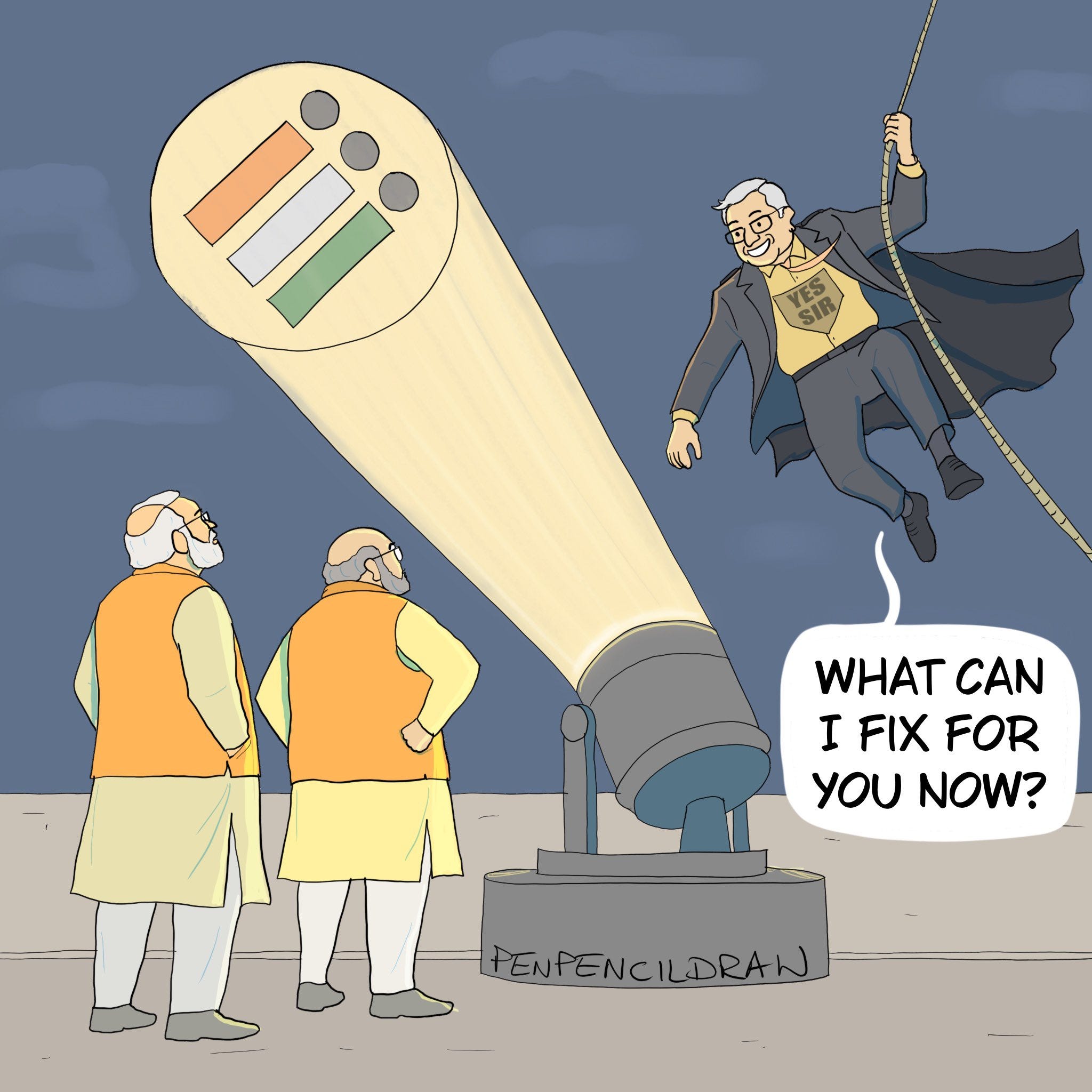
Parliament becomes the gathering place for all bourgeois classes who come together to create and enact laws that ultimately benefit the ruling class. Judicial proceedings and judgements back such actions. The recent country wide unprecedented degree of disenfranchisement under the Special Intensive Revision (SIR) is one example that reveals this. All agencies of the state ultimately function with the goal: to maintain class divisions and class oppression.
From A Liberal To A Neoliberal Conception of the State
Liberalism was a force that moulded Western governance, emerging in line with capitalism, post the breakdown of feudalism in Europe. It cultivated the administrative structures around which capitalism flourishes, especially through its imagination of the role of the state.
Each individual, according to liberalism, was inherently equal, hence worthy of equal respect by the State. One such example of birth right equality can be the concept of ‘one person, one vote.’ All individuals existing in the State, regardless of their economic or social affluence, hold the same amount of voting power.
The role of the State, then, becomes that of a neutral arbiter. It must simply create conditions in which equality is ensured, resulting in a harmonious fulfilment of competing interests. To contextualise, the existence of courts to settle disputes, the provision of travel infrastructure such as railways and roads - all form a part of the conditions requisite for equality.
Here, the State’s duty ends at providing aforementioned conditions. Each citizen is entitled to a ‘negative freedom’ – to an absence of external constraints, leaving one to live in the manner they like. This pattern also echoes in the policy of economic liberalism, which advocated for the free-market. The market was assumed to be a self-regulating machine, operating according to a set of impersonal forces – the market forces of supply and demand – that naturally inclined towards economic well-being. The State’s interference was not needed, because the market was a self-correcting entity managed by ‘an invisible hand.’
But when a demand for wider State intervention emerges – which did with the turn of the twentieth century – the State’s role does not stop at an equal distribution of pre-existing rights and entitlements, but extends to that of goods and opportunities to ensure the socio-economic welfare of its citizens. For instance, the provisioning of public education along with reservation policies to ensure inclusion of marginalised communities. This echoes a step towards ‘positive freedom’ – enabling one to live as they would prefer through the State diminishing socio-economic disadvantages. This idea took root after the trust in the invisible hand collapsed owing to the Great Depression and the Wall Street Crash of 1929. Most Western governments started adopting policies to increase aggregate demand, leading to further state intervention. Here, the State’s role expanded to include a broader range of economic and social responsibilities.
However, ever since the 1980s, renewed enthusiasm for the classical liberal economy has arisen, particularly through a free-market revolution which called for a withdrawal of government regulations and subsidies – this was the neoliberal shift, most prominent in the US and the UK. This shift was institutionalised in most international trade and finance bodies, which enforce a neo-liberal agenda onto developing countries today leading to the emergence of a transnational elite.
The most apparent example of this would be the Structural Readjustment Programs offered by the International Monetary Fund and the World Bank to the countries that approach them during their economic crises. These impose certain economic reforms on the borrowing country as pre-requisites for obtaining loans, which usually include the deregulation of state-owned industries along with their privatisation, devaluation of their domestic currency, opening up the domestic market etc. This is what happened to India during the 1991 liberalisation. Unsurprisingly, the urban elite absorbed its benefits, who in turn formed a part of the global elite, and the Indian economy shifted to meet their interests, as can be gleaned from the meteoric rise of multinational companies in India’s corporate sector, to name an example.
Moreover, the international community now imposes the idea of a ‘democratic State’ – which is the only kind of acceptable political organisation in the internal structure of States. It requires that farcically neutral periodic elections be held for membership in the international community, while ignoring underlying inequities like illiteracy that might affect the outcome. In effect, these superficial democracies are encouraged to bolster transnational capital, since elected representatives are coerced to follow social and economic policies - which are largely neoliberal - legitimised on the international level. The State hence becomes a mechanism through which neoliberalism infiltrates into the domestic sphere, posing deleterious effects for the people it is subject to.
Conclusion
The state came into existence and developed historically to maintain class divisions in society and facilitate the power of the ruling class over the oppressed class through force and exploitation. On one hand, the state and its apparatus function to repress any force that challenges and resists its legitimacy and by extension the legitimacy of the ruling class power in society. On the other hand, the state also normalises the ruling class ideology through everyday discourses that feeds into the legitimacy of the ruling class power.
The state is essentially a group of people who exercise the functions that were in the beginning exercised collectively by all members of society. All functions of the state and its apparatus can be reduced to: surveillance and control of the life of the society in the interests of the ruling class. As long as class conflicts remain, the state will exist to maintain the domination of the ruling class. And the stronger class conflicts become in society, the more coercive the state will become.
Read next

Online Reading and Screening| To Vote Is Not A Choice
Join us as we read, discuss, and collectively build clarity.

Online Reading and Screening| To Vote Is Not A Choice
Join us as we read, discuss, and collectively build clarity.
“Vote Chori”, SIR and Current Outburst
Where is the Movement Headed and What Must We Do?