UAPA and Repression of Dissent
Contents
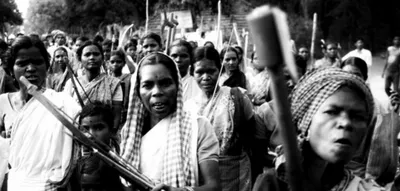
In 1967, a time marked by extreme government failures, the model of capitalist development that the Indian State was trying to sell to its newly independent people was collapsing. This was also a time of mass protests and uprisings, most notably the Naxalbari movement. To suppress this growing resistance, the State introduced a law granting itself sweeping powers. The promises of the recently inaugurated Constitution began to erode, and the Unlawful Activities (Prevention) Act (UAPA) was enacted.
The groundwork for this was laid earlier through the Sixteenth Amendment Act of 1963, which authorised the government to impose “reasonable restrictions” on fundamental rights, including the freedoms of speech and association. Despite strong opposition from civil rights advocates and parliamentarians who warned of the dangers to individual liberty, the UAPA was passed. It armed the State with the power to ban organisations, detain individuals, and restrict fundraising linked to so-called “unlawful” activities.
Subsequent amendments—particularly in 2004 and 2008—expanded these powers further, introducing definitions of “terrorist acts” and “terrorist organisations” and incorporating provisions from earlier draconian laws like TADA and POTA, both of which had already been repealed due to widespread misuse.
What makes UAPA one of the most draconian law can be understood from a look at the following sections:
The definition of "terrorist act" under Section 15 is incredibly vague and wide, such as "likely to strike terror," with no defined bounds and permitting criminality that might go well beyond actual acts of terror to encompass dissent or small offenses.
By permitting the detention of UAPA-accused for up to 180 days, Section 43D(2) modifies basic bail principles. This doubles the maximum period permitted by the then Criminal Procedure Code and essentially reverses the Supreme Court-endorsed "bail, not jail" doctrine, making prolonged incarceration the norm.
The 2019 amendments to Section 35 give the government executive power to designate both organizations and individuals as terrorists—without trial—by simply issuing an order.
Section 37, which establishes a Review Committee for appeals against such designations, is marked by arbitrary composition and lack of accountability, as it leaves the government free to appoint members without transparency, breaching principles of natural justice and limits on bias.
Further, Section 20 imposes life imprisonment for mere membership in a terrorist gang or organization involved in a terrorist act, while Section 38 penalizes association with a terrorist organization if the intent to further its activities is established—making both direct and indirect links to designated groups prosecutable, and drastically lowering the threshold for criminal liability under the law.
Expanding Use of UAPA
Since its inception, the UAPA has been increasingly utilized as a legal instrument to combat suspected terrorism and unlawful activities, with a significant uptick in its application during recent years. Data from 2015 to 2020 shows that 8,371 individuals were arrested in connection with 5,924 UAPA cases, yet only 544 of these cases proceeded to trial, resulting in an average conviction rate of just 27.5% per case—roughly 150 convictions.
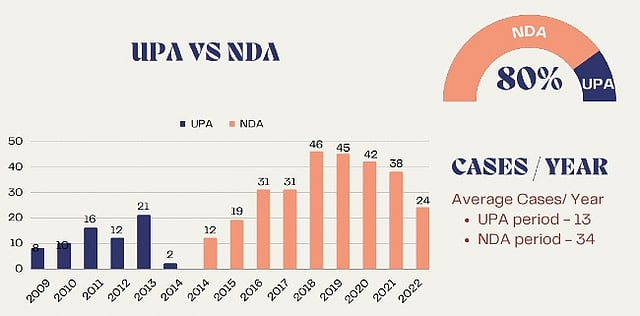
When viewed from the perspective of arrested individuals, the conviction rate is even lower, with only 2.8% (235 persons) being convicted. This stark disparity reflects that while a relatively high number of cases are registered and arrests made, few result in convictions, raising concerns about lengthy detentions and judicial outcomes. Notably, the average number of UAPA cases registered annually by the National Investigation Agency (NIA) climbed from 13 cases per year during the UPA regime (2009–May 2014) to 34 cases per year under the NDA regime (May 2014–present), underscoring a marked intensification in the use of law.
Branding Dissent as “Naxals”
With unchecked use of UAPA, the State has engaged in several controversial arrests. For instance, the incarceration of late Delhi University professor G N Saibaba, and his comrades, on being branded as “naxals”. The entire case suffered from procedural lapses and was built on flimsy evidences. The prosecution allegations were itself an empty can. The very allegation that the accused were waging a war against the nation by supporting a banned ideology in itself lacks strength to be sustained. How can one wage a war without weapons? A question that has been put up since. In this case, none of the six detained were shown to possess any weapons at the time of arrest or later during a search in their homes. This is not the only time the government has painted human rights activists as ‘naxals’.
“Supporting an ideology, even if the same ideology is adhered to by a banned organisation, cannot be a crime. Such a verdict would not have been possible without the extreme provisions found in the draconian anti-terror UAPA. The Unlawful Activities (Prevention) Act.”
The government often brands civil activists as “Naxals” because the label evokes fear and apprehension among the general population. By attaching such a stigma, the state gains public support for otherwise unlawful arrests, framing its actions as measures of national security. In doing so, the government not only initiates a modern-day witch hunt but also wrongfully brands its citizens as seditious. Such tactics mislead the nation, replacing truth with narratives designed to silence dissent.
Elgar Parishad to Bhima Koregaon
On 31st December 2017, the Elgar Parishad was organised in Pune by retired Justice P.B. Sawant and Justice B.G. Kolse Patil, bringing together activists, artists, and lawyers to challenge caste oppression and the rising tide of authoritarianism. The next day, on 1st January 2018, in a quite unrelated case, violence erupted at Bhima Koregaon, a historic site of Dalit assertion. Survivors and eyewitnesses pointed to right-wing Hindutva groups as instigators of the violence. Yet instead of pursuing this, the state shifted its attention to Elgar Parishad and claimed that it had instigated the clashes.
Arrests and Custodial Deaths
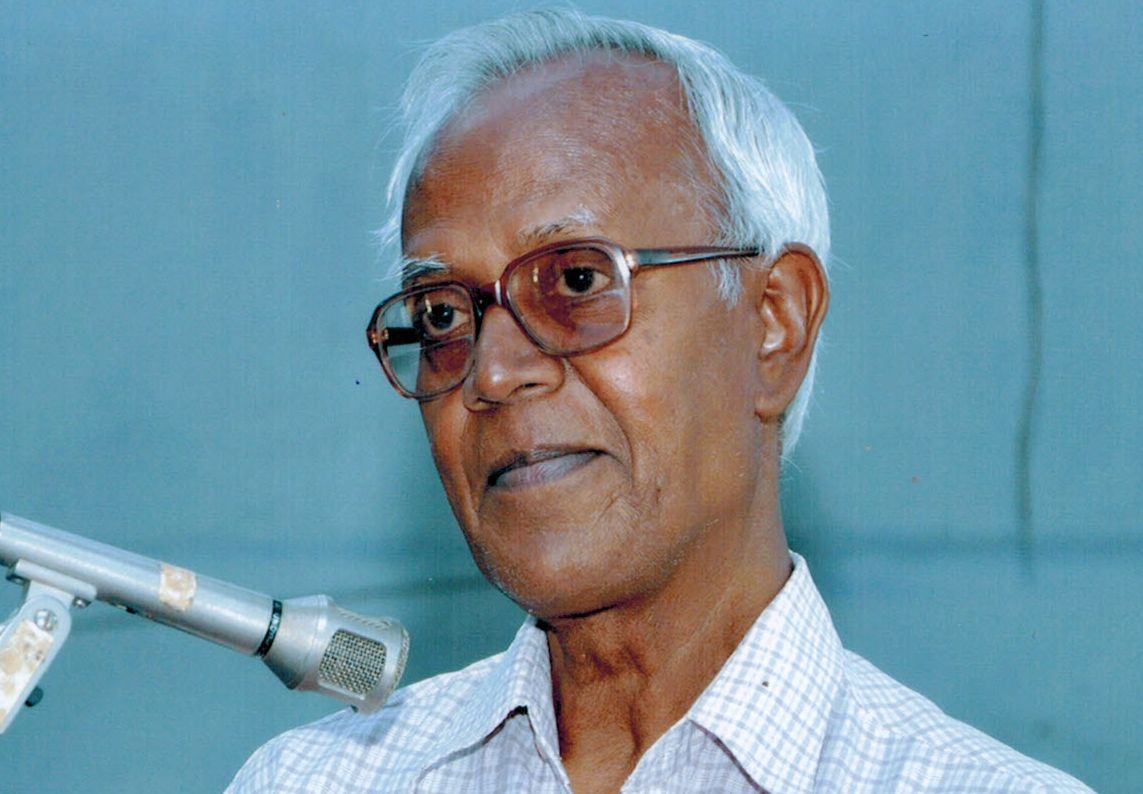
On 6 June 2018, five prominent figures—Dalit rights activist Sudhir Dhawale, lawyer Surendra Gadling, Nagpur University professor Shoma Sen, social worker and TISS graduate Mahesh Raut, and activist Rona Wilson—were arrested under the Unlawful Activities (Prevention) Act (UAPA). A second round of arrests followed on 28 August 2018, targeting poet Varavara Rao, activists Sudha Bharadwaj, Arun Ferreira, Gautam Navlakha, and lawyer Vernon Gonsalves. Over time, more were taken into custody, including scholar Anand Teltumbde and writer-activist Gautam Navlakha in 2020, despite their advanced age and health conditions. Among the most ruthless was the arrest of Father Stan Swamy, an 83-year-old tribal rights activist. Despite suffering from Parkinson’s disease, he was denied bail and even basic facilities in jail such as a sipper bottle and straw. His health worsened in custody, and he died on 5 July 2021, an event widely noted as a custodial death.
Shifting Narratives
The State kept shifting narratives: what began as allegations of “provocative speeches” at the Elgar Parishad was reframed as the event being “funded by Maoists,” and later stretched to an alleged “plot to assassinate the Prime Minister.” These claims were amplified uncritically by mainstream media, even though the convenors of the Parishad repeatedly clarified that no money was spent and that the arrested activists had little connection to its organisation. The police claimed to have recovered incriminating letters and documents from the computers of the accused. However, independent forensic investigations, including reports by international agencies, have since suggested that incriminating evidence was planted on the activists’ computers through malware.
Kashmir: Targeting Human Rights Defenders
In another instance, Kashmiri human rights defender Khurram Parvez, aged 44, was arrested at his home by the National Investigation Agency (NIA) in 2021 on accusations of “terror-funding.” Parvez, who has received international recognition for his work, is the program coordinator of the Jammu Kashmir Coalition of Civil Society (JKCCS) and chairperson of the Asian Federation Against Involuntary Disappearances. He has spent decades documenting cases of enforced disappearances, torture, and extrajudicial killings in Kashmir.
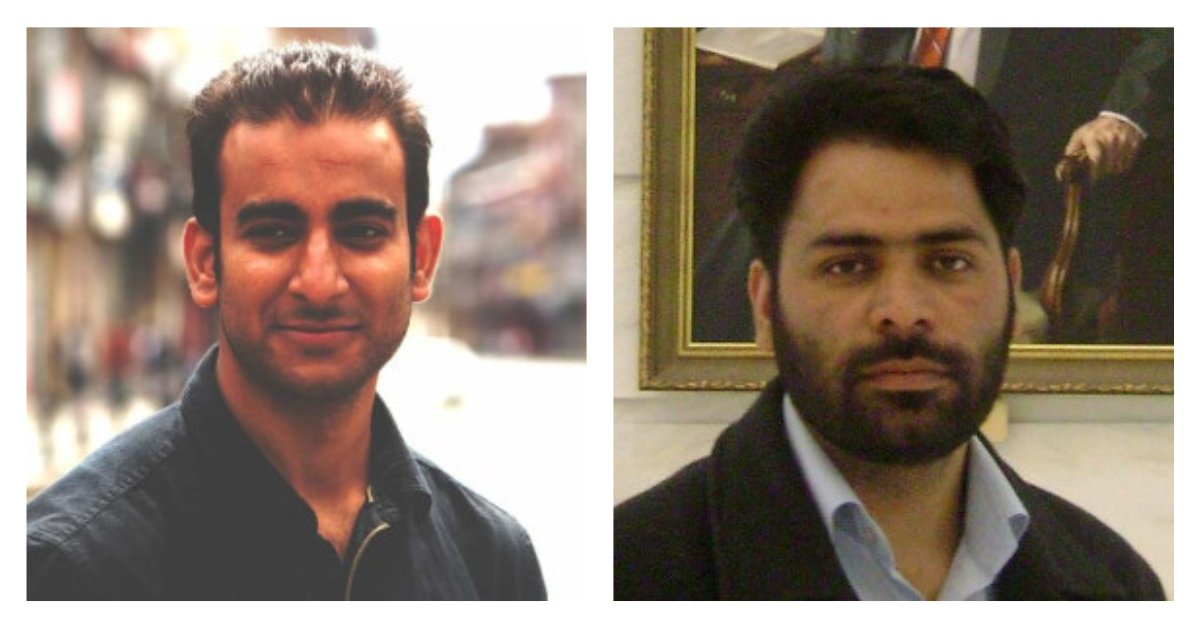
In March 2023, Kashmiri journalist Irfan Mehraj was also arrested by the NIA under terrorism charges. The agency claimed his detention was due to his collaboration with JKCCS, the very organisation led by Parvez. Mehraj, a respected journalist who wrote for national and international outlets, had reported extensively on human rights abuses in Kashmir. His arrest made clear that the state was treating not just activism but even the act of documenting or reporting on human rights as a crime. However, it was later understood that Mehraj’s arrest was also linked to his editorial work with Wande Magazine, where he published stories that questioned the installation of CCTV cameras in Srinagar by the Kashmir police and highlighted how locals feared constant spying while also being forced to bear the financial costs of the project. Such stories as one could reasonably foresee would dissatisfy the government that despises being questioned by the people.
“The arrest of Kashmiri journalist Irfan Mehraj under terror charges is a travesty. The arrest is yet another instance of the long-drawn repression of human rights and the crackdown on media freedoms and civil society in the region of Jammu and Kashmir. Human rights defenders such as Irfan Mehraj should be encouraged and protected, not persecuted. Indian authorities should prioritize ending impunity for the human rights violations that human rights defenders and journalists have bravely documented and exposed, especially in Jammu and Kashmir, and ensure that human rights defenders and activists can work in a safe and enabling environment without any fear of reprisals.”
— Aakar Patel, chair of board at Amnesty International India, on arrest of Irfan Mehraj
Umar Khalid: Jailed for His Words
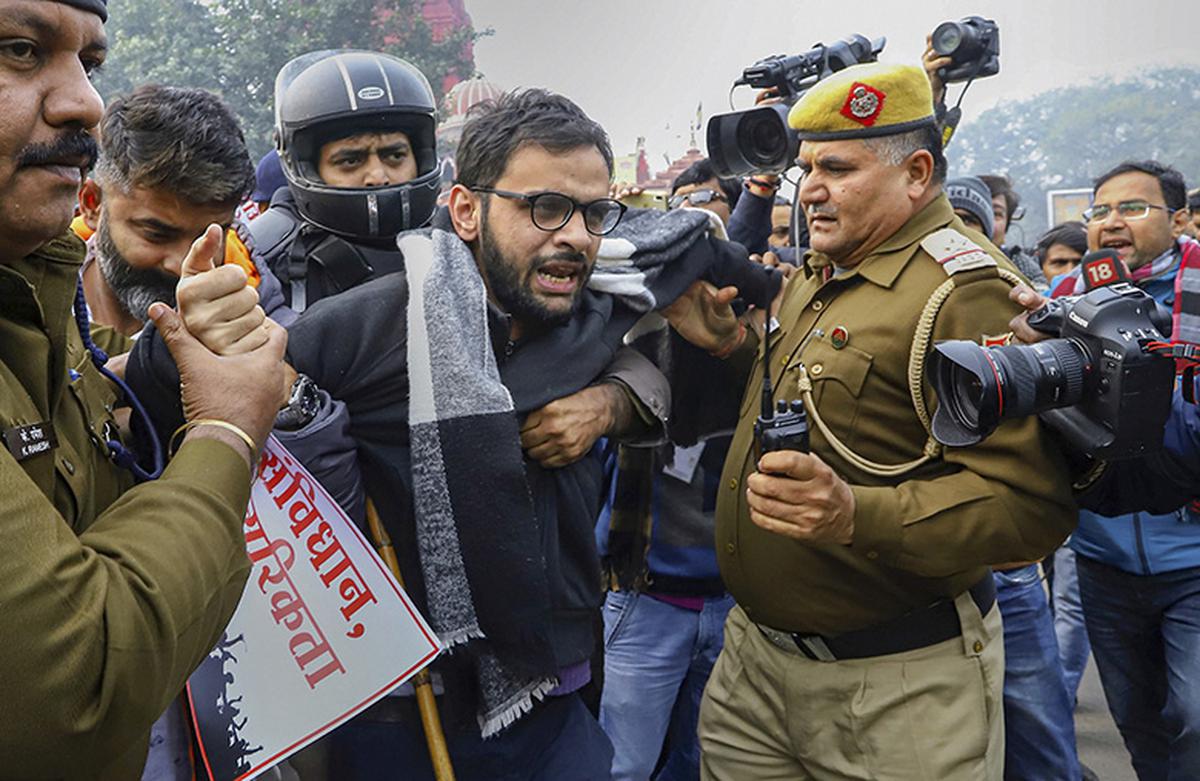
And before the rest became history, we witnessed the arrest of Umar Khalid in September 2020 under the Unlawful Activities (Prevention) Act (UAPA). He was accused of playing a key role in a “larger conspiracy” behind the violence that broke out in northeast Delhi in February 2020. The charges, however, rested not on acts of violence but on his speeches during the anti-CAA protests — speeches where he consistently invoked the values of non-violence and unity. In one such speech, he urged people to “raise their voices with love, with non-violence, with Gandhian values.” These very words, far from inciting riots, were reframed by the government as evidence of terrorism.
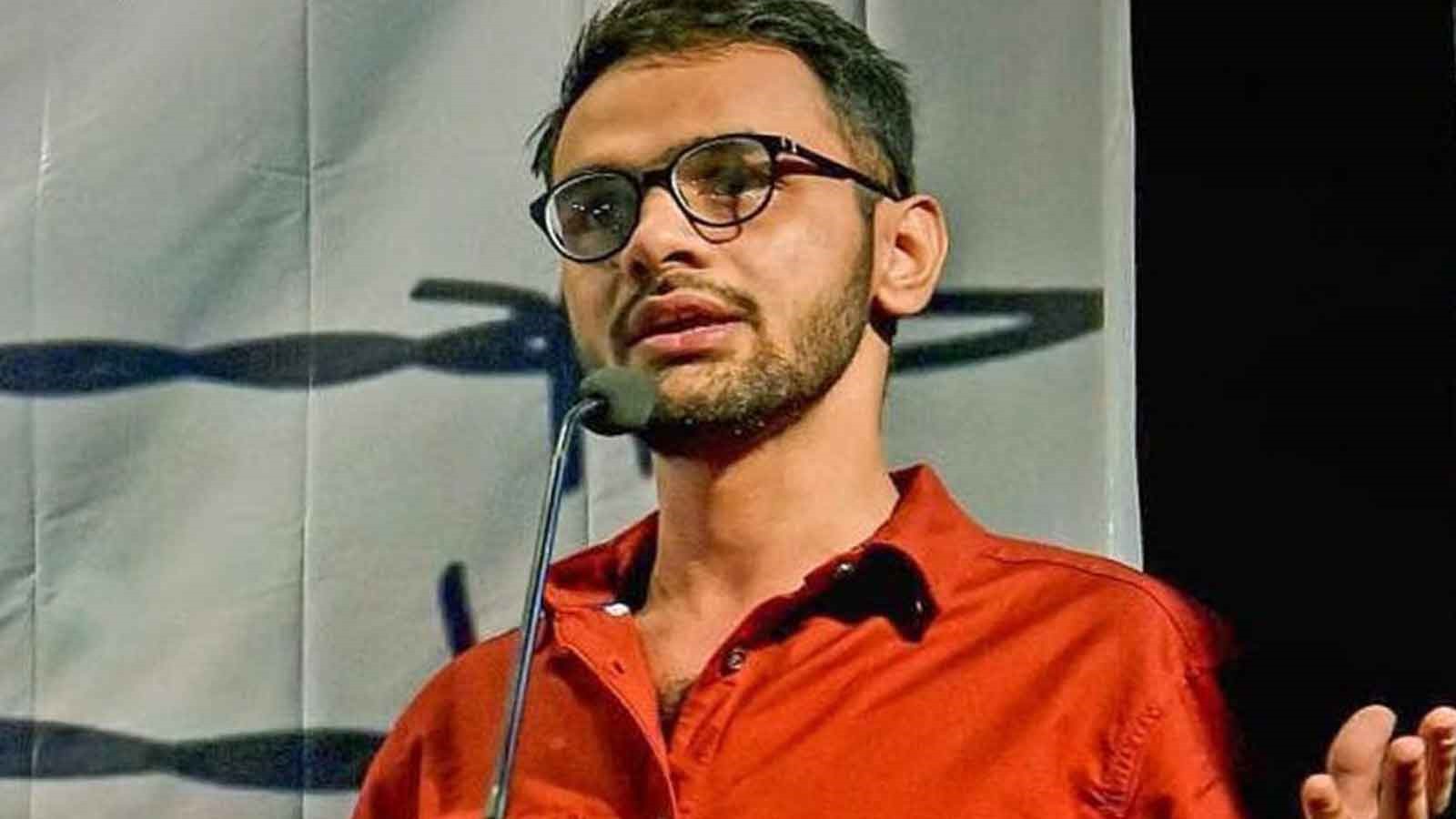
“If those in power want to divide India, the people of India are ready to unite the country. We won’t respond to violence with violence. We won’t respond to hate with hate. If they spread hate, we will respond to it with love. If they thrash us with lathis, we keep holding the tricolour. If they fire bullets, then we will hold the Constitution. If they jail us, we will go to jail singing, Saare Jahaan Se Acha Hindustan Hamara”
— Umar Khalid, Jailed activist
By exercising his right to speech and expression, Khalid merely questioned the government’s policies, warning against laws that divide the country on religious lines. To call his words seditious or conspiratorial is to deny the visible reality — the systemic targeting of minorities and the persistence of hate crimes carried out with impunity. Yet, even four years later, Khalid continues to languish in jail without trial, a reflection of how UAPA is designed to punish dissenters not by conviction but by prolonged incarceration. The Constitution may promise liberty and equality, but UAPA reveals how easily those promises collapse when confronted with the interests of the ruling class.
“We spoke of how Umar could find ways of listening to the concerns of all working people, of women, of young people, of minorities and migrants, and speaking with them—it was his construct of a political, cultural and ethical project. Of how this project could form connections and networks of love, resistance and solidarity. Of how he could speak to, and listen to, all Indians as an Indian, to all South Asians as a South Asian. Of how he could speak as a rafiq, a comrade, to all Muslims, especially in India, who could help restore, renew and repair the frayed relationship between what it means to be a Muslim and what it means to be a citizen of the future.”
Law as a Tool of Class Power
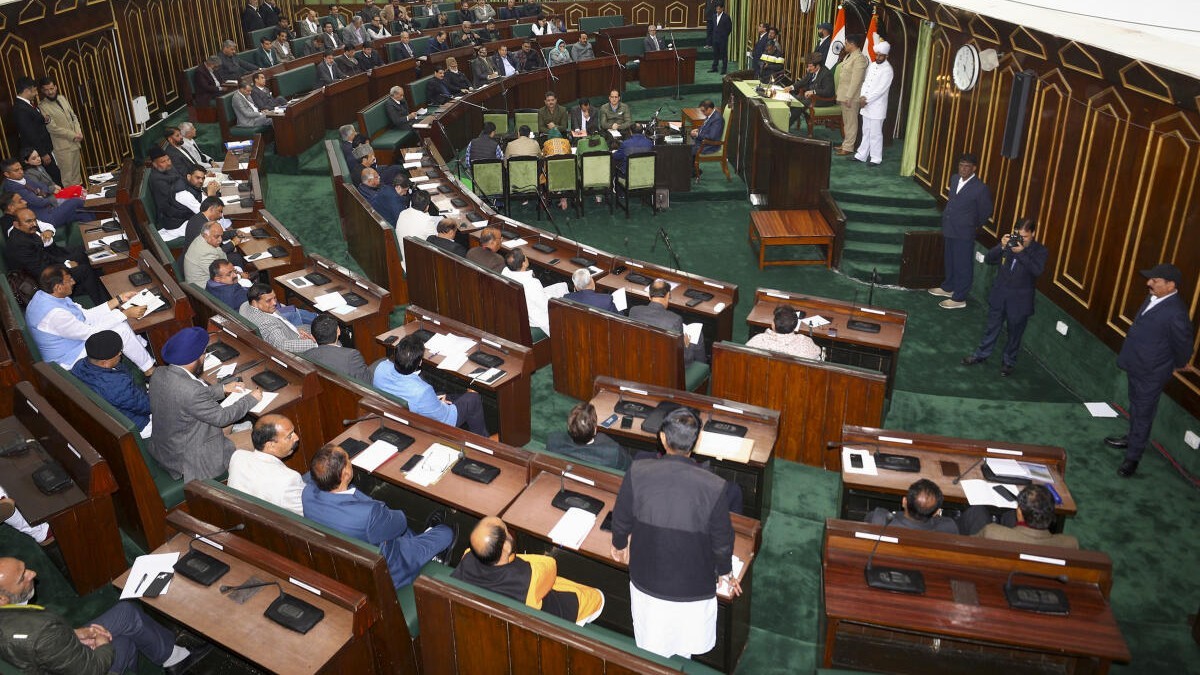
Laws like UAPA are presented to the public as weapons to defend society from terrorism, to safeguard the lives of “ordinary citizens.” But in practice, they function as shields for the ruling class, used to silence those who expose the loot and plunder of the nation by those in power. This is not an accident but the very nature of law in a bourgeois society: it does not stand above classes as a neutral protector, but serves to preserve the interests of the ruling class. The state acts as the enforcer of this order. By branding dissent as “terrorism,” the state shields the real terror unleashed daily on the majority through poverty, communal violence, dispossession, and repression.
UAPA makes this truth impossible to ignore. It strips away the democratic facade, laying bare the reality that bourgeois democracy means freedom only for the few, and repression for those who dare to speak against them.
Read next
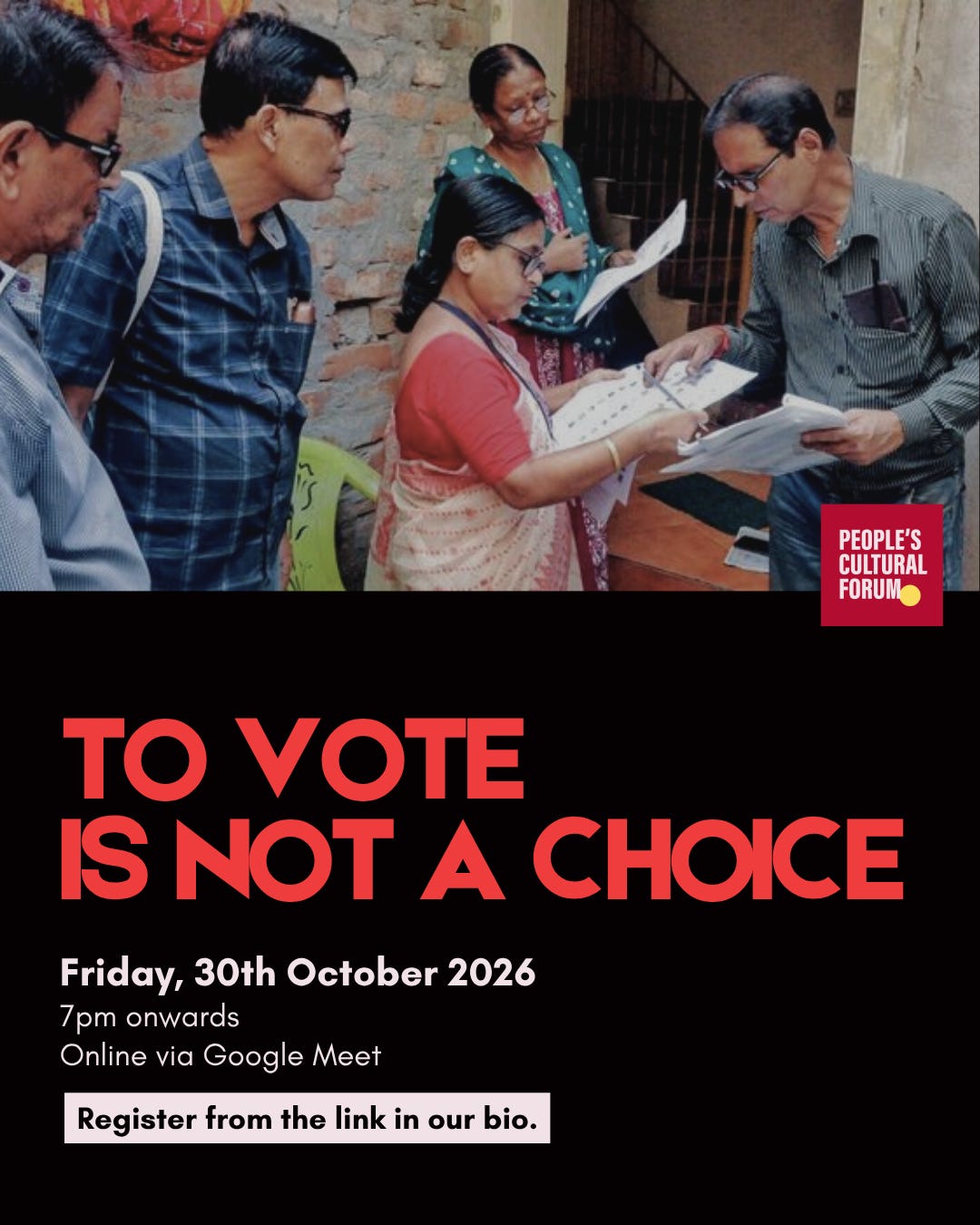
Online Reading and Screening| To Vote Is Not A Choice
Join us as we read, discuss, and collectively build clarity.
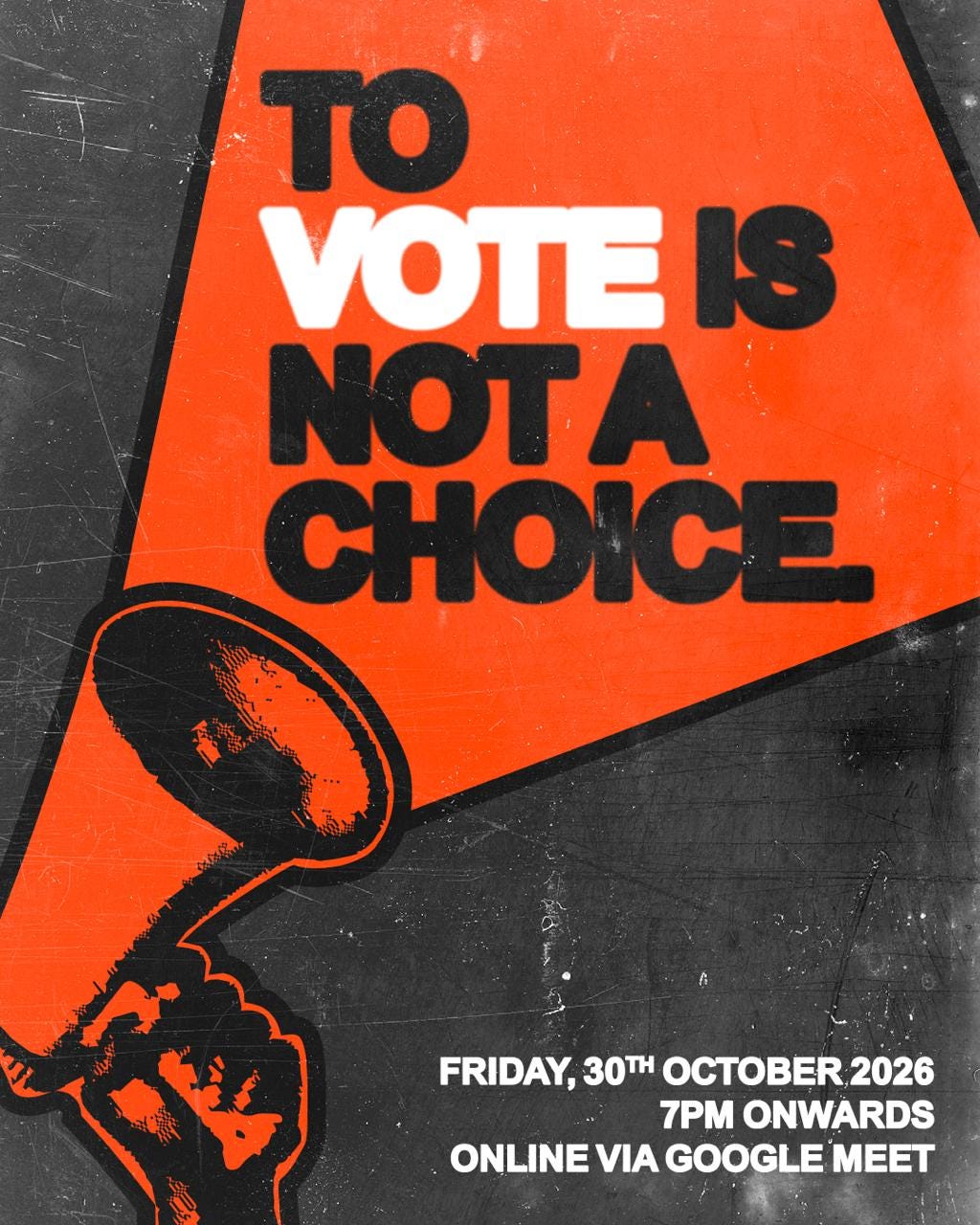
Online Reading and Screening| To Vote Is Not A Choice
Join us as we read, discuss, and collectively build clarity.
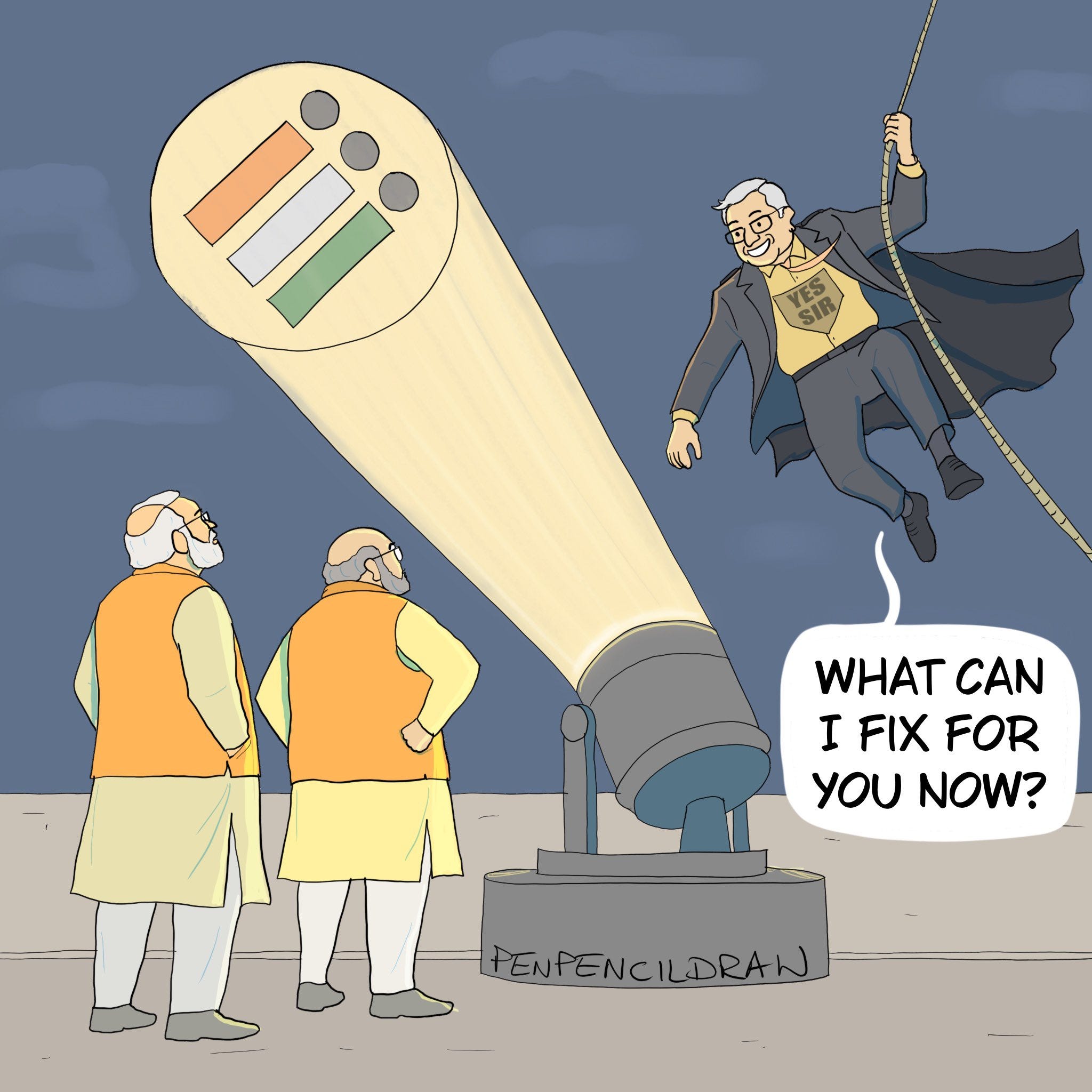
“Vote Chori”, SIR and Current Outburst
Where is the Movement Headed and What Must We Do?