To Make The Ruling Class Tremble
The Delhi Legislative Assembly Bombing by HSRA
Contents
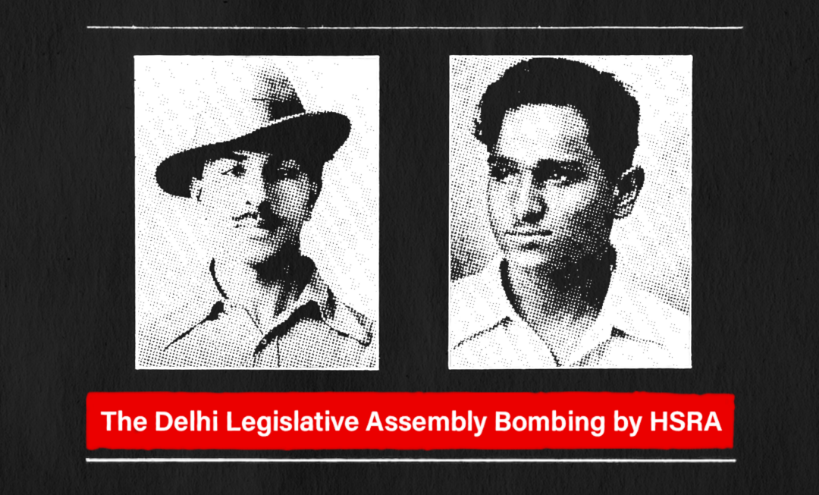
In the house of the “Indian” Parliament on 8th April 1929 an explosion occurred.
Two young revolutionaries positioned themselves in the visitor's gallery hanging above the chambers, sporting khaki shorts, raised a slogan, "Inquilab Zindabad". Smoke from the bombs and panicked voices filled the hall; the bombs were carefully thrown at the unoccupied seats, intended to startle, and not to kill. The two revolutionaries were Bhagat Singh and Batukeshwar Dutt. Standing firm, throwing leaflets into the air, they declared that the act was a protest against tyranny and the silencing of oppressed voices through laws like the Public Safety and Trade Disputes Bills. They made no attempt to flee and allowed themselves to be arrested, taking their battle from the assembly hall to the courtroom. The message was simple but powerful, if the British Empire would not listen to reason, it would be forced to listen to the echoes of revolution.
“We are sorry to admit that we who attach so great a sanctity to human life, who dream of a glorious future, when man will be enjoying perfect peace and full liberty, have been forced to shed human blood. But the sacrifice of individuals at the altar of the 'Great Revolution' that will bring freedom to all, rendering the exploitation of man by man impossible, is inevitable.”
— The Red Pamphlet
It was not a random outburst; on the contrary, it had been a well-thought-out political decision of the Hindustan Socialist Republican Association (HSRA) led by Chandrashekhar Azad, Bhagat Singh and Ram Prasad Bismil. The actual thought behind this revolutionary collective was the dream of complete independence—not as a gift from colonizers but as a right that is claimed through resistance. The HSRA was formed out of the increasing political disgust among youth and masses towards moderate liberal politics.
Alongside Bhagat Singh, the revolutionary organisation was marked by key revolutionary figures: Sukhdev, who was the lead strategist; Yashpal, the intellectual force that helped distribute revolutionary literature; Durgawati Devi, who risked everything to help her comrades, aiding in escapes and providing shelter. Together, they were fighting not just British rule but oppression in all its forms—social, economic, or political.
The bombing was an act of resistance against the draconian bills through which British imperialist forces sought to suppress the free speech, ensure easy arrests of the dissenters, and silence the rising voices of the masses. The laws were not mere laws but shackles fitted to tighten the noose of colonial rule.
The Public Safety Bill allowed the detention without any trial. It was meant for revolutionaries and dissenting voices under the guise of maintenance of ‘order’. It was a direct assault on civil liberties, meant to choke the growing influence of socialism and youth-led political movements. Further, the Trade Disputes Bill allowed the Britishers to declare any sort of workers’ protest as illegal. The legislation curbed numerous freedoms of industrial workers and required a 15-day written notice for strikes and lockouts in public utility services, severely bringing workers’ strikes for struggles for fair wages and humane conditions under check.
From Delhi to Westminster, the sound of the explosions echoed. The valor of Bhagat Singh and Dutt had rattled the colonial state and put its mighty power in an embarrassing position in the face of the world. The British immediately retaliated with brutal force. Members of the HSRA were quite literally hunted down and arrested across the lengths and breadths of the country. The bombing became a justification for the British authorities to smash the entire revolutionary network, reopening and accelerating the cases related to the murder of British police officer J.P. Saunders by Bhagat Singh, Rajguru, and Sukhdev which culminated into the “Lahore Conspiracy Case”.
While the trial was all directed towards securing the very gallows for the revolutionaries, the courtroom became a theatre for them to propagate their ideas. From the courtroom, the revolutionaries raised slogans of “Long Live Revolution” and used every moment to expose the tyranny of British rule. Maintaining his opposition to tyrannical imperialist British order that led its oppression in the name of law, Bhagat Singh declared:
“The sanctity of law can be maintained only so long as it is the expression of the will of the people. When it becomes a mere instrument in the hands of an oppressing class, it loses its sanctity and significance, for the fundamental preliminary condition for administration of justice is the elimination of every interest. As soon as the law ceases to correspond to the popular social needs, it becomes the means for perpetration of injustice and tyranny”.
Almost a century down the line, the shadows of that Assembly bombing linger on; not as a memory of sacrifice, but rather as a stark warning. Bhagat Singh and his comrades-in-arms resisted the weaponization of the law to crush dissent back in the day but this resistance is no relic of the past. Today, the UAPA, designed ostensibly to combat terrorism, is being used far more against anyone daring to question the establishment-activists, students, and the intellectuals. The UAPA allows mandatory detention without trial, in spirit almost echoing the Public Safety Bill of 1929.
Recently, in Maharashtra, we find the resemblance in the Special Public Security Bill, that aims to address "urban naxalism" and opens the door to indiscriminate arrests of the dissenters and activists under vague and sweeping terms.
The labour environment too has changed drastically with the new labour codes that erode hard-won rights, dilute workers' rights to trade unions, and make collective bargaining and strikes nearly impossible, a monumental resemblance to what the Trade Disputes Bill was engineered to do under colonial rule.
The act of resistance displayed by the members of HSRA must serve as a reminder to today’s youth—to not stay silent in the face of oppression and to serve the society.
Bhagat Singh, just 23, embraced the gallows with the hope that the youth of India would further his ideas and continue the revolutionary fight against capitalism-imperialism.
Read him not to remember; but read to organize and act.
~Written and edited by Atharv, Arna and Theo
Young Political Workers is a revolutionary youth group based in India, rooted in the ideals of Bhagat Singh. We are committed to spreading political education among the youth and encouraging them to join the revolutionary movement. Follow us on Instagram to stay updated and share with your friends.
Read next
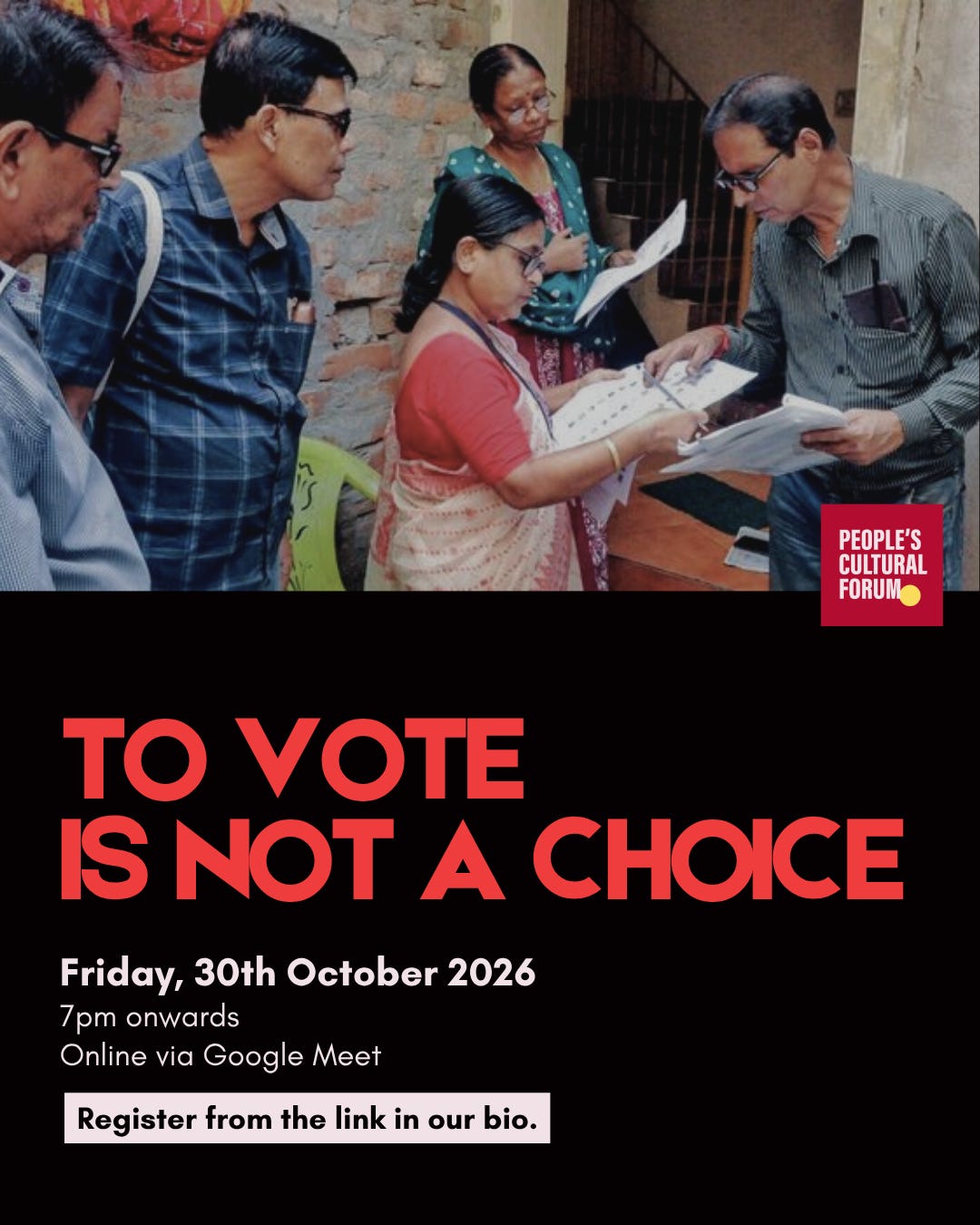
Online Reading and Screening| To Vote Is Not A Choice
Join us as we read, discuss, and collectively build clarity.
Online Reading and Screening| To Vote Is Not A Choice
Join us as we read, discuss, and collectively build clarity.
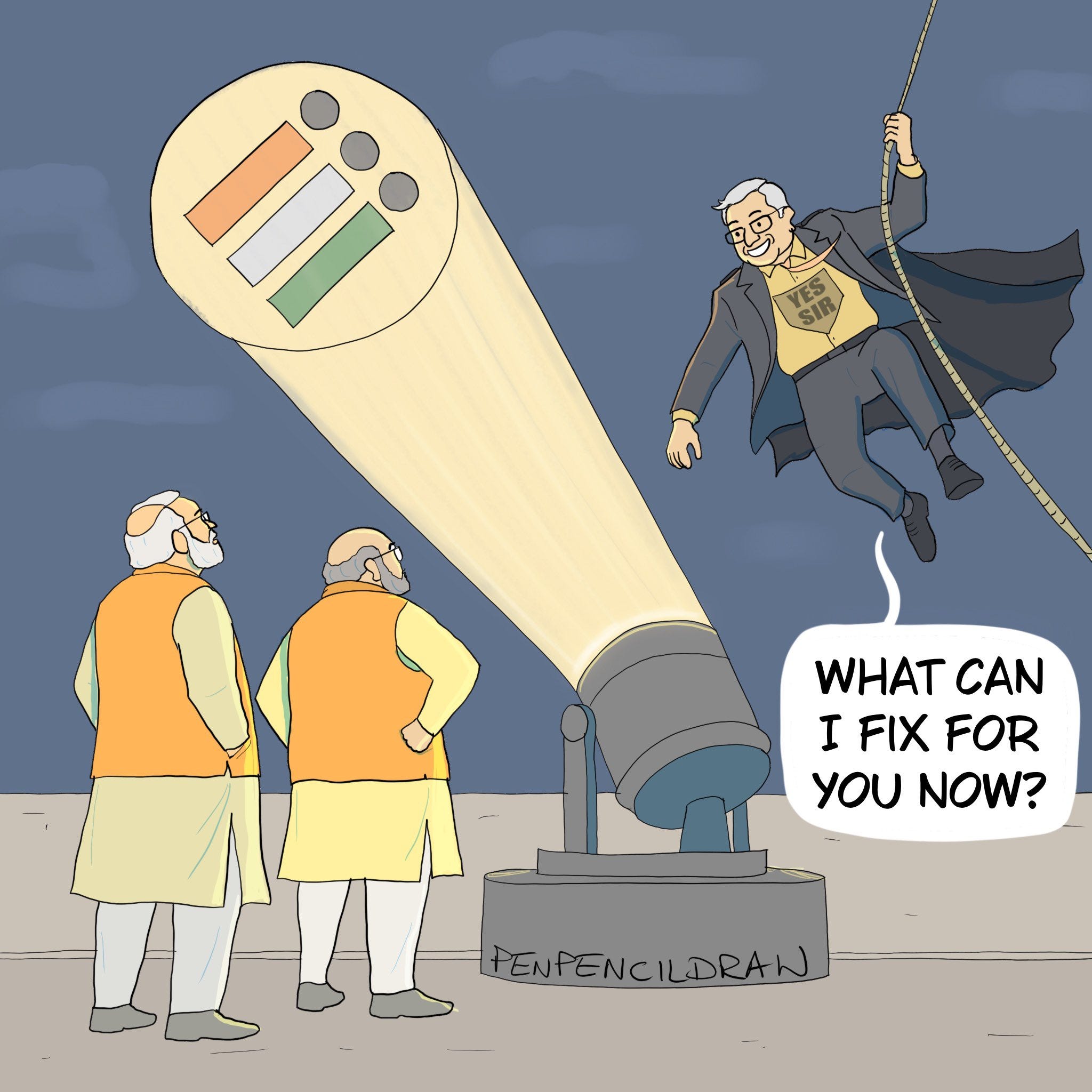
“Vote Chori”, SIR and Current Outburst
Where is the Movement Headed and What Must We Do?