Their Land? Our Land? Whose Land?
What is happening at HCU and how is it relevant to all of us?
Contents
At Hyderabad Central University (HCU), a place long regarded as a sanctuary for biodiversity and a space for inclusive education, a significant ecological and institutional crisis is unfolding. Sounds of chainsaws and bulldozers have pierced the air. Trees have been felled. The land has been marked. The forest cover, sanctuary to diverse students and fauna alike, has been scarred.
The Telangana State Industrial Infrastructure Corporation (TSIIC) has auctioned the Kancha Gachibowli forest, an area that formed an integral part of the university campus and has also initiated clearing nearly 400 acres of forest cover. This area is not just a piece of land, it is a living classroom. And thus, the students of HCU have stood up in resistance.
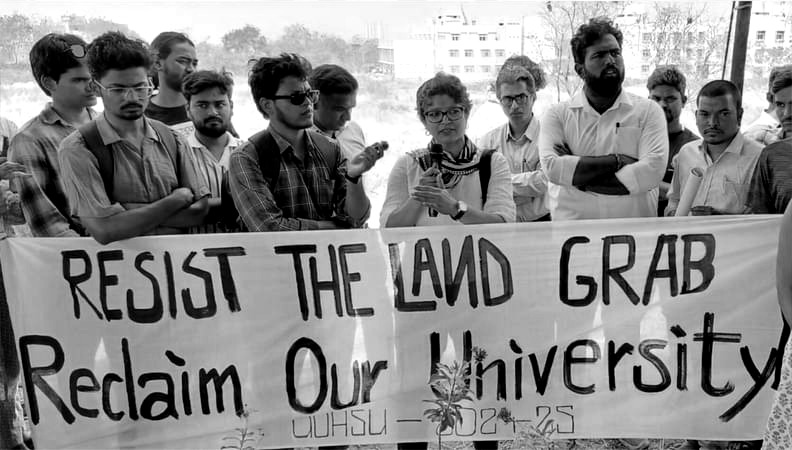
Hyderabad Central University (HCU), established in 1974 as part of the Six-Point Formula, was envisioned as a cornerstone for urban development and educational access in the newly reorganized Andhra Pradesh.
Over the years, it has evolved into one of India’s most politically conscious and intellectually vibrant public universities. Known for its critical academic environment and active student movements, particularly from Dalit, Bahujan, and Adivasi communities, HCU has consistently been a site of democratic dissent and ideological engagement.
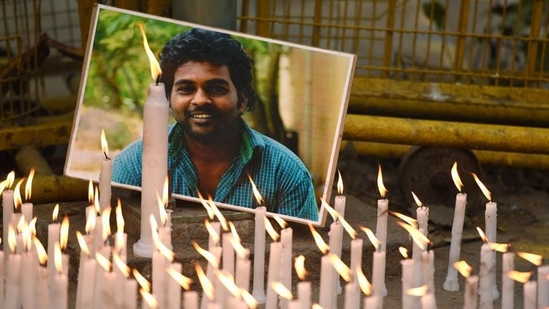
In this context, the clearing of the forest land is not merely a matter of property — it reflects a deeper erosion of spaces where critical thought, dissent, and translates into a broader struggle for collective rights over the environment.
All across the country, land that once belonged to the people is being slashed and carved up for private gain. For the sake of the "profit" of a few individuals. Forests are cleared for expressways. Rivers are dammed for power. Universities are turned into concrete projects of elite ambition. No matter the case, the language stays the same:
Progress. GDP. Development. Growth.
And in every case, the cost is paid by the people — first the inhabitants who are displaced, and second those who are put to work on those lands to make them into profit-building machines, but never receive any share of this so-called development.
Recently, the state turned its silence into violent action. Fences went up, and the shovels arrived. Trees were destroyed — with no public consultation, no ecological assessment, no space for dialogue. Students, many of whom come from Dalit, Bahujan, and Adivasi communities, stood in protest.
For them this is more than a legal dispute. It is a story that requires no resurrection of memory.
Repressive forces have responded promptly. The protesting students faced lathi charge from the police. Over 50 students were detained. A journalist covering the protests was also imprisoned.
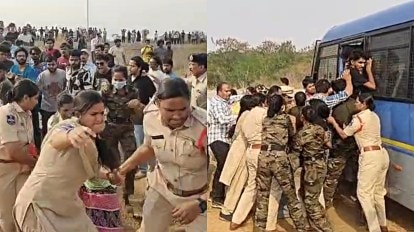
It was only after the issue gained national attention, amplified by media coverage and the intervention of progressive voices across the country, alongside the widely circulated visuals of police brutality against students, that the Telangana High Court intervened and temporarily halted the clearing of the forest.
While this moment can be seen as a victory for the student movement, it also raises serious concerns about the increasingly repressive stance adopted by university administrations and the state towards student bodies.
From HCU to Ambedkar University to Jamia to Delhi University, instances of students coming together to express dissent or create spaces for dialogue are now routinely met with swift and violent suppression. Even the limited space that was once afforded to progressive collectives within academic institutions is rapidly shrinking — signalling a dangerous alarm.
The recent trend of suppressing student voices is a matter of concern for all students. This repression is not confined to any particular group but impacts the rights of students and youth as a whole.
As space for dissent continues to shrink, the state gains more unilateral power, enabling it to hand over public resources to private capital, further eroding the rights of the people.
Students, who are meant to be the leaders of tomorrow, are being silenced by the leadership of today. They are being asked to build the future while being denied the means to protect the very foundation beneath them.
The rising suppression reflects the state's growing fear of dissenting voices and youth mobilizing to demand their rights. The answer lies in unity — standing together, raising our voices, and resisting these repressive forces.
Learn more about these struggles, stand in solidarity with your peers instead of running away from politics. It is time to get political!
Read next
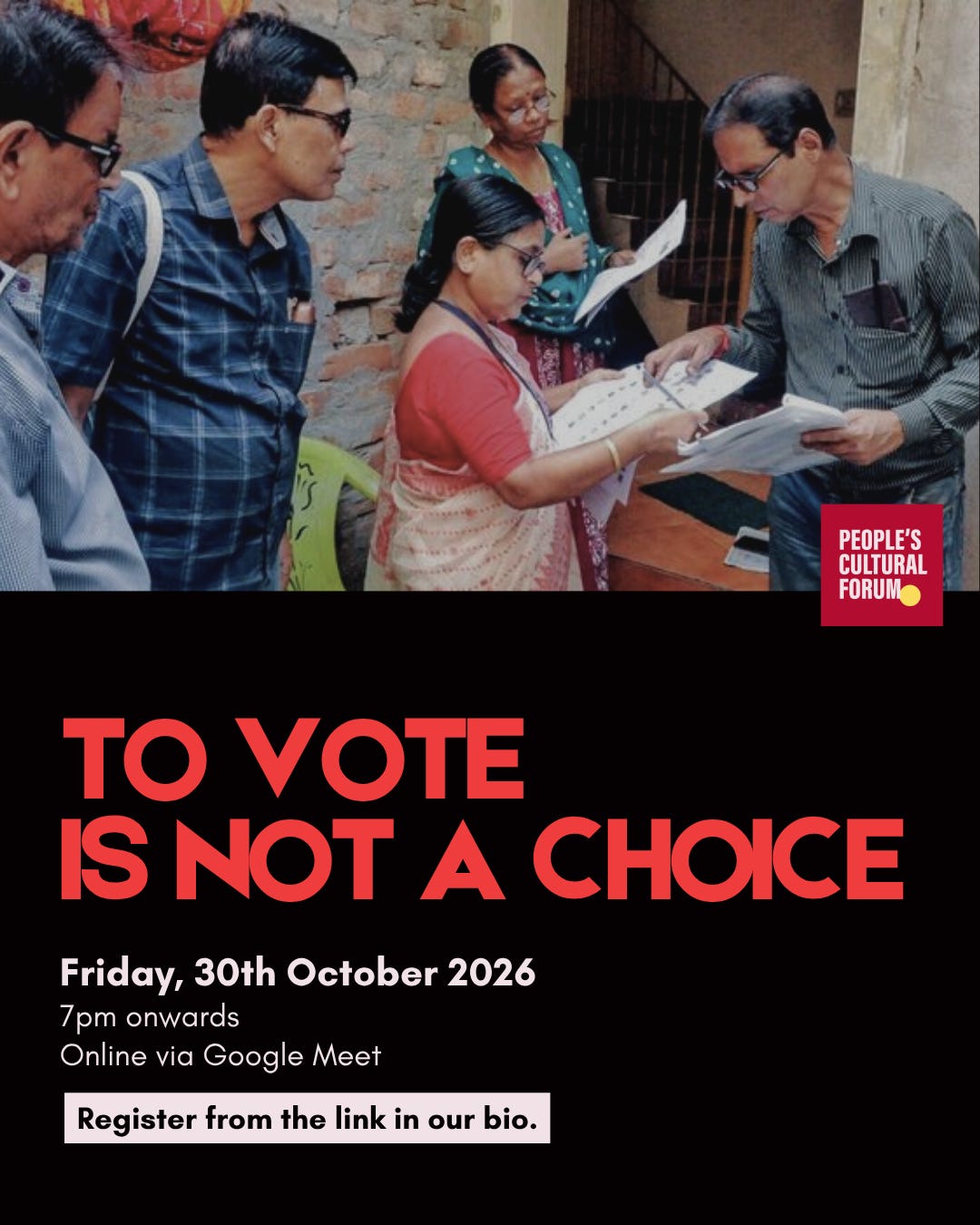
Online Reading and Screening| To Vote Is Not A Choice
Join us as we read, discuss, and collectively build clarity.
Online Reading and Screening| To Vote Is Not A Choice
Join us as we read, discuss, and collectively build clarity.
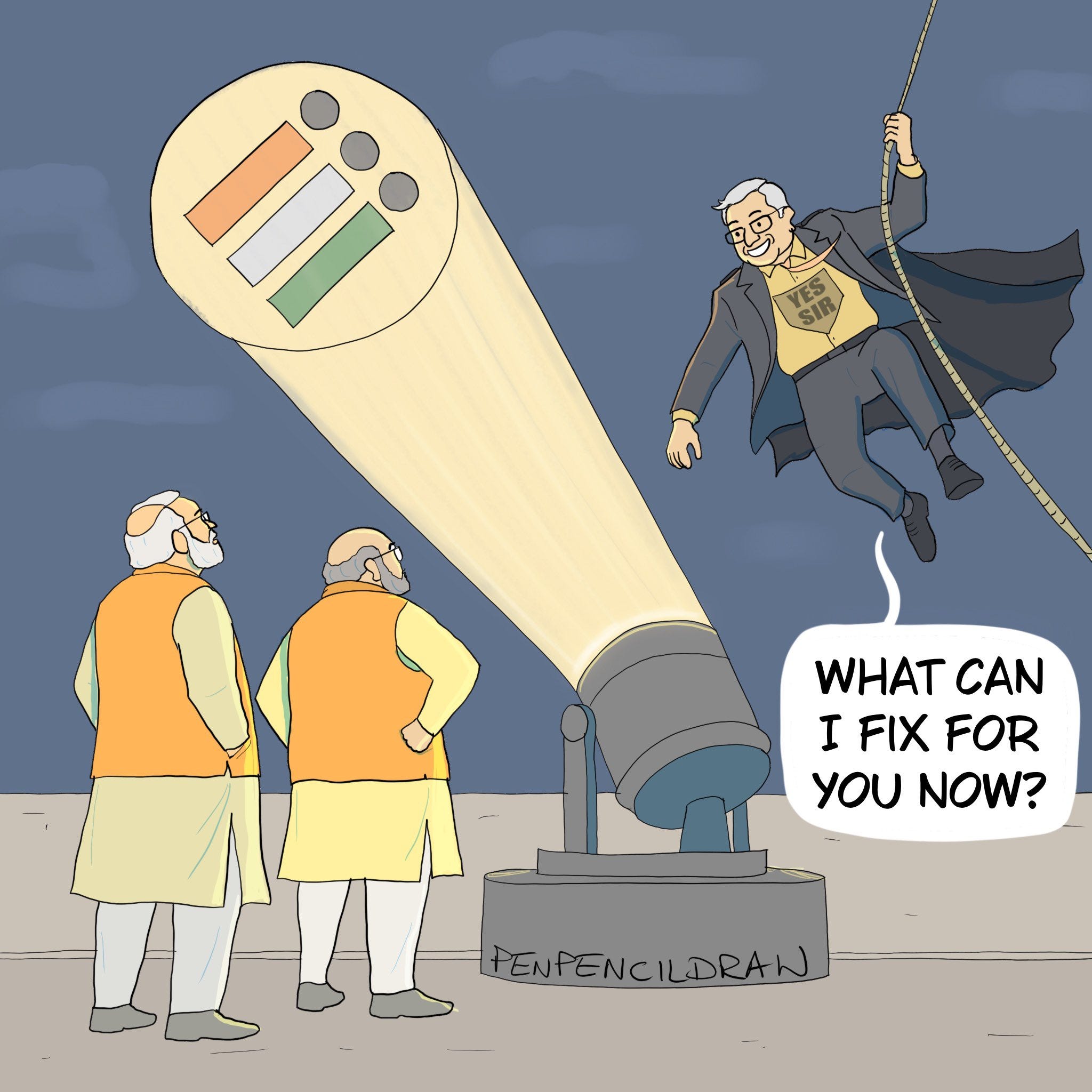
“Vote Chori”, SIR and Current Outburst
Where is the Movement Headed and What Must We Do?