The Struggle for “Jal, Jangal, Zameen”
Should the Indian State's war against Maoists be governed under the international humanitarian law?
Contents
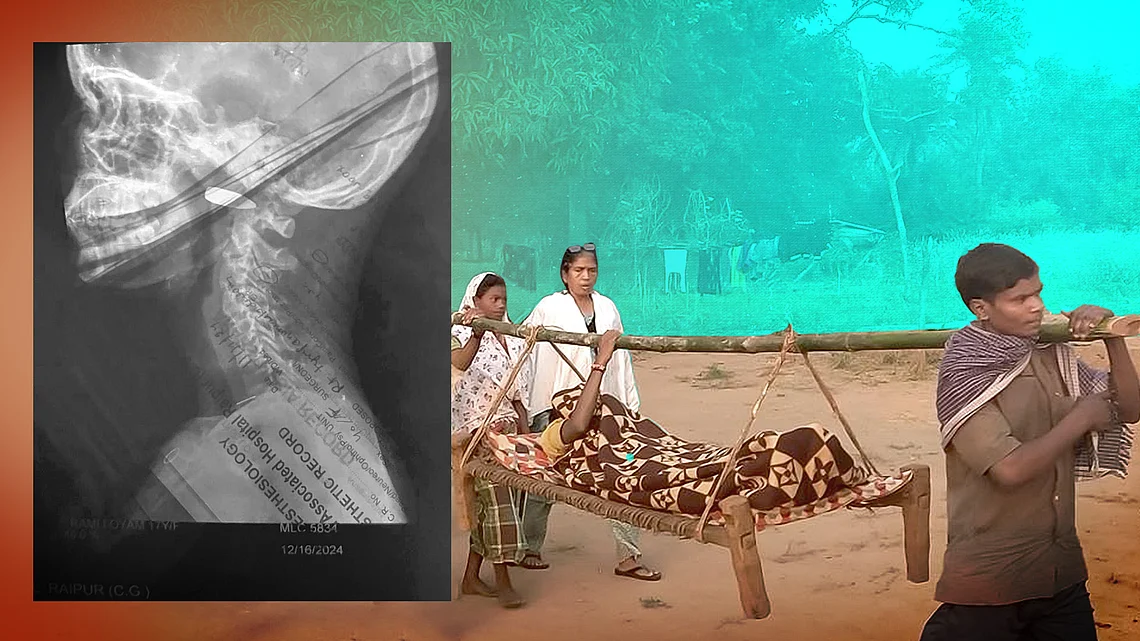
Since 2024, extra-judicial killings of Adivasis have shown a stark increase. Amit Shah proclaimed in the Parliament the new strategy for combating Maoists: “We shoot them between the eyes as soon as we spot them.” On March 25, 2025, the police reportedly surrounded Bodga village at night, took 17 people away, released seven, shot three in cold blood, and took the remaining seven with them. On 11-12 December last year, the police and paramilitary reportedly opened fire in a village in Abujhmad hills while the villagers were farming, killing six innocent villagers including young children, and injuring several others. Ramli, a 17 year old girl, was struck with a bullet on her back, which lodged itself in her jawbone. Unable to claim that the bullets that had injured and were lodged in the bodies of these children were not those of the police, they claimed that the Maoists had used these children as “human shields”.
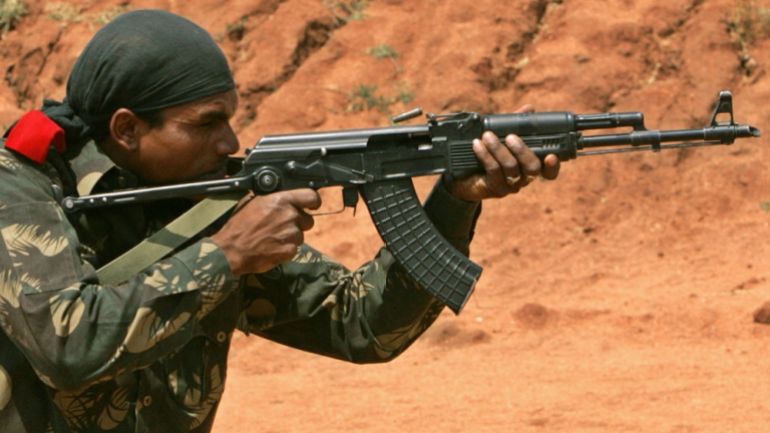
This intensive militarisation and securitisation benefits foreign and domestic companies, which want a clear path to exploiting the land and natural resources. Security camps are set up in areas where the corporates want to establish mining centres, thus ensuring that any protest from the Adivasis dwelling there is quelled by the security forces by shooting them dead. The operations against Maoists are characterised as a “war”, invoking intense feelings of patriotism. To be labelled a “Naxalite” or “Maoist sympathiser” by the State is a one-way ticket to prison for social activists. Yet, the “Maoist problem” is classified as merely a “law and order issue” by the State. This obfuscates the fact that the State’s war against the Maoists is a full-scale internal armed conflict and should be labelled as a “non-international armed conflict” (NIAC).
What is an NIAC?
In the 1997 ruling of Prosecutor v. Duško Tadić, the International Criminal Tribunal for Rwanda (ICTR) established two essential criteria for identifying a NIAC:
The intensity of the violence
The organisational capacity of the non-state actors involved.
The International Criminal Tribunal For Yugoslavia in 2008 in Prosecutor v. Haradinaj, identified key indicators including:
The violence must be periodic, and escalating set of continuous armed clashes that are neither regionally disparate and temporally sporadic nor one-sided after considering civilian displacement, weapon type, physical destruction, quantity of troops, deployment of government forces.
The existence of a command structure and disciplinary rules and mechanisms within the group; the existence of a headquarters; the fact that the group controls a certain territory; the ability of the group to plan, coordinate and carry out military operations, including troop movements and logistics; its ability to define a unified military strategy and use military tactics; and its ability to speak with one voice and negotiate and conclude agreements such as cease-fire or peace accords.
Does the Maoist insurgency qualify as an NIAC?
The Indian government has engaged in a sustained and violent campaign against the Maoists. This conflict has caused a significant number of deaths across a quarter of the country’s territory, i.e., the violence is widespread and systematic. The prolonged nature of the conflict, the scale of operations, and the number of armed participants on both sides far surpass examples where NIACs have previously been recognised, such as in the Tadić case, where hostilities lasted six years. Armed violence while persisting over time has also escalated in recent years, reaching a peak not imagined. These are hardly minor disturbances but rather represent a sustained, regional campaign of armed resistance evoking an equal or greater state response.
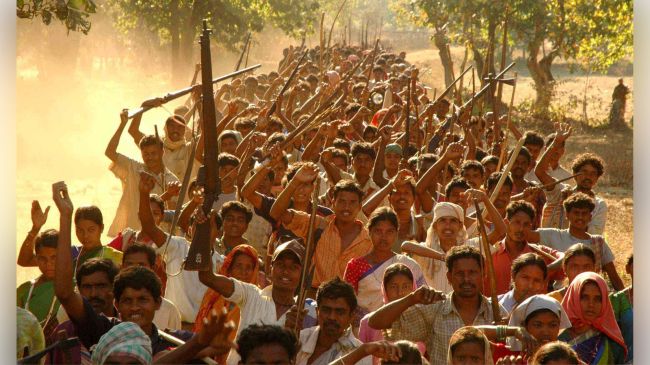
The Communist Party of India (Maoist) constitutes a well-established hierarchical system. Orders are given by the Central Committee which controls the entire operations of the Naxalites. To give effect to these orders, and those of state- and local-level Committees, a Central Military Commission has been established which coordinates the orders on the ground. Commentators have acknowledged that the command structure of the Naxalites, while sophisticated, leaves considerable operational autonomy to the lower level militias. This level of centralized command and control strongly reflects the criteria outlined by the ICTY regarding non-state actors’ capacity to wage organized armed conflict. The Party has established parallel administrative structures in the regions controlled by it, including "people’s courts", that have sanctity in the eyes of the locals. The Party has also entered into and attempted to negotiate several ceasefire agreements with the Indian state, including a current offer of ceasefire.
The application of International Humanitarian Law (IHL)
While IHL traditionally applies mostly to conflicts between states as outlined in the Geneva Conventions and the Additional Protocols, Common Article 3 of the Geneva Conventions provides a legal framework for the conduct of all parties engaged in an NIAC, setting minimum standards for humane treatment and protection of civilians. Additional Protocol II further provides for more restrictions aimed at limiting suffering and upholding human dignity during internal conflicts.
The Universal Jurisdiction of the International Criminal Court, combined with ‘armed conflict not of an international character’ being included in Article 8 of the Rome Statute, 1998 makes judicial enforcement of NIAC norms possible through international criminal responsibility. With the Indian government not ratifying the Additional Protocol II and abstaining from voting on the Rome Statute, it has abandoned its commitments toward upholding humanitarian law.
Geneva Conventions 1949
Common Article 3:
In the case of armed conflict not of an international character occurring in the territory of one of the High Contracting Parties, each Party to the conflict shall be bound to apply, as a minimum, the following provisions:
(I) Persons taking no active part in the hostilities, including members of armed forces who have laid down their arms and those placed hors de combat by sickness, wounds, detention, or any other cause, shall in all circumstances be treated humanely, without any adverse distinction founded on race, colour, religion or faith, sex, birth or, wealth, or any other similar criteria.
To this end, the following acts are and shall remain prohibited at any time and in any place whatsoever with respect to the above-mentioned persons:
(a) violence to life and person, in particular murder of all kinds, mutilation, cruel' treatment and torture;
(b) taking of hostages;
(c) outrages upon personal dignity, in particular humiliating and degrading treatment;
(d) the passing of sentences and the carrying out of executions without previous judgment pronounced by a regularly constituted court, affording all the judicial guarantees which are recognized as indispensable by civilized peoples.
(2) The wounded and sick shall be collected and cared for.
An impartial humanitarian body, such as the International Committee of the Red Cross, may offer its services to the Parties to the conflict.
The Parties to the conflict should further endeavour to bring into force, by means of special agreements, all or part of the other provisions of the present Convention.
The application of the preceding provisions shall not affect the legal status of the Parties to the conflict.
Protocol Additional To The Geneva Conventions Of 12 August 1949, And Relating To The Protection Of Victims Of Non-International Armed Conflicts (PROTOCOL II)
Develops and supplements Article 3 common to the Geneva Conventions of 12 August 1949 without modifying its existing conditions of application,
Shall apply to all armed conflicts which are not covered by Article 1 of the Protocol Additional to the Geneva Conventions of 12 August 1949, and relating to the Protection of Victims of International Armed Conflicts (Protocol I) and which take place in the territory of a High Contracting Party between its armed forces and dissident armed forces or other organized armed groups which, under responsible command, exercise such control over a part of its territory as to enable them to carry out sustained and concerted military operations and to implement this Protocol.
Violations of International Humanitarian Law
Non-ratification of Additional Protocol II still does not negate the fact that application of Common Article 3 and the principles of international customary law are binding. India is sworn to align domestic law with IHL. India’s justice system has failed miserably to mete out any “justice” to the perpetrators of horrific massacres of innocent villagers, and to even sustain an illusion of holding the State accountable. Irrespective of the applicability of treaty law, there is customary humanitarian law which applies to all civilians as well as to all persons who are injured in combat. In the “encounters” regularly reported in the news, there are never any reports of injured Maoists being captured and evacuated. Under IHL, collective punishment is prohibited. However, entire villages continue to be razed and villagers reportedly shot and killed as revenge for Maoist operations. The use of aerial bombs in internal conflicts stands in violation of the 1907 Hague Convention. The Indian State’s war against the Maoists is not bound by any of the traditional rules of warfare. The State says - this is an extraordinary situation, a state of emergency, an existential threat to the country. This logic is all that is required to justify any and all actions - be it alleged mass rape of Adivasi women by security forces, gunning down of young children in broad daylight or razing entire villages to the ground.
Salwa Judum
In 2005, when Tata and Essar began their projects to mine iron ore, the State launched Salwa Judum as a vigilante group comprised of tribal youth, evacuating 644 villages and displacing at least 3,50,000 people under the pretext of Maoist fear. However, tribal resistance forced the companies to withdraw. By arming and encouraging local tribal youth to act as vigilantes, the state outsourced its use of force to non-state actors, enabling it to distance itself from direct violations of humanitarian norms, shielding its security apparatus from scrutiny.
On 5th July 2011, the Supreme Court of India held that the State cannot arm civilians. It ordered the Chhattisgarh government to disarm them and stop supporting vigilante movements:
“The fight against Maoist/Naxalite violence cannot be conducted purely as a mere law and order problem to be confronted by whatever means the State can muster. The primordial problem lies deep within the socio-economic policies pursued by the State on a society that was already endemically, and horrifically, suffering from gross inequalities. Consequently, the fight against Maoists/Naxalites is no less a fight for moral, constitutional and legal authority over the minds and hearts of our people. Our constitution provides the gridlines within which the State is to act, both to assert such authority, and also to initiate, nurture and sustain such authority.”
The response of the State was to absorb the SPOs in various paramilitary forces, and continue using them. A contempt of court case remains pending in the Supreme Court.
Massacres
Out of thousands of extra-judicial killings in Bastar in the last 25 years, only two have faced judicial inquiry. On June 28, 2012, 17 Adivasis, including six children, were killed in Sarkeguda village in Bijapur district. On the night of May 17, 2013, the villagers of Edasmeta village were celebrating their annual ‘Beej Pandum’; a ritual sowing festival just before the rains. Personnel from CoBRA, a special ‘anti-Naxal’ force of the CRPF attacked the village during the celebrations, killing eight, amongst them four children. The state government set up a one-member judicial commission, presided over by Justice V.K. Agarwal, to investigate the incidents. This commission submitted reports after years, holding the armed forces responsible for killing innocent villagers in “panic firings”. No action has been taken on the report.
Aerial Bombings
In April 2021, Maoists accused the Government of conducting airstrikes, stating that twelve bombs were dropped using drones and helicopters. Mettaguda and Bottethong have been repeatedly aerial bombed since 14th April 2022, when 35 blasts took place in the villages and surrounding areas. In 2022, the People’s Union for Civil Liberties (PUCL) Chhattisgarh filed a complaint regarding the use of Rocket Propelled Grenades (RPGs) on civilians with the NHRC, but no action has been taken so far. The villages were bombed again on 11 January 2023. On 13 January 2024, bombs were again dropped over Bastar region. The next month, forces fired rocket shells in villages around the newly setup camp in Tekalguda, as retaliation for a recent Maoist attack on the under-construction camp.
The Way Forward
Now, the government sets up security camps in areas where mining has begun or is about to. In Bastar’s mining belt, there is one soldier for every nine tribals. Many of these camps are funded by mining companies. Of the 51 mineral leases in Bastar, 36 are held by private firms. This year, the State has allocated 48 major mineral blocks to private companies in Chhattisgarh. It has also launched Operation Kagar in Bastar and Operation Black Forest in Karegatta Hills, making 2025 one of the deadliest years for the Adivasis living in Central India.
The State refuses to negotiate with the Maoists, despite their offer of peace talks. The war is merely a pretence behind which the State hides, as it crushes any whisper of dissent from the Adivasis against the forced industrialisation of their land. Consent is manufactured for the mass killings and human rights abuses by invoking patriotism against Maoists. Intellectuals, lawyers, activists and other public individuals are silenced in a heartbeat by labelling them with the dreaded words. Is it then not convenient for India to continue this war on the Adivasis of Central India in the name of combating Maoists? And won’t the deceit lie uncovered if international humanitarian norms are allowed to be applied, accountability is asked for, and civilians and combatants alike are afforded protections?
The State must keep Indians occupied with violent imagery of the security forces killed by Maoists, and the revenge that inevitably follows. The blood must keep flowing, to distract from the corporate plunder of the country and its economic decline. India’s justice system has failed miserably to mete out any “justice” to the perpetrators of horrific massacres of innocent villagers, and to even sustain an illusion of holding the State accountable. It is now that the people of India must assert their rights under international humanitarian law and push for international scrutiny of the human rights violations in Central India. The State must be answerable for its violation of Common Article 3 of the Geneva Convention, and become a signatory to Additional Protocol II as well as the Rome Statute.
Read next
Online Reading and Screening| To Vote Is Not A Choice
Join us as we read, discuss, and collectively build clarity.
Online Reading and Screening| To Vote Is Not A Choice
Join us as we read, discuss, and collectively build clarity.
“Vote Chori”, SIR and Current Outburst
Where is the Movement Headed and What Must We Do?