Spontaneity and Revolution
A brief look into the limitations of spontaneous upsurges and how revolutionary organizations must respond to them
Contents
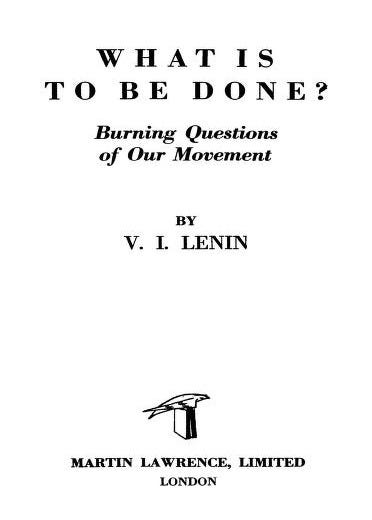
In the year 1902, the pamphlet, “What is to be done? Burning Questions of Our Movement” by V.I. Lenin was released. It had been written to combat the trend of economism and “bowing to spontaneity” holding back the revolutionary movement in Russia and for paving the way for a principled vanguard party of the proletariat to lead the Socialist revolution. What do ‘economism’ and ‘bowing to spontaneity’ mean here? What is the need to understand these terms in the present day context? What can we understand from the increasing number of spontaneous agitations by the oppressed masses in India? Are some questions this article aims to discuss in a brief manner.
What is spontaneity?
...the “spontaneous element”, in essence, represents nothing more nor less than consciousness in an embryonic form… The workers were losing their age-long faith in the permanence of the system which oppressed them and began… I shall not say to understand, but to sense the necessity for collective resistance, definitely abandoning their slavish submission to the authorities. But this was, nevertheless, more in the nature of outbursts of desperation and vengeance than of struggle.
— V.I. Lenin, Chapter 2, “What is to be done? Burning Questions of Our Movement” (1902)
Spontaneity or spontaneous movements mean, in essence, the outbursts or mobilizations taken up by section(s) of the oppressed classes that have come from within them in a manner which focuses for the most part on their immediate needs. Their demands remain constricted to meet these needs, for example they may ask for a wage raise, a reduction in compulsory working hours and even the withdrawal of a bill. If these demands are met to a certain degree, business-as-usual can carry on. If they are not met at all, there may be escalations seen till they are or till the upsurge dies down out of exhaustion. But this does not address what allowed these problems to arise, as much is evident by the periodic and intensifying nature of these crises and outbursts.
The Need for Political Consciousness
If we look on the surface, it may seem that there are some political parties, certain corporations or a few evil people in power who are causing these problems to occur in our lives, who are responsible for destroying the lives of many. These people and groups in power collectively act this way, in the interest of corporates and capital, because they belong to the ruling class of capitalists and exercise their power through the State, which is not a neutral entity but an instrument of class rule.
Even if a certain reform is achieved, for example a wage hike or the repealing of a law, the power still remains in the hands of the same ruling class. Such reforms are only superficial, while desirable, they must be only one of the means of class struggle and not the end in itself. As long as the rotten core of the old society is not uprooted and thrown out, the oppression and exploitation will continue, all historical examples of reformist methods have shown us the same. Hence, the method of legislative reform does not bring a fundamental and lasting change. Only through the conquest of political power by the proletariat from the bourgeoisie in the process of a social revolution would a new society be formed.
This deeper understanding of the origin of these problems being not simply this or that greedy individual, a few “crony” capitalists but rather the entirety of class society and the knowledge that the enemy of all hardworking and oppressed peoples, the enemy of the toiling masses being the ruling classes and their State, is what can be regarded as political consciousness.
Trade Union Consciousness Is Not Political Consciousness
The history of all countries shows that the working class, exclusively by its own effort, is able to develop only trade union consciousness, i.e., the conviction that it is necessary to combine in unions, fight the employers, and strive to compel the government to pass necessary labour legislation, etc.
— V.I. Lenin, Chapter 2, “What is to be done? Burning Questions of Our Movement” (1902)
Trade unions, when not connected with any of the revolutionary forces and not as a means of organizing the working class employed by a communist party, become in essence, mediators between the workers and their exploiters and oppressors. A means by which the workers are duped into settling for reasonable demands and to return to their daily lives without any fundamental social change. The leaders of trade unions don’t become representatives for workers’ demands but play the role of rationalizing the capitalists’ demands in the workers’ eyes. In this way they seek to preserve an unjust peace, a compromise between labour and capital, the subjugation of labour to capital continues.
Economic agitations such as demands regarding wages, working conditions, working hours, against a particular law are taken up as our sole task, they get stuck in a loop of getting concessions from the ruling class and as more and more severe crises hit, the concessions are taken away. Without having far reaching goals and not having the means or intent to achieve them, the subjugation of labour to capital cannot end. To end this subjugation, to bring a fundamental social change, a transformation of society, means primarily to struggle for the seizure of political power under which economic agitations must be included as opposed to making economic agitation itself the sole task and relinquishing any possibility of struggling a new society.
Revolutionary Politics and The Source of Political Consciousness
The theory of socialism, however, grew out of the philosophic, historical, and economic theories elaborated by educated representatives of the propertied classes, by intellectuals. By their social status the founders of modern scientific socialism, Marx and Engels, themselves belonged to the bourgeois intelligentsia.
— V.I. Lenin, Chapter 2, “What is to be done? Burning Questions of Our Movement” (1902)
A crucial point to understand is that while in its coming face to face with the conditions that capitalism has produced, the working class can have a sense that the boss, the corporation or even a particular political party, a particular government is its enemy, the working class cannot on its own or from within itself become conscious of the contradiction of class society as a whole. As Lenin has explained, this consciousness first arose in the intellectuals through the development of the theory of socialism and further developed into scientific socialism. This is because it requires an understanding of the development of society as a whole, of all the inter-relations within class society, of the laws of motion of capitalism, its contradictions and the means, historical necessity to resolve them. This is not to deny the day to day experiences and struggles of the working class, it is in the full acceptance and understanding of these conditions, not in isolation or just in an immediate sense but in the inter-relation with the whole of the rotten old society is what allows us to find the way to do away with these conditions entirely. To imbue this political consciousness into the oppressed masses then becomes a key task of revolutionary politics.
Why Must Revolutionaries Combat Spontaneity?
...for the spontaneous working-class movement is trade-unionism … and trade unionism means the ideological enslavement of the workers by the bourgeoisie. Hence, our task, the task of Social-Democracy, is to combat spontaneity, to divert the working-class movement from this spontaneous, trade-unionist striving to come under the wing of the bourgeoisie, and to bring it under the wing of revolutionary Social Democracy.
— V.I. Lenin, Chapter 2, “What is to be done? Burning Questions of Our Movement” (1902)
Spontaneity, by its very nature, subdues itself to ruling class politics, that is to say, however many times these spontaneous outbursts take place, they will get nullified through the state machinery, through repression by the police, through the granting of certain temporary concessions and being taken advantage of by ruling class political parties to bring the participating workers, peasants or any oppressed section of society into their politics.
This politics will keep parliamentarian, constitutionalist and reformist illusions alive in the mind of the oppressed, they will be made to believe that if you simply side with us, vote for us, we will fight for you. But owing to their nature, these parties (whether “left”-wing or right wing) go on to betray the masses. Every couple of years, the ruling class political parties come to the people asking for votes on this or that promise of change. But their class character becomes clear when they inevitably serve capital and no one else, they also utilize the state machinery when it comes to repressing mass struggles.
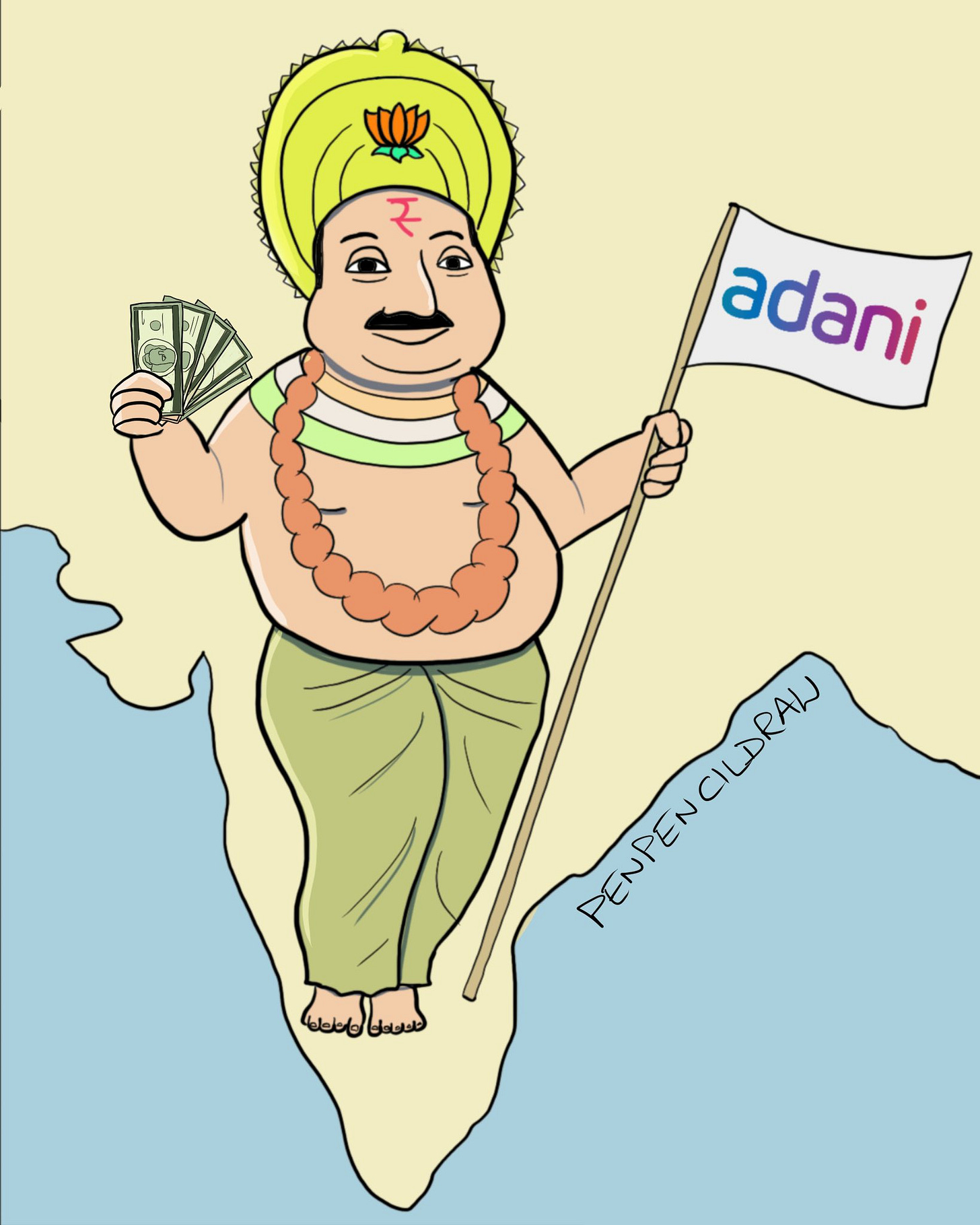
Whether it is Adani and Ambani for the BJP now, Tata earlier for even the Congress, or Adani and his port deal for the so-called CPI(Marxist), these parties contest only for the redistribution of power among various sections of the ruling class. Some are outright fascist, while others not so much, they all still operate within the politics of Neo-liberalism. What is required then is a revolutionary intervention to boycott elections in an active manner, to expose the falsehoods perpetrated by these ruling classes and bring the toiling masses under the revolutionary movement.
The Noida Worker Protests and Other Working Class Protests Across The Nation
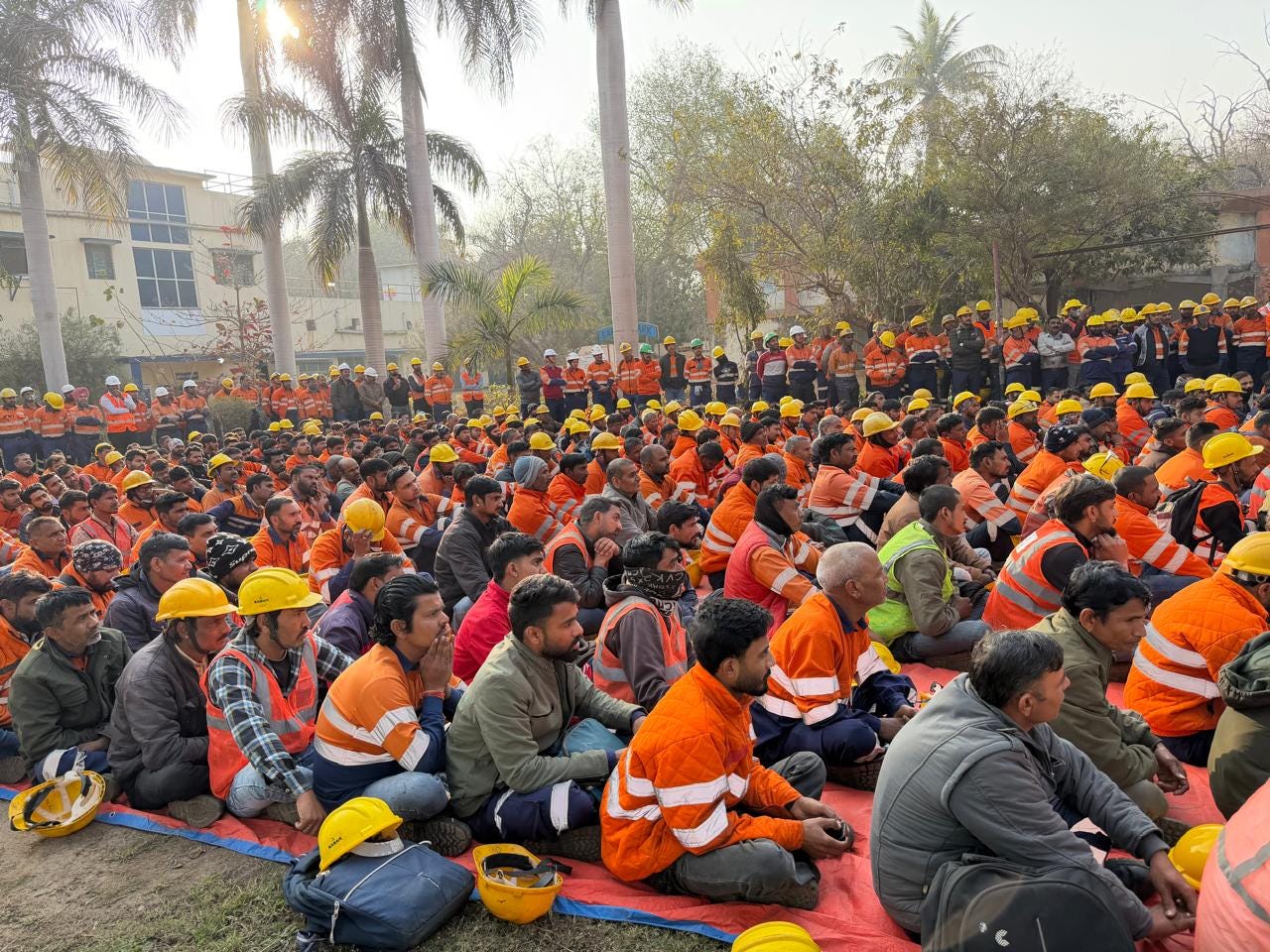
Around 2 weeks ago on April 13, 2026, workers in Noida took the streets in a wave of unrest. This was after previous dharnas and an increase by a meagre sum of money, as low as 320 rupees increase in monthly wages for some. This clearly conciliatory move was not enough as they face more and more problems in their daily lives from financial issues. The LPG crisis from the US-Israel imperialist aggression war on Iran (even more so because of the Indian state siding with the Imperialists) pushes cylinder costs in black markets upwards of 5000 rupees.
Moreover, the Brahmanical Hindutva fascist state has implemented the new labour codes, which are meant to directly serve corporate interests and make worker exploitation more efficient. Over 40,000 workers in more than 80 locations within Noida’s industrial areas mobilized on the streets. Swift police repression was brought down upon these protestors. The arrests that were made during these protests, of both workers and activists, have still not been released, families of workers and activists await answers of whereabouts and the conditions of their family members. These protests have not been the only ones, in various industries, thousands of workers have been protesting in recent times.
The Nature Of These Protests
They [the strikes of the 1890s] marked the awakening antagonisms between workers and employers; but the workers, were not, and could not be, conscious of the irreconcilable antagonism of their interests to the whole of the modern political and social system, i.e., theirs was not yet Social-Democratic consciousness. In this sense, the strikes of the nineties, despite the enormous progress they represented as compared with the “revolts’, remained a purely spontaneous movement.
— V.I. Lenin, Chapter 2, “What is to be done? Burning Questions of Our Movement” (1902)
What is observed differently in these protests is the lack of the leadership of any trade union. This is the case because the established trade unions not tied to any revolutionary forces in the country have fallen behind the workers. They became a fetter during these protests and hence were sidelined, instead used only as per the convenience of the protesting workers’ for legal aid and such. “What sets these [Noida] protests apart is the absence of major trade union leadership, which is unusual for labour movements in India, said a union leader who declined to be named for fear of police action.” reported BBC news on April 16. In this scenario we can observe directly the nature of trade unionist politics, that the workers became more militant and came into a direct confrontation with the police and the state machinery. But nonetheless theirs remained a spontaneous upsurge that on its own cannot fundamentally change society owing to the limited demands and lack of a revolutionary leadership. Hence it becomes the role of revolutionaries to bring the workers into revolutionary politics and elevate, not de-escalate or pacify their struggle.
A Contrast With The Anti-Transgender Amendment Bill (2026) Agitations
Now we have seen the power that the working class possesses, even if in its embryonic form of a spontaneous outburst. Just about 2 weeks before the Noida workers protests, the Trans amendment bill that directly aims to criminalize Trans people and police their identity, became a law on March 30, 2026. It was brought into the Lok Sabha on March 24th and swiftly steamrolled through both the houses, passing in the Rajya Sabha on March 25th. Amidst this, some limited sections of the so-called opposition parties gave a few hollow words and “staged a walkout” as their only action to supposedly stop this bill from passing. The agitations on the ground to oppose this bill were limited, in both their participation and their scope. For example, email campaigns to MLAs and MPs, then to the President were conducted, moreover, most protests that happened were done with police permission in restricted areas and limited slots of time.
There were many reports of marginalized peoples and activists within the Trans community, from working class and oppressed caste sections having their demands and their voices not reaching the leaders that were present for this movement. The NGOs and sections of ruling class parties that came to acquire leadership of these agitations, were inherently limited by their class character to not elevate these agitations and keep them palatable. What was lacking in this movement, even in the shared characteristic of being spontaneous movements, was working class participation and hence there couldn’t be a large-scale mobilisation that would pose a significant challenge to the bill. What is needed in the Queer movement, is its fusion with the revolutionary movement, with the striving to defeat the fascist state’s onslaught on all the oppressed sections of society and not just workers or transgender people.
... people who pronounce themselves in favour of the method of legislative reform in place and in contradistinction to the conquest of political power and social revolution, do not really choose a more tranquil, calmer and slower road to the same goal, but a different goal. Instead of taking a stand for the establishment of a new society they take a stand for surface modifications of the old society.
— Rosa Luxemburg, “Reform or Revolution” (1900)
Spontaneous upsurges often fail to achieve the demands that they themselves set out to, this is owing to their primitive nature. As opposed to this, revolutionaries must be organized in a party and through a concrete analysis of all inter-relations within our society and a study of the primary and secondary contradictions, wage the struggle for the birth of a new society. To further understand these ideas it is imperative to study the Marxist classics such as “What is to be done? Burning questions of our movement” (1902) by Lenin and further study the Russian and Chinese experiences of Socialist revolution and other movements that have been born since then including our own. In the summing up of their experiences, both achievements and setbacks faced by them and in creatively applying Marxism to our specific conditions through a concrete analysis lies the key to furthering the Indian revolutionary movement.
Read next

Online Reading and Screening| To Vote Is Not A Choice
Join us as we read, discuss, and collectively build clarity.

Online Reading and Screening| To Vote Is Not A Choice
Join us as we read, discuss, and collectively build clarity.
“Vote Chori”, SIR and Current Outburst
Where is the Movement Headed and What Must We Do?