Revolution Behind Bars: Gramsci’s Battle Against Fascism and Capitalism
"For twenty years, we must stop this brain from functioning." – Fascist Prosecutor at Gramsci’s trial
Contents
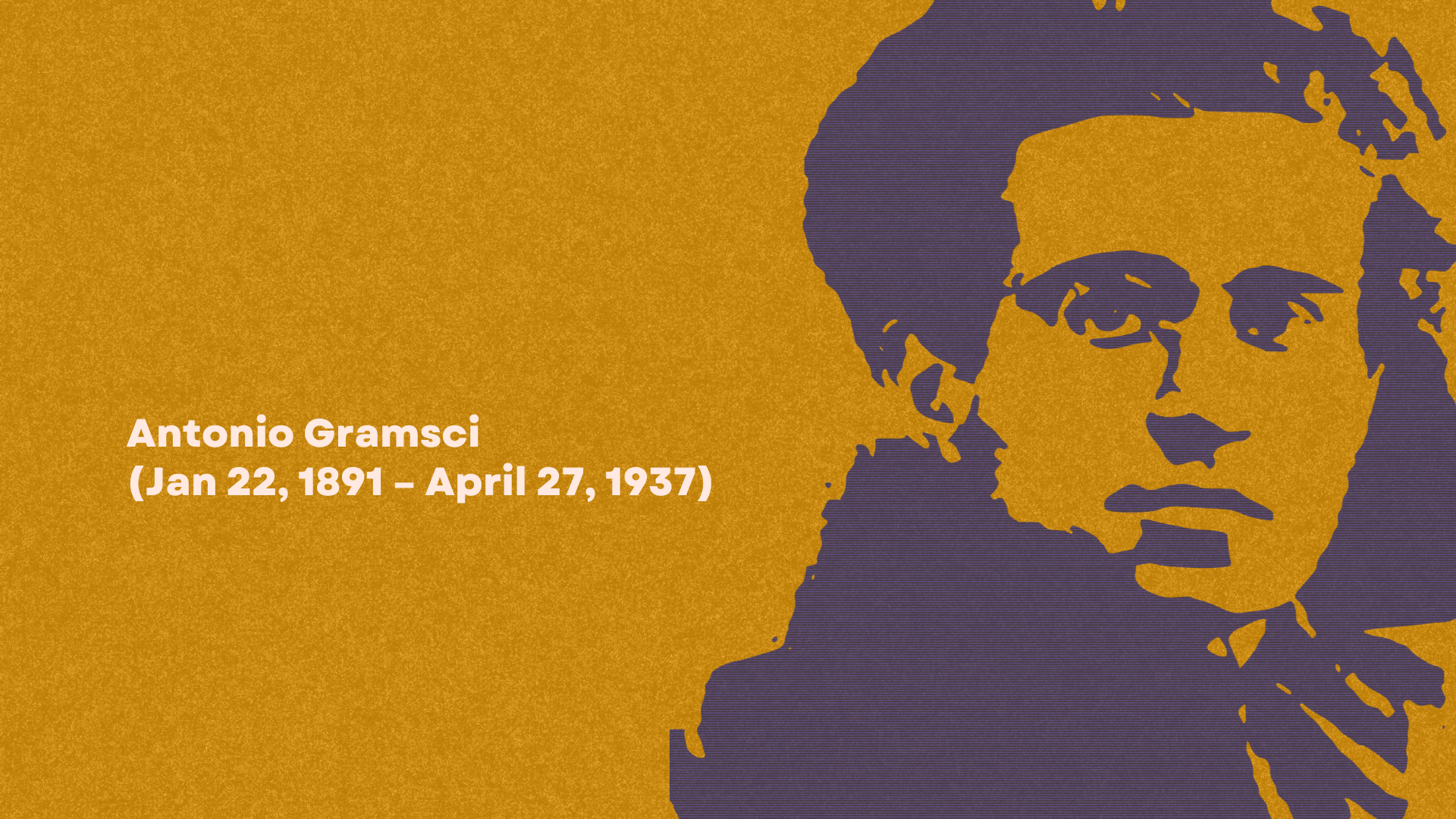
Who was Gramsci?
Born in 1891 in Ales, Sardinia, a land of poverty and hardship, Antonio Gramsci rose from the margins of Italy to become one of the dangerous intellectual threats to capitalism and fascism.
As the general secretary of the Communist Party of Italy, he challenged Mussolini’s (the filthy dictator who, in fact, coined the term ‘fascism’) fascist regime not with guns but with ideas. Ideas so dangerous that the prosecutor at his 1928 trial declared:
“We must stop this brain from working for 20 years.”
Sentenced to prison, Gramsci died in captivity, but he gifted the world with around 3000 pages of revolutionary thought. These Prison Notebooks became a tool for resistance, not just against fascist Italy, but against all systems that rule through consent disguised as freedom.
Hegemony
Gramsci’s most important idea was hegemony. It refers to how the rich, dominant class maintains its power not by force, but by winning the consent of the masses through culture.
It can simply be defined as:
“Predominance obtained by consent.”
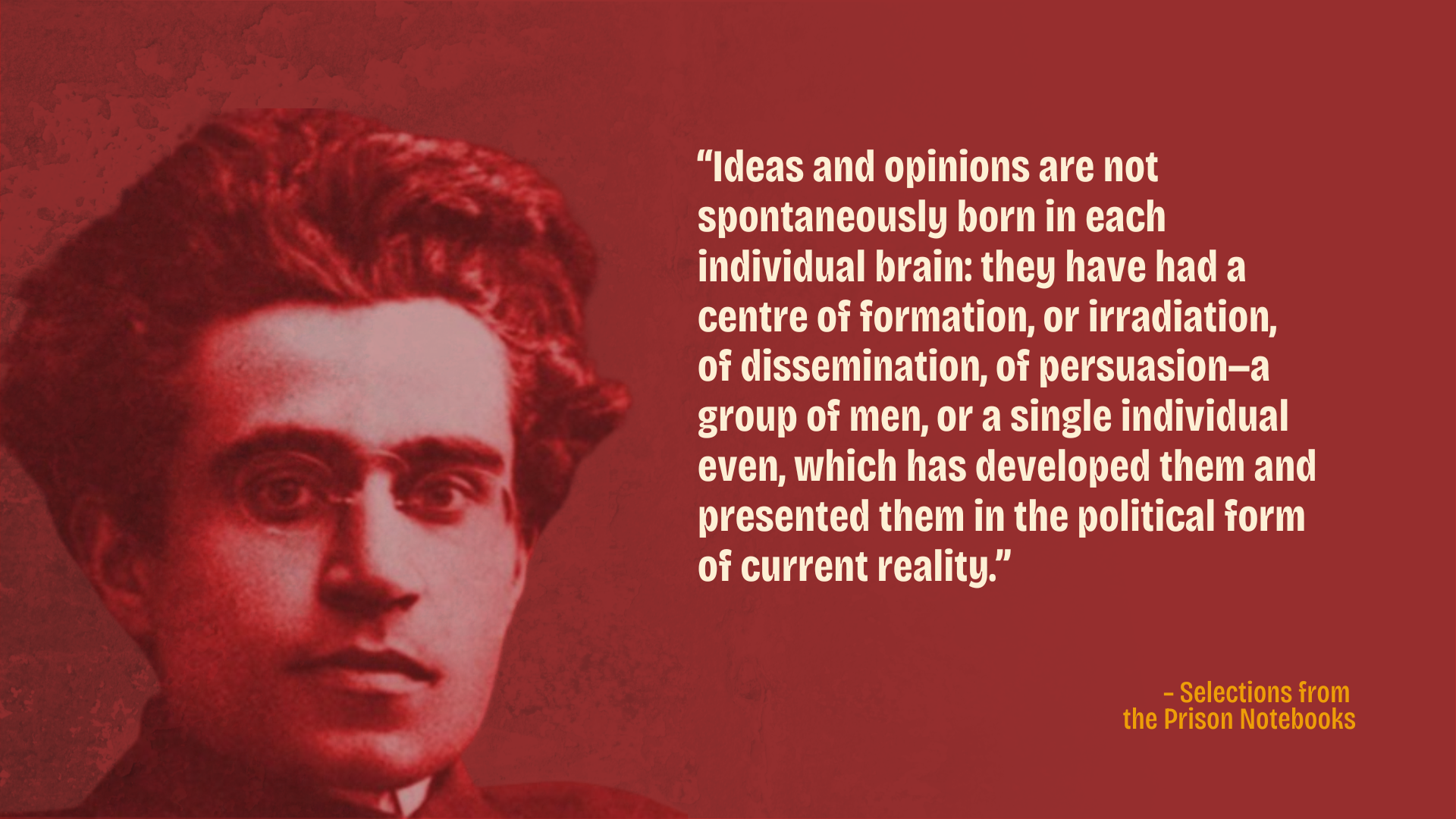
This means that capitalist ideas like individualism, nationalism, meritocracy, and notions like “poverty is natural,” “there is no alternative for capitalism,” or “if you work hard, you’ll be rich” become ‘common sense.’
Through cultural institutions like schools, churches, media and even family structures, capitalists try to convert oppressive and fascist ideas into a ‘common sense’ that doesn’t seem oppressive at all. These institutions work to convince people that the current social order is natural and unchangeable.
As a result, the people directly affected by these oppressive ideas begin to support them. For example, the idea that “everyone must suffer to succeed” creates a ‘common sense’ that glorifies exploitation as necessary and deserved.
Another Example of Hegemony
Capitalists may use social media, trading and cryptocurrencies to create the illusion that anyone can become rich through hard work and dedication.
For example, the recent popularity of Ashton Hall, an Instagram ‘influencer’ who rose to fame by posting his daily routine, gives young people the neoliberal illusion that by trading, going to the gym and isolating themselves from community engagement, they can become rich and live in a penthouse.
This routine becomes ‘common sense’ for people.
Capitalists have thus succeeded in converting the ‘capitalist sense’ into a normal common sense. As a result, instead of resisting or questioning the immense wealth gap, people, especially the youth, desire to become so rich that inequality no longer affects them.
The oppressed dream of becoming the oppressor. In this way, the ruling class gains consent from the working class through cultural artefacts and legitimises their dominance.
State = Political Society + Civil Society
Political society refers to the institutions of coercion, like the government, police and legal system, that maintain order and direct control.
Civil society, on the other hand, refers to everyday cultural life, like media, education, religion and family, where people’s consent is manufactured.
So, the state is both the political society and civil society — that is, the government and everyday life. It doesn’t just control people, it also teaches them how to live.
That’s why Gramsci called it an “ethical state” or “educator” that promotes “a certain way of life.”
However, that’s not to say the state doesn’t use force. Hegemony (the ‘common sense’) is protected by the “armour of coercion.” The government tries to get people to agree with its ideas, but it also keeps force (like the police or laws) ready in case they don’t.
Consent comes first, but force is always in the background to protect it.
Common Sense vs Good Sense
Gramsci believed that to understand and change society, we must pay attention to everyday beliefs shaped by ‘common sense’ (religion, education, language etc.), ideas that people accept as truth without questioning.
Although often uncritical and shaped by dominant ideologies, common sense also contains ‘good sense’, that is, practical and realistic ideas based on real lived experiences.
Example:
There might be a belief among the working class that “poverty is a matter of fate.”
This is a ‘common sense’ idea propagated by capitalists to discourage collective resistance.
But Gramsci would point to the ‘good sense’ within this: people’s deep frustration with injustice and their desire for dignity.
Another common sense idea that “you must suffer, overwork and sacrifice your well-being to succeed” makes exploitation seem necessary. But the good sense in it is the recognition that even after all technological progress, people still trade life for survival, which is a deep injustice.
The task of revolutionaries is to nurture this ‘good sense’ and transform it into class consciousness. Rather than mocking people’s beliefs, revolutionaries should engage with them.
Their frustrations must be used to challenge hegemony (dominant ideology).
And for Gramsci, that’s where the intellectuals come in.
The Role of Intellectuals in Building a Counter-Hegemony
For Gramsci, intellectuals are anyone shaping people’s consciousness.
He identified two types of intellectuals: traditional and organic.
Traditional intellectuals, like professors, clergy and philosophers, often come from elite spaces, focus on theory, and remain distant from real struggles.
Organic intellectuals, in contrast, emerge from within a class or movement. They understand the ground reality and fight for their people.
The ruling class also has its own organic intellectuals, such as media figures, consultants and policy-makers, who reinforce the capitalist worldview.
If the dominant class can create its hegemony by winning the consent of people and without using force, Gramsci believed a counter-hegemony could be built through collective action and strategy.
To create a counter-hegemony, Gramsci argued that the working class must develop its own organic intellectuals, like union leaders and artists, to translate everyday frustration into political action.
Organic intellectuals should transform frustration and ‘good sense’ into tangible revolutionary action. Traditional intellectuals, like professors or religious figures, could also be brought into the struggle, but they must be repurposed, not worshipped.
What Should Revolutionaries Learn About Strategizing?
Gramsci warned that modern revolutions aren’t won with violence alone.
In capitalist societies, revolution can’t rely solely on direct confrontation.
He called that a “war of maneuver,” which refers to quick and open conflict, like uprisings.
But real change requires a “war of position,” a long-term struggle for cultural and ideological influence. It involves gaining societal support before taking formal control.
While force may still be needed, securing consent across society is key in modern revolutions.
Before taking power, revolutionaries must reshape ‘common sense’, build alliances, strategise, spread new values and train minds.
As Mao reminded:
“Revolutionary culture is a powerful revolutionary weapon for the broad masses of the people. It prepares the ground ideologically before the revolution comes.”
Revolutions fail when people don’t believe in them.
To win power, we must first win belief — culture helps create that belief.
And everything takes us to what Ambedkar said:
“Educate, Agitate, Organise!”
Read next

Online Reading and Screening| To Vote Is Not A Choice
Join us as we read, discuss, and collectively build clarity.

Online Reading and Screening| To Vote Is Not A Choice
Join us as we read, discuss, and collectively build clarity.
“Vote Chori”, SIR and Current Outburst
Where is the Movement Headed and What Must We Do?