Lines in the Sand
A brief analysis of the perception of the Indian Army in popular imagination and the sustenance of this perception
Contents
Every year, as India celebrates its Republic Day, the nation wakes up early and gathers around the television to watch the parade, a national event of sorts. The highlight of the parade, of course, is the army: the epitome of bravery, grace, and sacrifice, marching in all its glory. In India, there is a strange reverence for the army. In a country that does not mince its words while criticising state institutions, the army exists as a perennially moral entity beyond all other institutions and affairs of the state. The ministers might be corrupt, the police might be greedy and incompetent, the banks might be slow, and the bureaucracy might be inefficient, but for the people of India, the army is untouchable; almost a divine force in public imagination, the questioning and criticism of which feels almost unspeakable. A force that has its own rules, laws, customs, morals, and ethics, a distinct universe governed by its own standards of discipline.
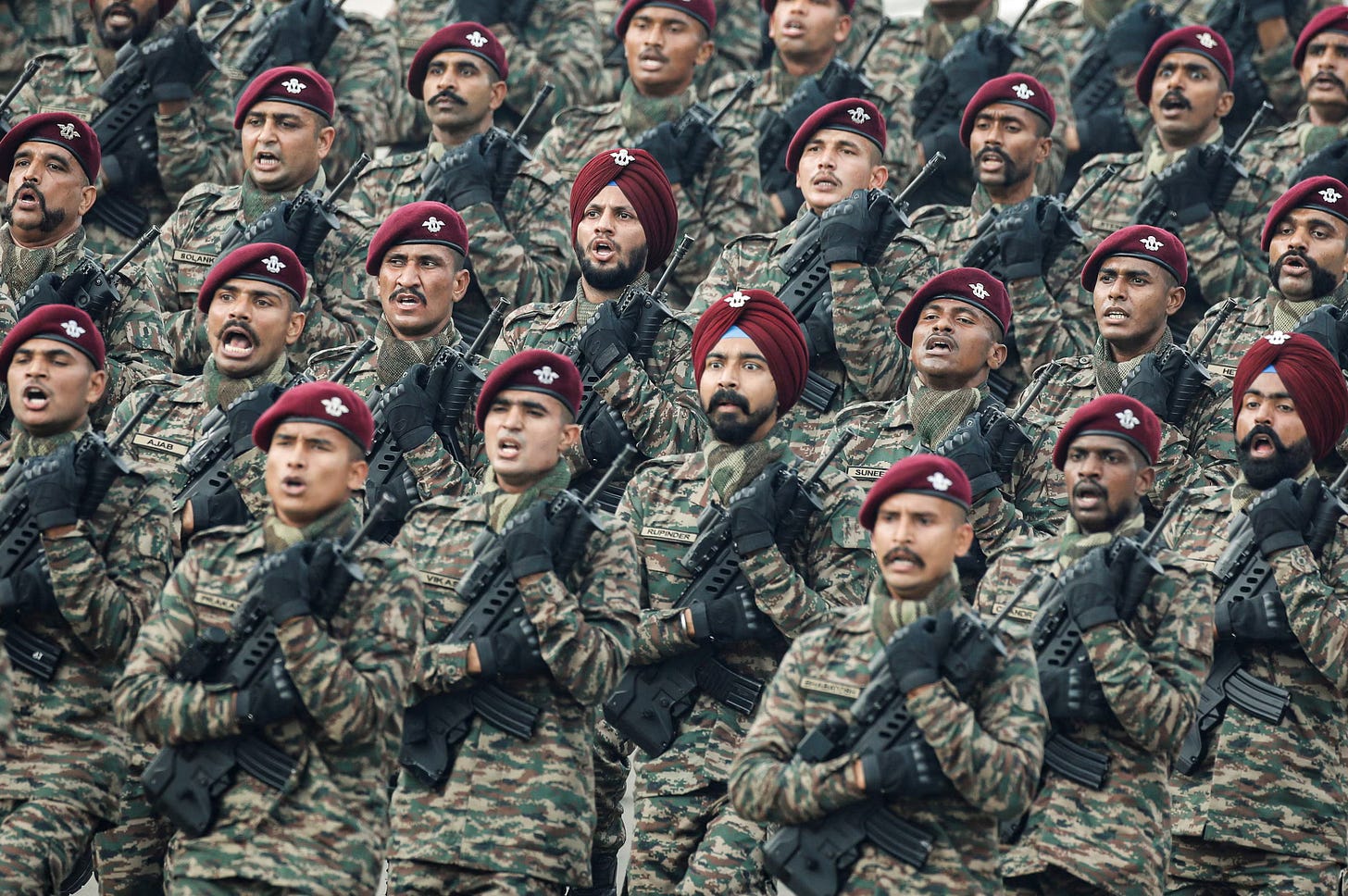
This reverence, contrary to popular notion, cannot be explained simply by the risks soldiers face. Military service is neither the most dangerous occupation in the country, nor the only one in which individuals routinely risk their lives. Doctors and nurses work on the frontlines of epidemics, sanitation workers enter toxic sewers (often without proper protective equipment, unfortunately), and factory labourers operate under hazardous industrial conditions every day. All these forms of labour demand courage and expose individuals to mortal danger, often with far less recognition. And yet, it is the army alone that enjoys this strange, persistent, and unparalleled admiration. The goal of this article is to analyse this admiration and understand the cause behind it.
But before we understand this strange relationship between the people and the army, we must first understand what an army is.
In popular imagination, the army is a heroic force that exists solely for the security of the country and its citizens. Political theory, however, has a less romantic definition. If, as Weber argued, the modern state is defined by its monopoly over ‘legitimate violence’, then the army is the most concentrated and disciplined embodiment of this violence. It should be carefully noted that this power is not merely an abstract principle, but a material force, organised, institutionalised, and exercised through real bodies in specific social contexts. Lenin describes the standing army as a ‘special body of armed men’, trained and armed to the teeth by the state, responsible for enforcing this monopoly, and answerable only to the state. It executes decisions that are made elsewhere, carrying out violence on behalf of the state and in protection of its interests.
Thus, when stripped to its bare bones, the army appears to be nothing but a weapon without its own conscience, not because the soldiers within it lack moral judgement, but because the institution itself is designed to subordinate personal morality to the command of the state. Since the institution itself is subject to the whims of the state, individual morality becomes insignificant. Ultimately, it functions as an instrument of violence that the state can choose to deploy, beyond its borders or within them, at its own discretion.
But if the army is the institutional embodiment of the state’s monopoly on violence, why does it occupy such a uniquely moral position in public imagination in India? The answer is not straightforward. A combination of historical experience and sociological factors has gradually produced this reverence, and we must study these in order to make some sense of this phenomenon.
The roots of this phenomenon can be traced, in part, to the traumatic birth of the Indian state in 1947. An extraordinarily violent partition brought with it territorial insecurity, post-colonial fragility, and almost-immediate military conflict. In tumultuous times like these, institutions capable of projecting order and stability acquire immense symbolic power. The army, disciplined and visibly organised at a time when other institutions — and the newly born nation itself — seemed fragile, came to embody this stability. Early conflicts over territory (as early as October 1947) only reinforced this perception, and established the army’s position as the physical guarantor of the country’s sovereignty and territorial integrity in the years following the partition. The reassuring idea of a brave and valorous institution defending the country against external threats provided a sense of protection and psychological safety, and assurance that the state would endure. Gradually, this pride in the army fused with pride in the nation itself, to the point that admiration for the army became an essential tenet of nationalism. In popular imagination today, the army sits at a pedestal closer to the nation itself than to other institutions within it.
This historical experience, however, is not enough to fully explain the army’s image, especially why it has persisted almost uncontested for so long. A sociological factor that contributes to this image is the severe deficiency of art that criticises the army, or even art that seriously confronts the brutality of war in general, in the Indian mainstream.
Artistic traditions around the world have often questioned the necessity of war, and the legitimacy of the institutions that carry out war, including the military. In the United States, for instance, the fall of Saigon gave rise to an entire genre of anti-war cultural production, ranging from films to music albums. Popular and intentional art criticised war and the army alike and demystified the army, stripping it of its higher moral ground it had long enjoyed in public imagination, especially since the end of the second World War. What followed was a widespread sense of disillusionment, to the point that the romantic image of the army was replaced by abhorrence, to the extent that Vietnam veterans were greeted with the accusation of being ‘baby killers’ when they returned home.
A similar sustained cultural movement, which makes the military itself an object of sustained moral scrutiny through cultural production, has been largely absent in India.
This absence is partly rooted in the way war has been experienced in post-independence India. Conflicts in the years following the partition have largely remained geographically and socially distant from the everyday lives of most civilians. They have been short and fought primarily along the borders. As a result, war has rarely generated the kind of prolonged national disillusionment that might provoke sustained cultural interrogation of the military institution itself.
Although popular films that did attempt to portray the horrors of war, including Haqeeqat (1964) and Border (1997), were somewhat successful in humanising the army, they fell short of critically examining the role of the military institution itself. It made the army appear more relatable and humane without questioning the legitimacy of the institution, which in fact deepened public sympathy instead of forcing people to confront their own beliefs about it. What could have been an interrogation of war itself, an interrogation of this seemingly all-powerful institution that carries out mindless violence regardless of the brutality it inflicts on the soldiers themselves, was instead simply absorbed into a familiar narrative of sacrifice and patriotism. The ‘anti-war’ genre in the years following the partition, ultimately, could do very little to evoke an ‘anti-war’ emotion at all, it simply humanised the army while leaving the romantic image intact.
Even more progressive pieces of cultural production, for instance, Swadesh Deepak’s excellent play Court Martial (1991), which powerfully exposes the caste hierarchies embedded deep within the structure of the army and does a brilliant job at stripping it of its romantic aura, stops short of questioning the legitimacy of the institution. Overall, isolated attempts were made to humanise the army (while still keeping its ‘rightfulness’ intact) or even question aspects of it (without undermining the structure itself), but a ‘movement’ could hardly be seen.
At the turn of the century, things took a drastic turn. The rapid expansion of private satellite television in post-liberalisation India in the late 90s coincided with the Kargil War (1999), completely transforming the way war was experienced by the urban public. Television, which had begun modestly with just forty-one sets and a single channel in 1962, had by 1995 reached more than seventy million homes, with an estimated viewing population of over four hundred million people across more than a hundred channels. For the first time, conflict was broadcast into living rooms across the nation in near real-time. Television coverage framed it as a dramatic national narrative where the army was the protagonist, courageously defending us from the enemy. War became a spectacle, and the army, mythical. Popular culture, of course, soon reflected this shift, from movies like the quintessential Lakshya (2004) and LOC: Kargil to multiple plays and books that glorified the valour and heroism of the armed forces across cinema, theatre, and literature.
The little work that had been done to ‘humanise’ the army was inundated by the flood that came with the spectacle of Kargil.
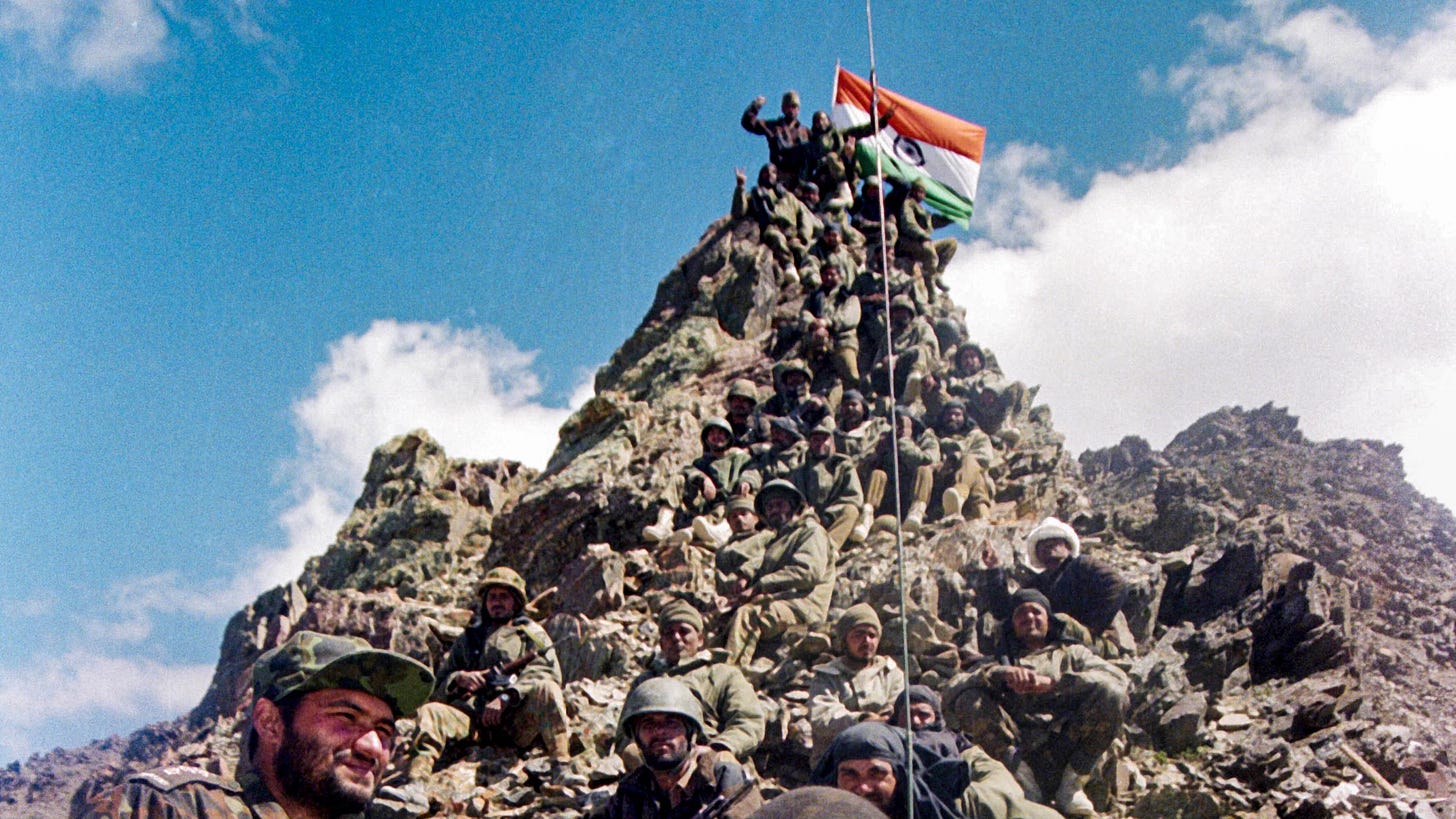
In the years that followed, the mythologised image of the army was only amplified, a process which has accelerated dramatically particularly over the last decade as an increasingly aggressive and violent form of nationalism continues to grip public discourse and culture. Popular cinema, again, has played a significant role in reinforcing this image. Blockbuster films like Uri: The Surgical Strike (2019) and Shershaah (2021) set the stage for more recent works such as Major (2022), Sam Bahadur (2023), and 120 Bahadur (2025), all of which have used the manic expansion of OTT platforms in India to their advantage. The prevalent nationalism in urban metropolitan societies fuels mainstream art that romanticises the bravery and sacrifice of the troops, which, in turn, intensifies further the nationalistic fervour; a vicious self-reinforcing loop that has little space for counter-narratives. The majority of the people interact and engage with the army only symbolically from a distance, not materially.
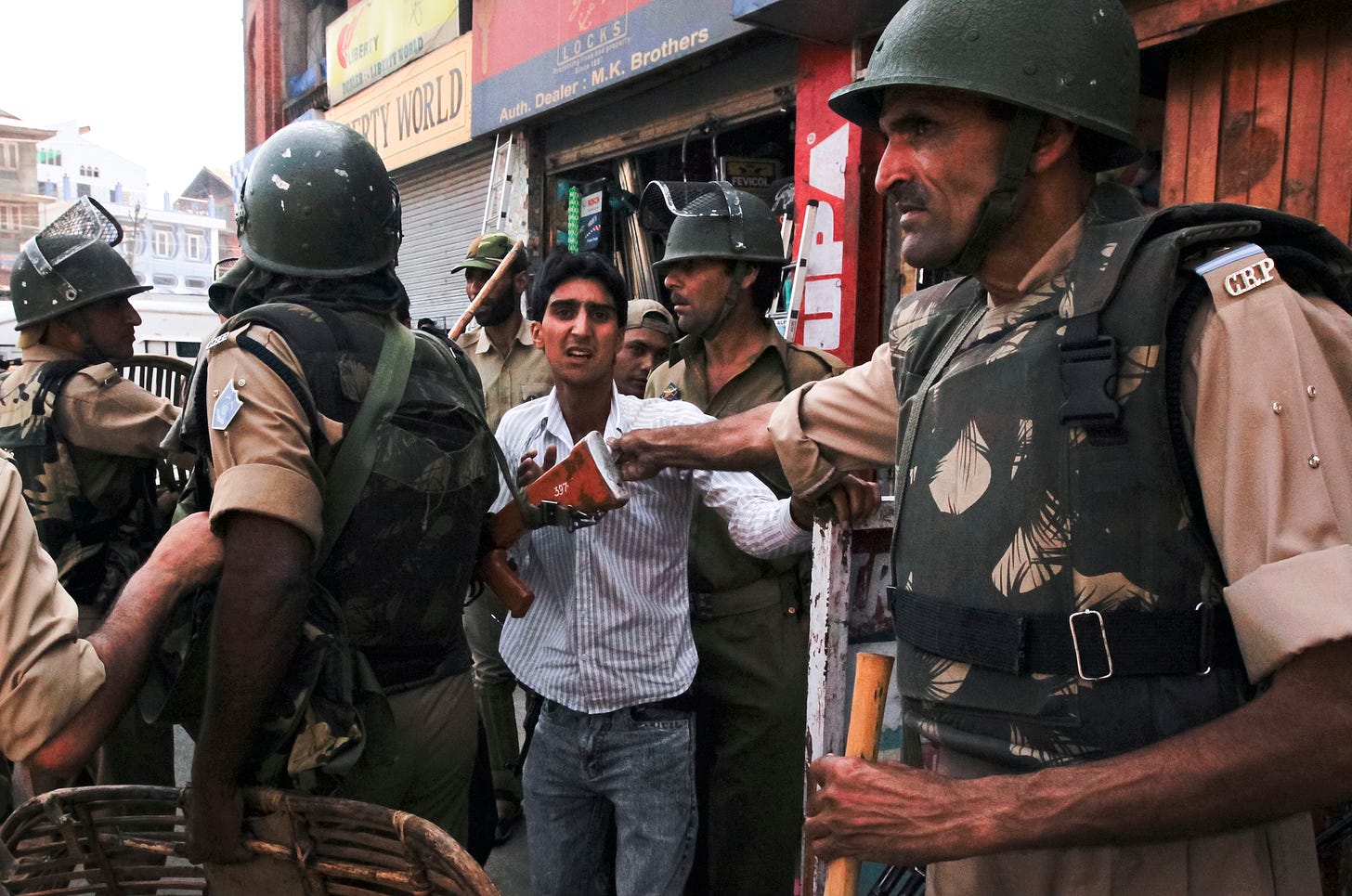
However, it would be naive to assume that everyone experiences the presence of the army from a distance. For a vast population, the army is not just a symbol of pride defending our borders, but a force that lives and breathes in their everyday life. A force that inflicts violence not just for them, but upon them; an omnipresent monstrosity breathing down their necks. This continuous violence has long been a part of the lived reality of people in Kashmir, Chhattisgarh, Jharkhand, and large parts of the North-East. In these regions, the army is not an abstract symbol mediated through cinema or television or literature, but an institution encountered directly, materially. Yet the voices that emerge from these spaces rarely find a place in the national mainstream. They remain geographically distant, politically marginalised, and culturally underrepresented.
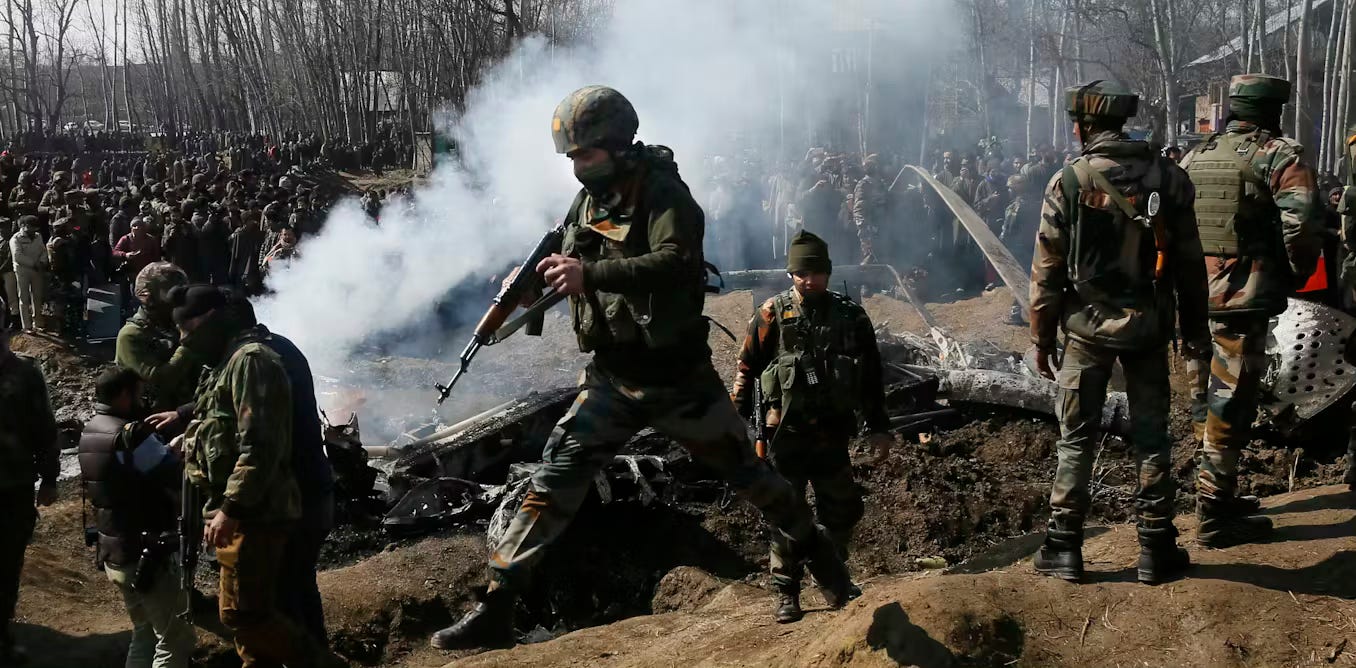
When the army carries out barbaric violence against these people on behalf of the state, when it kidnaps, maims, rapes, injures, shoots, and kills, the screams of the victims fail to pierce the bubble of the narrative constructed within urban metropolitan society. The vicious feedback loop between jingoistic nationalism and cultural production remains largely intact, insulated from the realities it does not represent. And the army continues to exist in the public imagination as a largely unquestioned and unopposed moral force, because even though alternative experiences exist, they are systematically excluded from the spaces where national meaning is produced.
Another major reason for the relatively little scrutiny is the historically stable and amicable relationship between the army and the state in India. In countries like Pakistan or Myanmar, where the military has repeatedly intervened in politics, and has, at times, even overthrown governments, the army comes to be seen as a competing centre of power. Such interventions naturally generate suspicion and distrust in the public imagination. In India, by contrast, the army has never attempted to seize political power by undermining the state, and by doing so it has preserved its image as a loyal and disciplined extension of the state, not as an entity driven by its own political ambitions. The idea of the army as an ‘apolitical’ institution is, therefore, not merely assumed, but actively reinforced through this history.
Taken together, these historical, cultural, and institutional factors produce an image of the army that transcends ordinary scrutiny. It comes to be seen not merely as a state institution, but as something closer to a moral absolute, a ‘godly’ entity imagined as being above error and sin, and therefore beyond question. In such a framework, to criticise the army begins to feel indistinguishable from criticising the nation itself. Consequently, incidents or actions that might otherwise invite criticism and reflection are either absorbed into narratives of ‘national duty’ and ‘sacrifice’, or dismissed as isolated aberrations or accidental mistakes attributable to individuals rather than the institution. The institution itself remains untouched, its moral authority intact.
What emerges, then, is not simply respect for the army, but a form of reverence that shields it from the very scrutiny that every instrument of power must inevitably be subjected to.
Read next

Online Reading and Screening| To Vote Is Not A Choice
Join us as we read, discuss, and collectively build clarity.
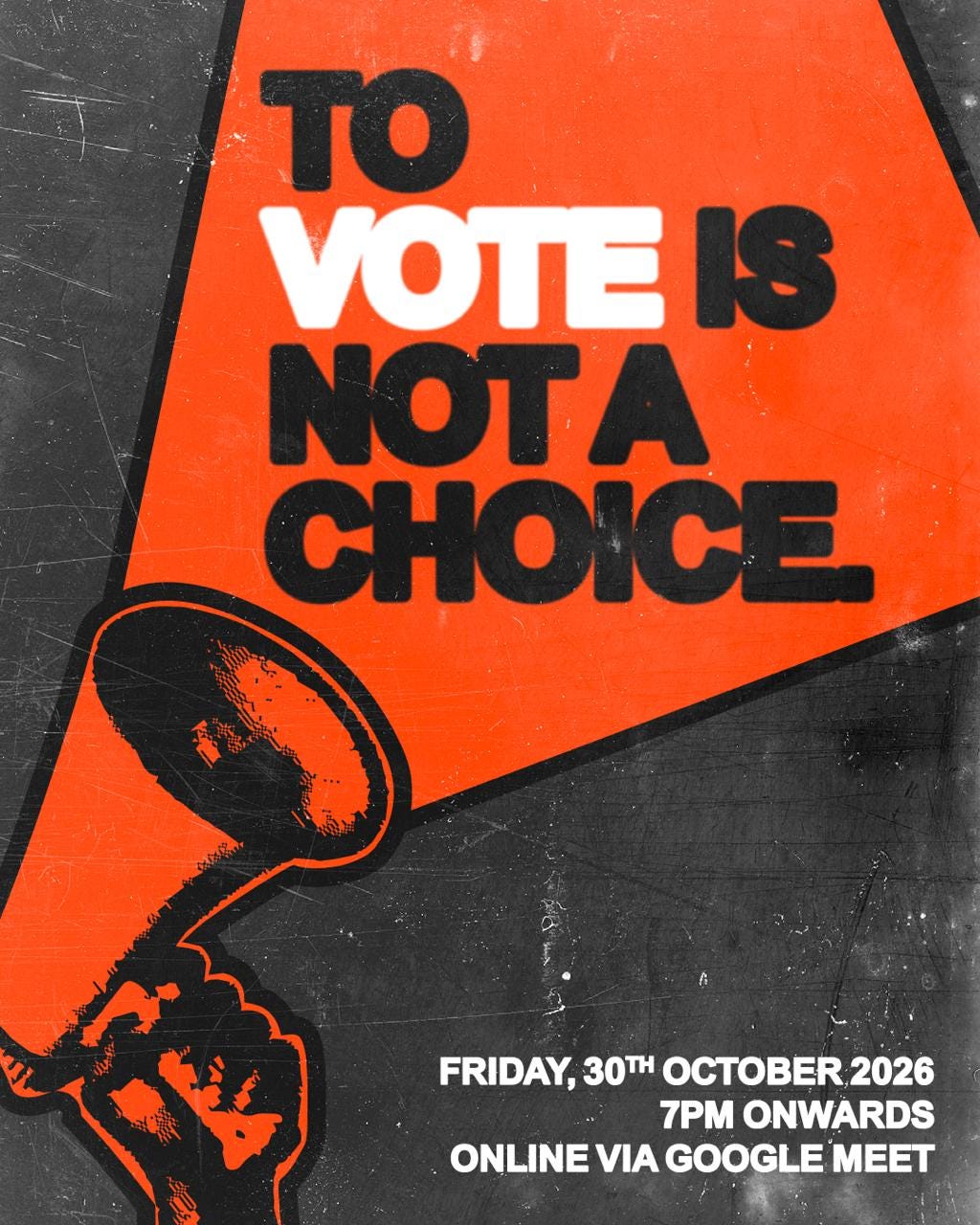
Online Reading and Screening| To Vote Is Not A Choice
Join us as we read, discuss, and collectively build clarity.
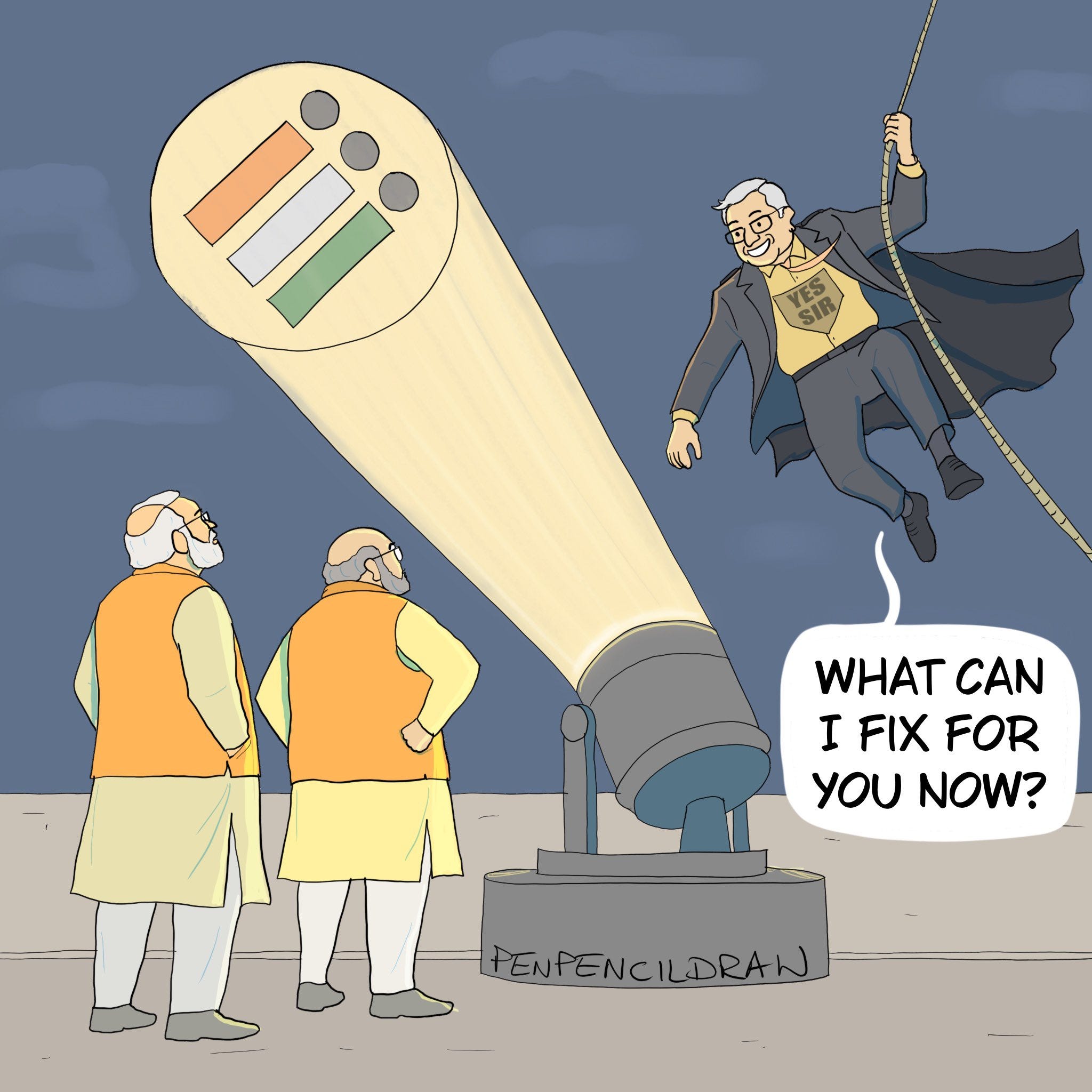
“Vote Chori”, SIR and Current Outburst
Where is the Movement Headed and What Must We Do?