Is Communism Really Just “Good on Paper” or Have We Been Taught to Think So?
Contents
“Communism looks good only on paper”, is one of the most common claims hurled at the communists. This claim is voiced not only by the most anti-communist, pro-capitalism individuals, but also by those who may be critical of capitalism but find the idea of communism, a utopian dream or a totalitarian nightmare that must be avoided.
This argument stems from two main causes:
1. A lack of understanding of Marxist socialism and how it differs from utopian socialism.
2. A lack of imaginative power and hopelessness.
Let us try and dissect both of these phenomena.
1. Misunderstanding the Meaning of “Socialism”
“Socialism is when the Government Does Stuff”
Socialism is often understood as a system where the state does everything, controls the market and serves the people. This idea of socialism has been deliberately made into the popular understanding of the term. It is one reason why many believe countries like India to have been “socialist” before 1991, because the state exercised significant control over licensing and ran certain industries and undertakings.
The economic failures of such a system are then pointed to as evidence of the “failure of socialism” itself. The argument becomes simple: the government controlled the economy, the economy performed poorly, therefore socialism failed.
However, this understanding only looks at what the state does. It does not ask who controls the state.
The fact that the state regulates the market, owns certain industries or controls parts of production does not by itself change the class character of society. What matters is which class holds power and therefore determines how production, distribution and consumption are organised.
A capitalist state can regulate markets, own enterprises and intervene heavily in the economy without ceasing to be a capitalist state. The question, therefore, is not simply how much the state controls. It is which class controls the state and whose interests that control serves.
To understand the character of any economic system, we must therefore begin by asking: Who is the ruling class?
“Socialism is when State Keeps a Check on Ruling Class”
The idea of an egalitarian, mutually cooperative society has existed long before Marx and Engels. Early thinkers observed the new, unique problems growing out of individualism under capitalism and envisioned a better world. The solution, according to them, was morally persuading the capitalist class into giving up their power and everyone coming together for a better world. They saw the state as the paragon of righteousness, an institution that could keep a check on capitalist excesses and take care of society.
However, this turns the idea of socialism into a matter of morality. It creates a scenario which naively makes out the individual capitalists to be the bad guys and the state to be the good actor who can keep their bad behaviour in check through consciousness and morals alone. This worldview assumes the state can and will act against the interest of capital and convince the ruling class to act against their own perceived interests.
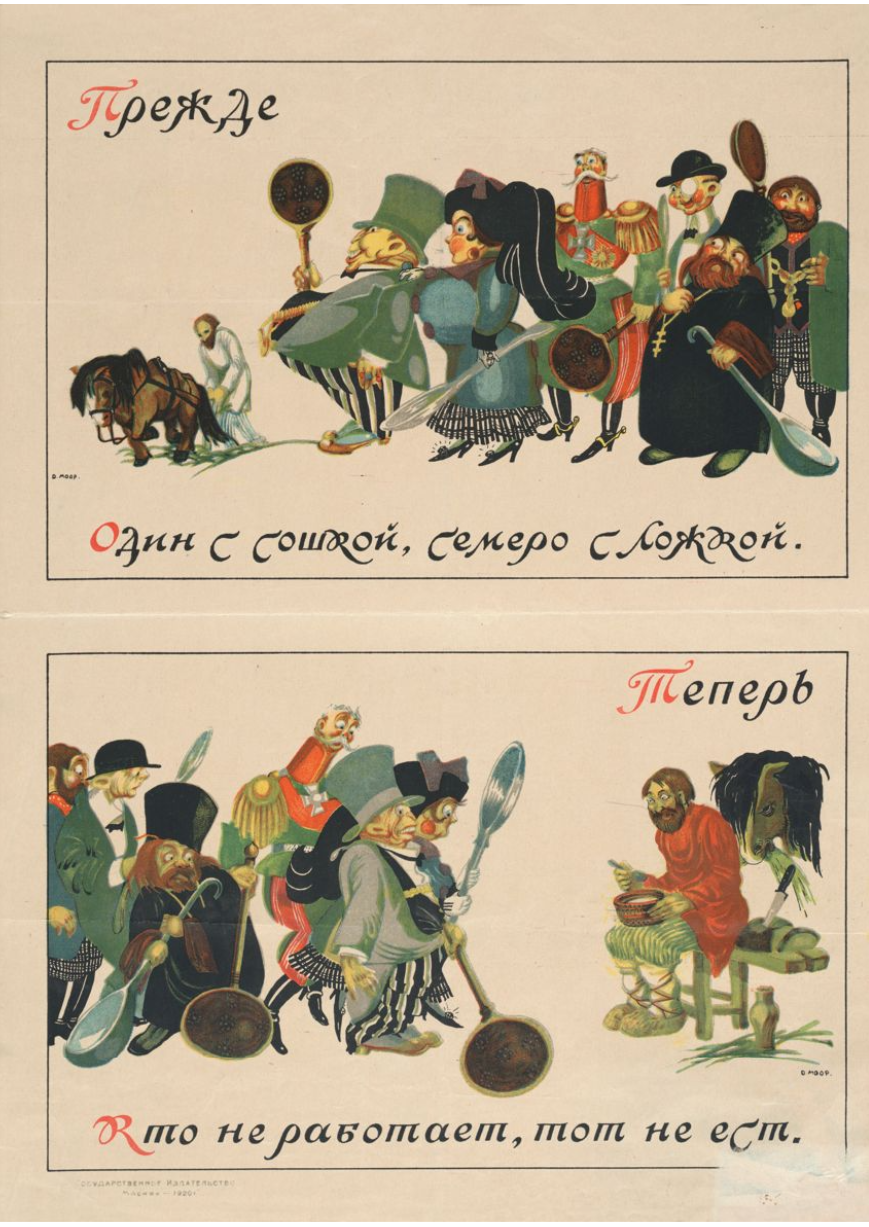
But can state act against the interests of the ruling class?
The state historically has always been under the control of the ruling class of a system. Under slavery, it belonged to the slaveowners; under feudalism, it belonged to kings and landlords; and under capitalism, it belongs to the capitalists. While seemingly kept above the society, the state is in fact part of a society and stems from it. As history suggests, its primary function is to keep a check on the opposing forces to the ruling class and to protect the status quo.
The final days of feudalism is a witness to this. The feudal state, for centuries, attempted to suppress the budding capitalist class. Many battles were fought between the capitalists and the feudal state, as the latter attempted to block the expansion of capitalism. However, in the end, as productive forces took shape and became fully incompatible with the relations of production under feudalism, the feudal state and society had to be broken down—and so it did.
As a recent example, in the aftermath of the 2008 global financial crisis, the US government effectively bailed out the capitalist class and preserved the existing market system which had caused the crisis in the first place, while the vast majority of ordinary working class people around the globe faced foreclosures, unemployment, and prolonged economic hardship.
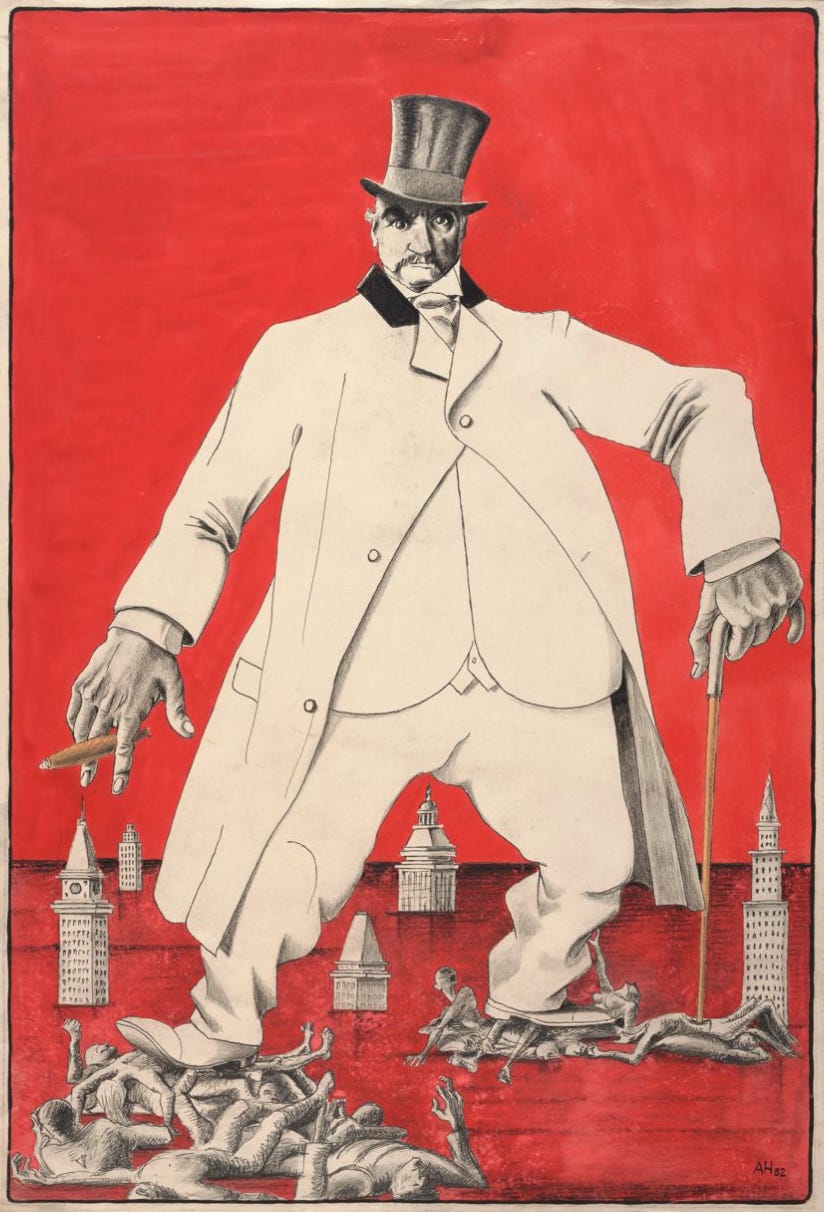
Under capitalism, the state doesn’t just protect the capitalist class at times of crisis but routinely aids its preservation and expansion through legislation, coercion or direct state force. Moreover, the state relies not only on coercion but cultivation of consent through cultural, educational and political institutions. An easily observable contemporary example is the deployment of security forces by the Indian state to secure raw resources by crushing people’s resistance, for e.g. in Jharkhand, Orissa, Madhya Pradesh, which are then handed over to private firms, to be sold for profit.
Therefore, it is naïve to assume that in a capitalist society, the state would act as a barrier to capitalist powers; in reality, this is the antithesis of the state’s role in such a system.
For now it would be enough to conclude that the popular idea of socialism, one rooted in morality and hinging on the consciousness of the State, is utopian, because such a thought is not rooted in any material reality.
What Do Marxists Mean by Socialism?
Marxist socialism takes a different, or rather the opposite, approach. It strays away from the idealist notion of the state as a noble institution, or as Hegel put it, the “march of God on earth”.
Marxism understood the class basis of the state by studying its historical function and its emergence alongside class divisions. It is then understood that only with the dissolution of classes does the necessity for an institution such as the State begin to wither away. This final stage is called communism.
It also understood, however, that before the transition to a classless society, a socialist state has to exist, wherein the state represents the actual majority class—the class that produces for society instead of feeding off the work of others. At this stage, the working class, through the State, can build the conditions necessary for the transition towards a communist society.
In this form of socialism, political power is placed in the hands of the working class, whose interests lie in transforming the conditions of production and eventually abolishing the class divisions that make the State necessary. The socialist state therefore serves as a means through which the working class can advance towards a classless society.
Marxist socialism, which is both dialectical and materialist in nature, does not strive towards this goal on the basis of morality or any other abstract concept alone.
Through the scientific framework of dialectical materialism, Marxism shows the contradictions that led to the decay of slave-based society and feudalism. Similarly, it also identifies the fundamental contradiction under capitalism: the social nature of production and the private appropriation of its results.
This means that while capitalism has developed the productive forces at an immense rate, it has also produced an incompatibility between those productive forces and the relations within which people produce. Production has become social on a massive scale, but ownership of the means of production remains private.
From these contradictions emerge several interconnected problems—exploitation of labour, recurring economic crises, alienation of workers, extreme wealth inequality, increasing commodification of all aspects of human life and perpetual violence, whether actual or potential. These contradictions, as Marxists understand, cannot be resolved without a complete transformation of the system. This requires the overthrow of bourgeois class rule and the establishment of a socialist society.
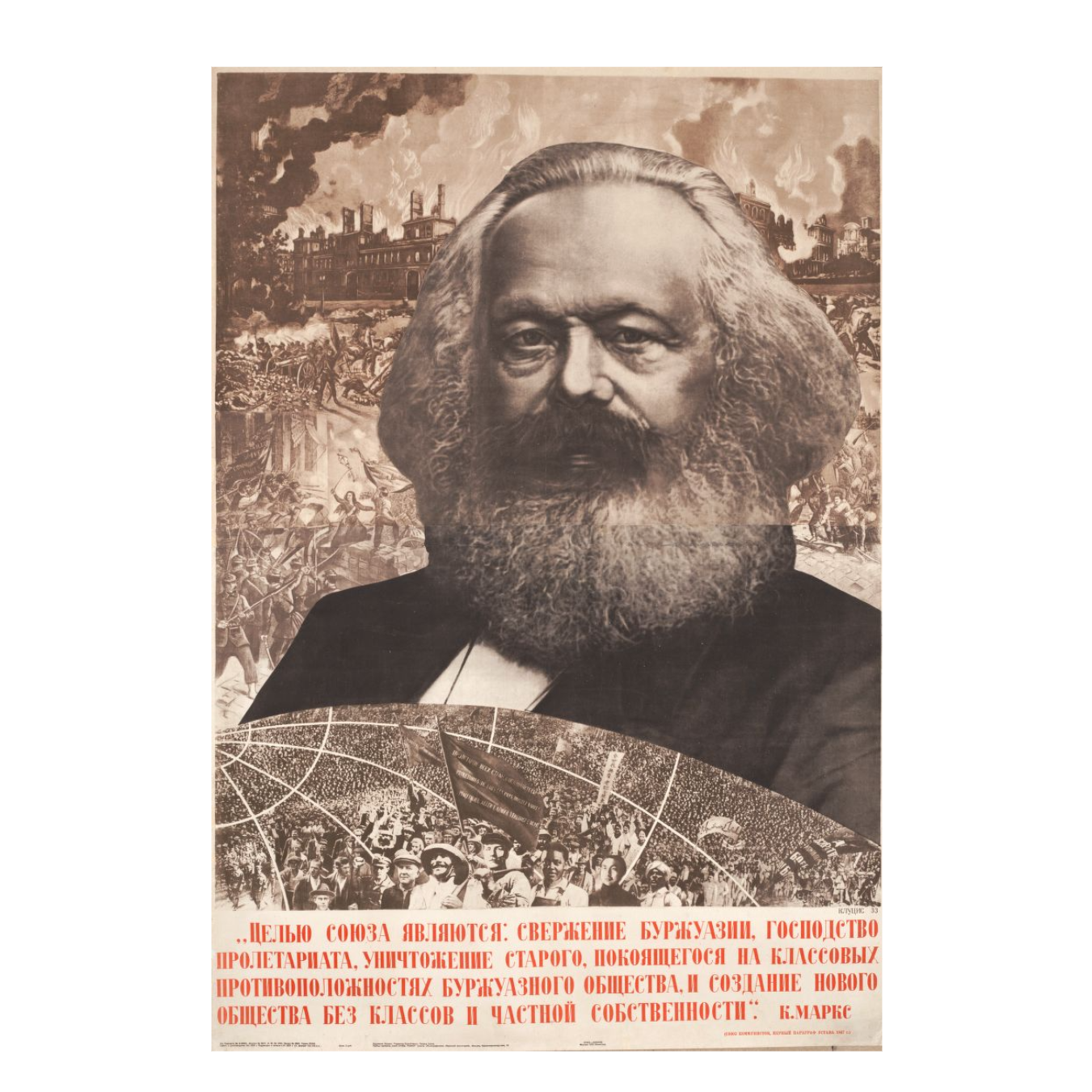
Thus, unlike utopian socialism, which expects existing class relations to remain intact while expecting the state to undertake tasks contrary to the interests of the ruling class, Marxists understand socialism as the political and economic transformation of those very class relations. It is through this transformation that the conditions for a communist society can be created.
2. The Problem of Imagination
The distinction of Marxist Socialism from other utopian ideas of an egalitarian society is an essential one, however, even with this differentiation, there lies the problem of imagination. Socialism or communism seems utopian and imaginary for the same reasons capitalism might have seemed utopian during the times when humans hunted animals to survive, or when production took place through slaves, or when a serf toiled day and night just for their subsistence.
The idea of an advanced system seems impossible to imagine when we live in an outdated one. Part of this is natural, for it is difficult to imagine something that you have not seen, especially when it seems diametrically opposed to what you do see around you. As Mark Fisher famously noted in Capitalist Realism, “It is easier to imagine the end of the world than the end of capitalism.”
While our inability to imagine constitutes part of the problem, the other part lies in the system itself. Capitalism, like all previous systems, has normalised its own conditions while portraying any alternative as dangerous, unrealistic, or impossible. Despite widescale evidence of its crises, corruption and contradictions, capitalism presents the existing order as the only natural and viable way to organize society.
One of the tools in its pocket is the examples of socialist experiments that were “unsuccessful” and “totalitarian”. Capitalists make huge investments in running the propaganda machine against them, obscuring two important facts:
Socialist governance produced positive results at a scale that the capitalist system never has been able to, especially in terms of the improvement of the lives of the people.
These systems were subjected to sustained covert and overt intervention, sanctions, coups, economic isolation, or military pressure from Western capitalist powers, preventing them from developing under conditions free from external hostility
An insidious aspect of capitalism is accommodation of its own criticism. Films, television, literature, and social media routinely depict corporate greed, corrupt politicians, exploitative bosses, and environmental destruction. However, these critiques often do not threaten capitalism itself because they stop short of entertaining the idea of a credible systemic alternative. The audience is encouraged to recognize the flaws of the system while assuming that no fundamentally different social order is feasible.
People may complain about the existence of inequality and exploitation, however, they continue believing these are simply unavoidable features of reality rather than products of a particular economic system. Therefore, even when these issues are seen as systemic and institutionalised, the solution for them is understood to exist under the liberal framework of painstakingly slow reforms, within the larger system. Under capitalism, the critique of the system could be scathing, the denouncements, radical, but the accepted prescription never seems to escape the inadequate bounds of liberalism. Anything questioning the validity of the system itself is either discarded as something too unrealistic, too radical or at worst too dangerous to engage with. Capitalism therefore, does not have to claim to be the best, but merely the least bad and additionally, the only shield protecting us from the “totalitarian” nightmare that is communism.
Through its fear-mongering, misinformation, and control over media and education, the current system actively kills our imagination, fostering a belief that the existing order is natural, permanent, and without alternative. This erodes our ability to analyse our present living conditions in the context of human history.
Capitalism emerged to challenge and ultimately overthrow feudal exploitation as the market economy began to develop. Driven by advances in technology, expanding trade, and improvements in communication and travel, it unleashed productive forces on a scale no previous system had achieved.
Despite such advancements under this system, our society continues to structure itself around an artificial cause—profit, instead of a real cause—human needs.
Humanity has the means to feed everyone, yet millions remain hungry.
An abundant labour force and unprecedented automation capabilities exist, yet millions remain unemployed.
Scientific and technological progress has advanced at an extraordinary pace, yet countless people continue to struggle to meet even their most basic needs.
This is neither natural nor normal. Capitalism has conditioned our minds into normalizing these conditions. When we look at it from a critical perspective, doing away with the restriction of our imagination to our immediate reality, there remains no logical reason for us to not dismantle the capitalist system that continues to propagate misery and exploitation for its growth.
A New World Must Come
A new world is not only possible but it must be brought about with urgency, for a contradictory system continues to push the society towards its ruin and possible extinction every passing second.
Imagine if human beings had never shifted to cooking food on fire despite the discovery of it. Or if society had never adopted agriculture despite finding its production capabilities. Humankind would probably not have survived long enough for you to be reading this.
The case remains the same with Capitalism. While it has outlived its historical role, Capitalism continues to hinder the possibility of a better world, through economic exploitation, state power, and ideological domination. This has to be broken and just like all previous other systems, it will be achieved by the ordinary people living in the system.
For a new world to come forth, we have to do away, not only with the idealistic claims of utopia but also with the scepticism of the material possibility of a different and better future.
Read next

Online Reading and Screening| To Vote Is Not A Choice
Join us as we read, discuss, and collectively build clarity.

Online Reading and Screening| To Vote Is Not A Choice
Join us as we read, discuss, and collectively build clarity.
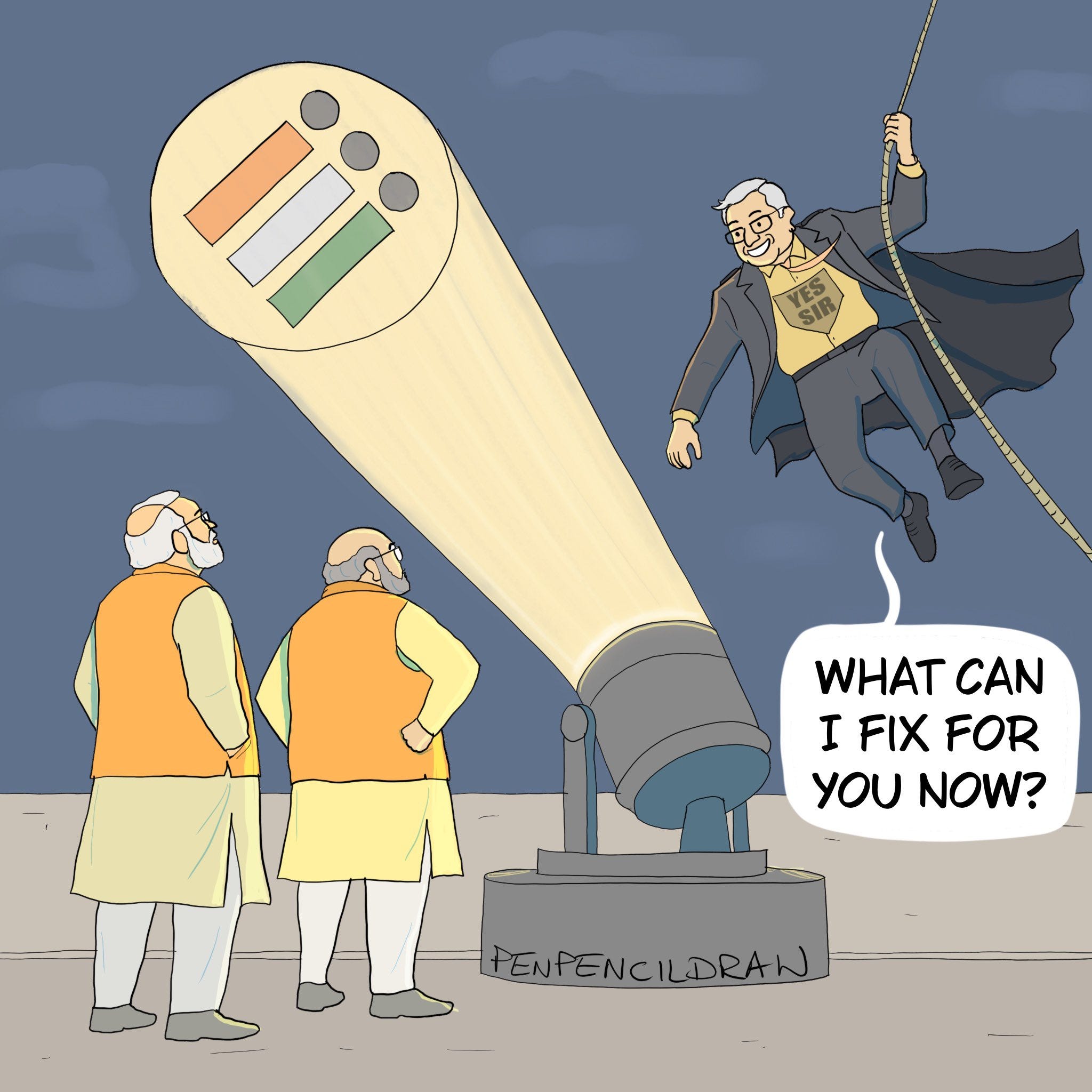
“Vote Chori”, SIR and Current Outburst
Where is the Movement Headed and What Must We Do?