Dalit History Month
Contents
Inspired by the Black History Month celebrated in October each year, Dalit History Month was launched in April, 2015 by a collective of Dalit women activists – including Thenmozhi Soundararajan, Christina Dhanaraj, and Sanghapali Aruna, to reclaim histories erased by dominant caste narratives.
In the United States, Black History Month was institutionalised to correct the systematic exclusion of African American experiences where slavery, segregation, and structural racism were long treated as marginal rather than foundational to the nation’s story. Similarly, in South Asia, caste has not only governed material life but also controlled memory, rendering Dalit histories invisible, distorted, or expendable.
Both systems, whether racism or caste, operate not just through economic and social domination but through epistemic violence: the denial of oppressed communities as producers of culture, knowledge and history. Dalit History Month, just like its Black counterpart, therefore seeks to reclaim history as a site of resistance, transforming absence into assertion and memory into a tool for dignity, political consciousness, epistemic justice, and democratic correction.
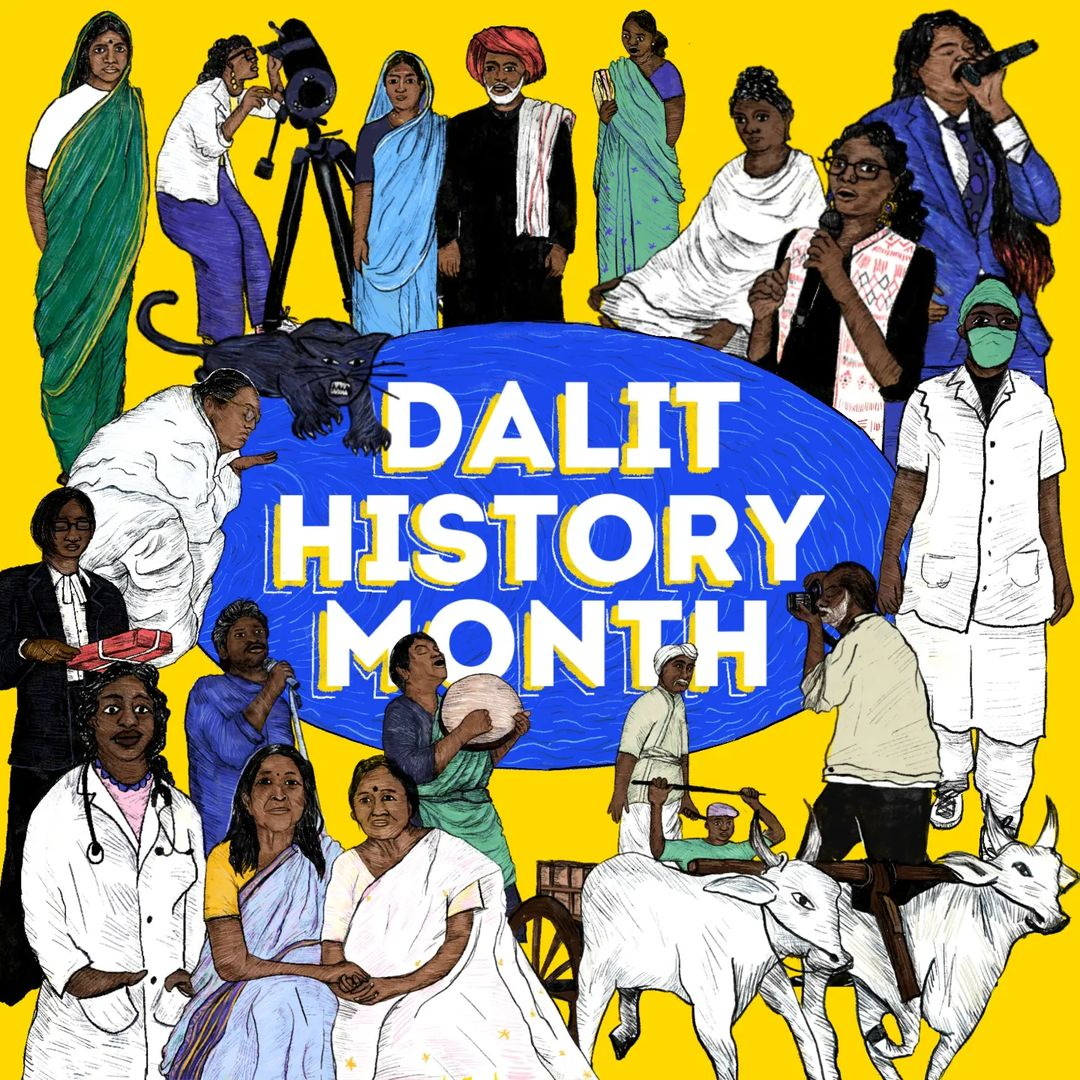
Significance and Need for Dalit History Month
“I was orphaned from history and forced to adopt someone else’s as mine. Made to believe that our history did not matter. The history of the people who built, cleaned and cremated for this country did not matter. But our history matters. It matters to us who form approximately one fourth of the population of India. It matters to the people from whom their history was taken away. So, we started to write our history, on our own.”
– Siddhesh Gautam, Ambedkarite Artist
For ages, the Dalit community was stripped of their rights and dignity, from access to basic resources controlled by Savarnas, to education and artistic expression. History itself was sanitised and held under Savarna control. Dalit History Month arises from a long-standing imbalance in how history has been written and remembered in India, where dominant caste perspectives have shaped what is preserved, while challenging narratives from anti-caste movements remain at the margins. Works of Dalit thinkers, activists, artists have not received the space they deserve in classrooms or public conversations, leaving us with a limited and incomplete understanding of the past.
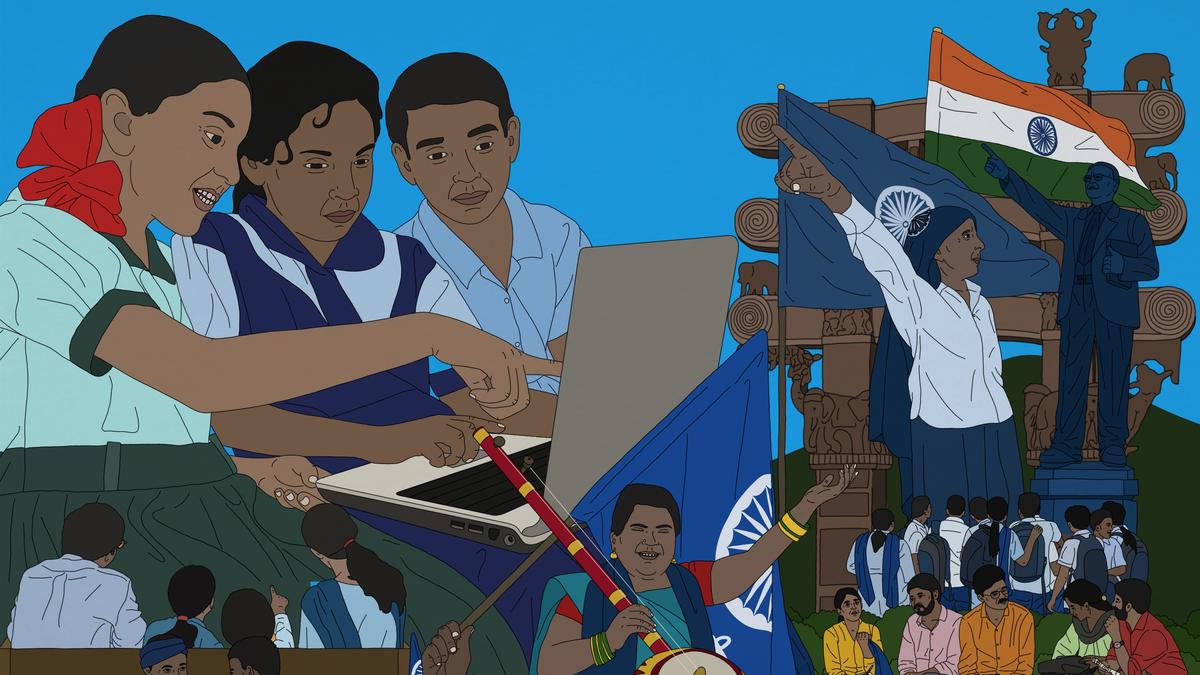
And so, Dalit History Month is not only about recognition but also about restoring memory and acknowledging struggles that have often been overlooked, from everyday resistance to larger movements for dignity and rights. It also encourages a more honest engagement with caste as a continuing reality that shapes social, economic and political life rather than something confined to the past.
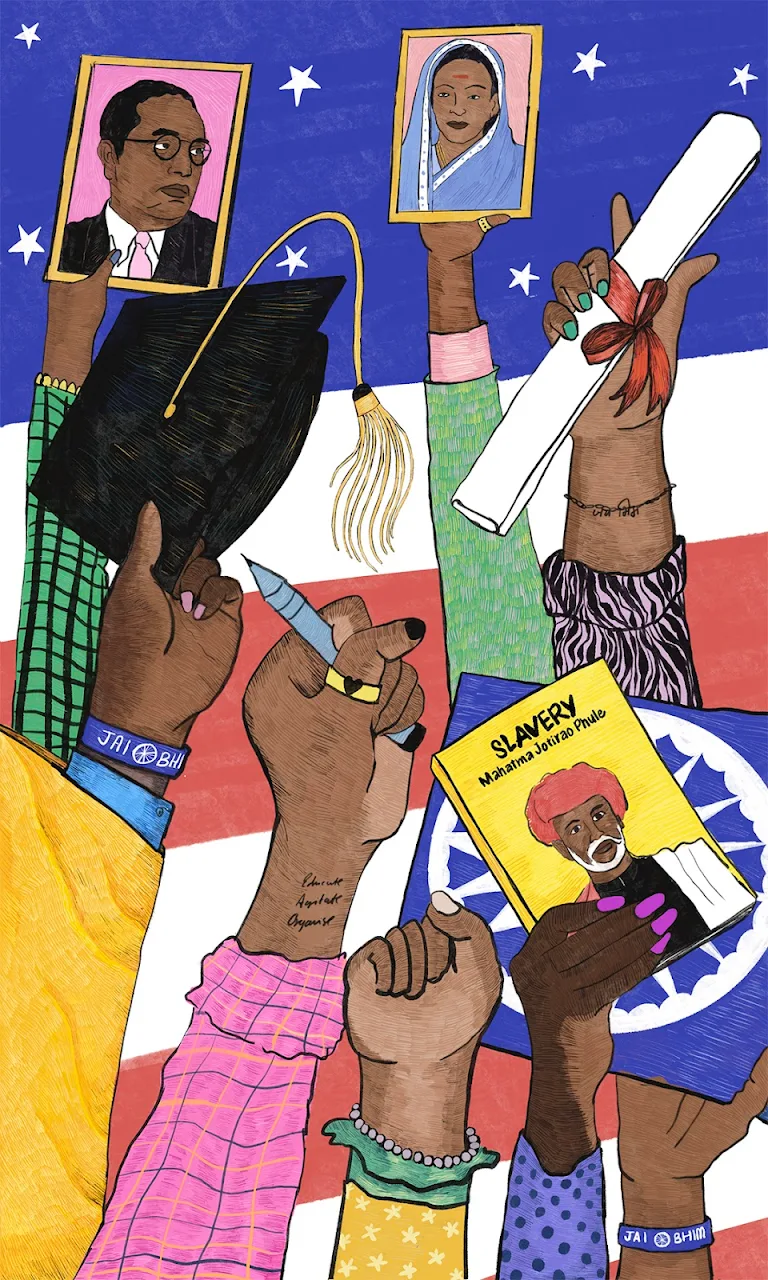
Dalit History Month is not only restricted to celebrating the history of Dr BR Ambedkar but also the various stalwarts from the community across history. Ramabai Ambedkar, social reformer and educationist Savitribai Phule, reformer Jyotiba Phule, activist and writer Babytai Kamble, social reformer Shahuji Maharaj, freedom fighters Birsa Munda and Uda Devi, educator Fatima Sheikh, just to name a few. It is also a month of grieving and remembering the lives of those lost due to caste discrimination and violence.
Religion and Revolt
Anti-untouchability movements in late 19th and early 20th century India, including the Satyashodhak Samaj in Maharashtra, the Self-Respect Movement, the Adi Dharma movement, the Adi Andhra movement and the Adi-Hindu movement signaled a shift from reform to organized resistance against caste hierarchy. Dalits rejected imposed caste identities and adopted self-ascribed names such as Adi-Andhra, Adi-Karnataka, Adi-Dravida, Adi-Hindu and Adi-Dharmi to assert indigeneity and reclaim historical agency. Conversion became a strategic tool in this struggle, enabling a break from caste-based exclusion while opening pathways to social mobility and economic transformation.
Religion, in this trajectory, became a terrain of revolt, rather than faith alone. The Kalaram Temple Entry Satyagraha marked a direct confrontation with caste exclusion in sacred spaces, while the public burning of the Manusmriti symbolized an explicit rejection of Brahmanism and Brahmanical authority. B.R. Ambedkar converted to Buddhism on October 14, 1956, along with around 4,00,000 followers and this is known as the Dalit Buddhist Conversion Movement. This rejection reframed conversion as collective emancipation and ethical reconstruction.
The persistence of caste violence has continued to generate similar acts of resistance, as seen in 2015 when Dalit families from Bhagana village in Haryana converted to Islam at Jantar Mantar after years of social boycott, sexual violence against Dalit women, land dispossession, and the failure of state institutions to deliver justice or protection. Conversion in this instance was not a theological shift but a political refusal of caste oppression and an assertion of dignity, security and equal citizenship.
Battle of Assertion: Bhima Koregaon
The Battle of Bhima Koregaon, fought on January 1, 1818, holds a significant place in Dalit history as a moment of resistance against caste oppression. A relatively small force of the British East India Company, composed largely of Mahar soldiers, confronted and defeated the army of Peshwa Bajirao II, a regime associated with Brahminical dominance. Over time, this event has come to be remembered not simply as a military encounter but as a symbolic challenge to a deeply hierarchical social order.
The importance of Bhima Koregaon lies less in the military scale of the battle and more in the meanings it has acquired in Dalit memory and politics over time. It has come to be seen as a rare historical moment in which those subjected to caste exclusion asserted themselves against a deeply hierarchical Peshwa order, giving it enduring symbolic value. For Dalit communities, the site functions as a space of remembrance where histories of resistance and dignity are collectively affirmed, often in ways that challenge dominant caste narratives which have long minimised or ignored such assertions. Within Dalit History Month, Bhima Koregaon stands as a powerful reminder that history is not neutral but contested, and that reclaiming it is itself a political act. Remembering the battle, therefore, is not about endorsing colonial rule but about foregrounding Dalits as agents in history whose struggles and interventions disrupt the idea that they existed only as subjects of oppression.
The contemporary trajectory of Bhima Koregaon illustrates how acts of remembrance can become sites of conflict when they unsettle entrenched caste hierarchies. On January 1, 2018, during the bicentenary commemoration, large numbers of Dalits travelling to and gathering at the Vijay Stambh were met with violence including stone pelting and targeted attacks. This incident sparked widespread protests across Maharashtra, with many outraged and mortified by yet another act of violence and a deliberate attempt to suppress dissent, another means of enforcing Dalit erasure.
The attacks were led by right wing Hindutva groups, with figures such as Milind Ekbote and Sambhaji Bhide repeatedly named in connection with the violence. In the aftermath, rather than pursuing accountability for those attacks, the state advanced a narrative linking the commemorations to alleged Maoist influence, shifting the focus toward a supposed conspiracy. This was accompanied by the arrest and prolonged incarceration of activists and intellectuals including Sudha Bharadwaj, Varavara Rao, Gautam Navlakha, Anand Teltumbde, and Stan Swamy, among others. The turn toward criminalising dissent, rather than addressing the violence itself, deepened a sense of injustice and reinforced the marginalisation of those who had gathered to remember.
Bhima Koregaon is not just a historical battle but an ongoing one. It has transformed into a living archive of resistance, one that the Dalit community returns to each year. Bhima Koregaon is not just about what happened in 1818 or even in 2018 but about the continuing struggle over who has the right to remember, to occupy space, and to define history itself.
Continuity of Struggle
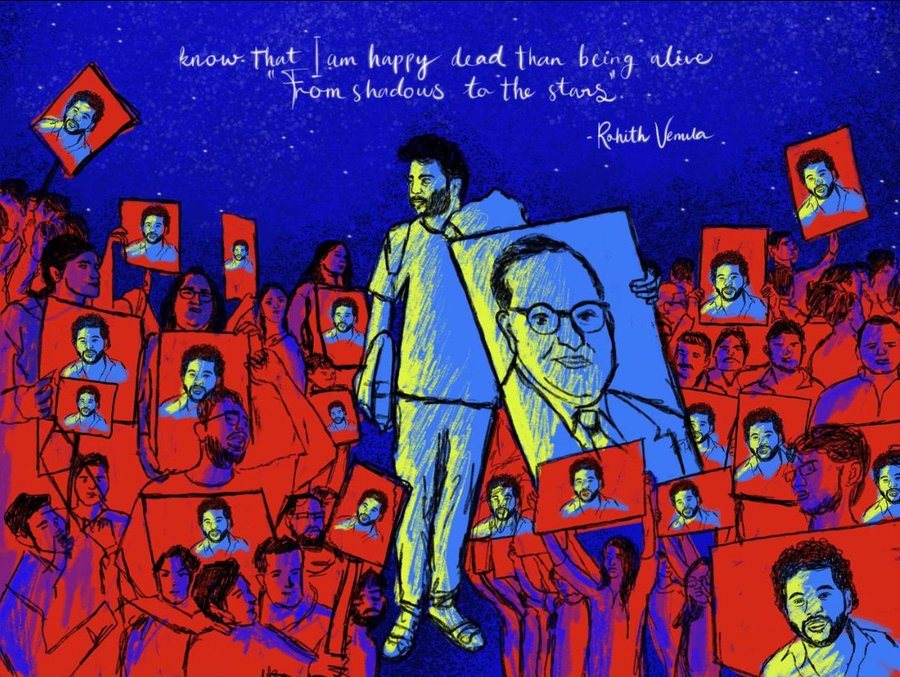
Dalit History is not just past but something still unfolding, contested and unfinished. Between 2019–2021 alone, at least 98 students from Dalit, Bahujan and Adivasi communities died by suicide in India’s premier institutional spaces that claim merit yet reproduce ostracism. These are not isolated tragedies; they are structural outcomes. The stories of Rohith Vemula, Payal Tadvi, Ritham Mondal and many others expose how caste operates not only through denial of entry but through humiliation, isolation, and the constant burden of proving one’s right to exist.
Reservation was always meant to be a corrective measure, a minimum guarantee against historical theft of dignity, education, and livelihood. Representation without transformation cannot dismantle the oppressive structures reinforcing caste.
The persistence of caste violence especially against Dalit women reminds us that social hierarchy is enforced not just in institutions but in everyday life, through stigma, exclusion, and brutality. Affirmative action addresses access, but annihilation of caste demands deeper structural change: in attitudes, governance, education, and power.
In celebration of Dalit History Month, we honor the legacy of resistance and refuse erasure. To every Dalit scholar, activist, artist, and community builder, past and present, we pay not just respect but allegiance. Your struggle is not history, it is ongoing, it is urgent, and it is ours.
Read next
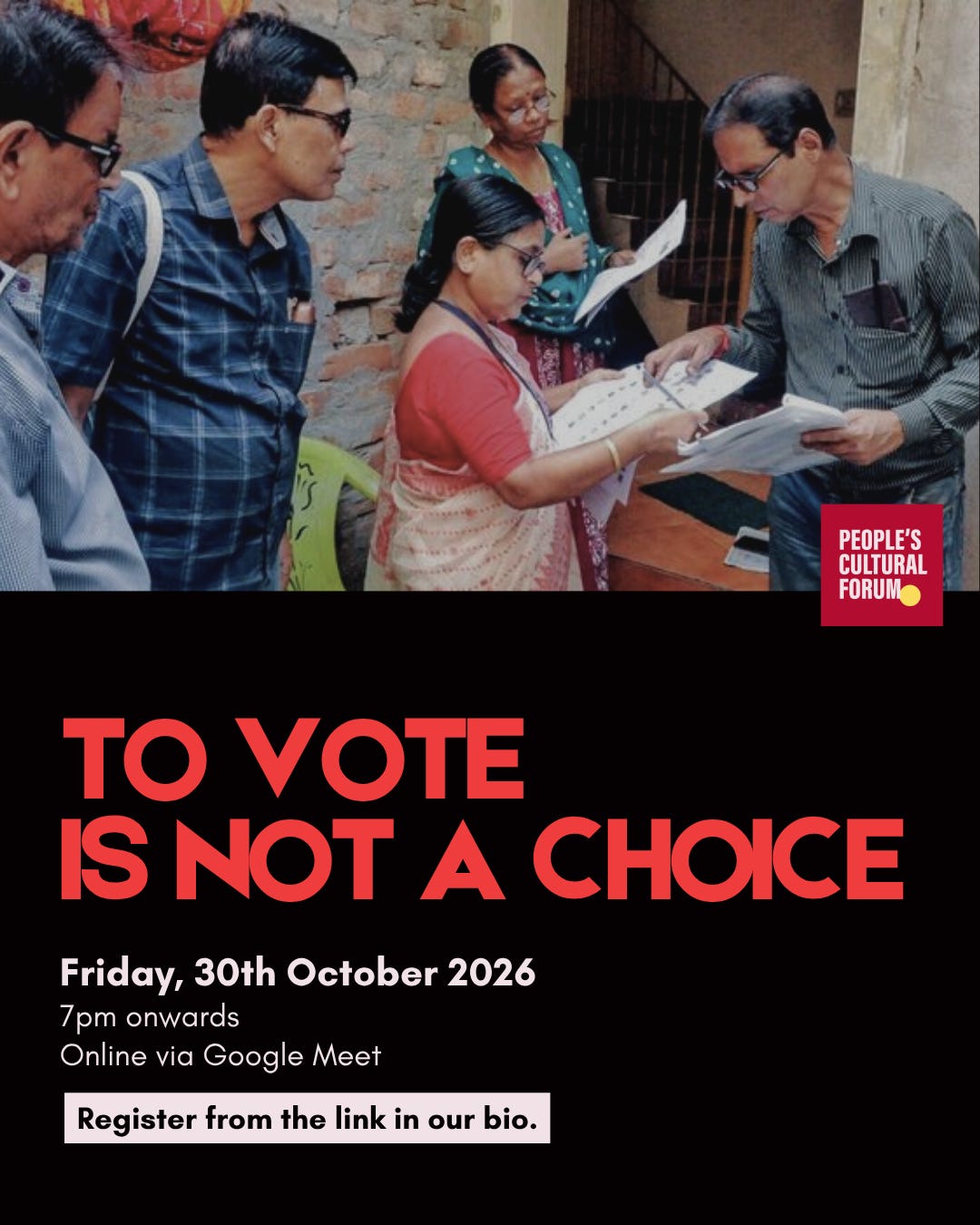
Online Reading and Screening| To Vote Is Not A Choice
Join us as we read, discuss, and collectively build clarity.
Online Reading and Screening| To Vote Is Not A Choice
Join us as we read, discuss, and collectively build clarity.
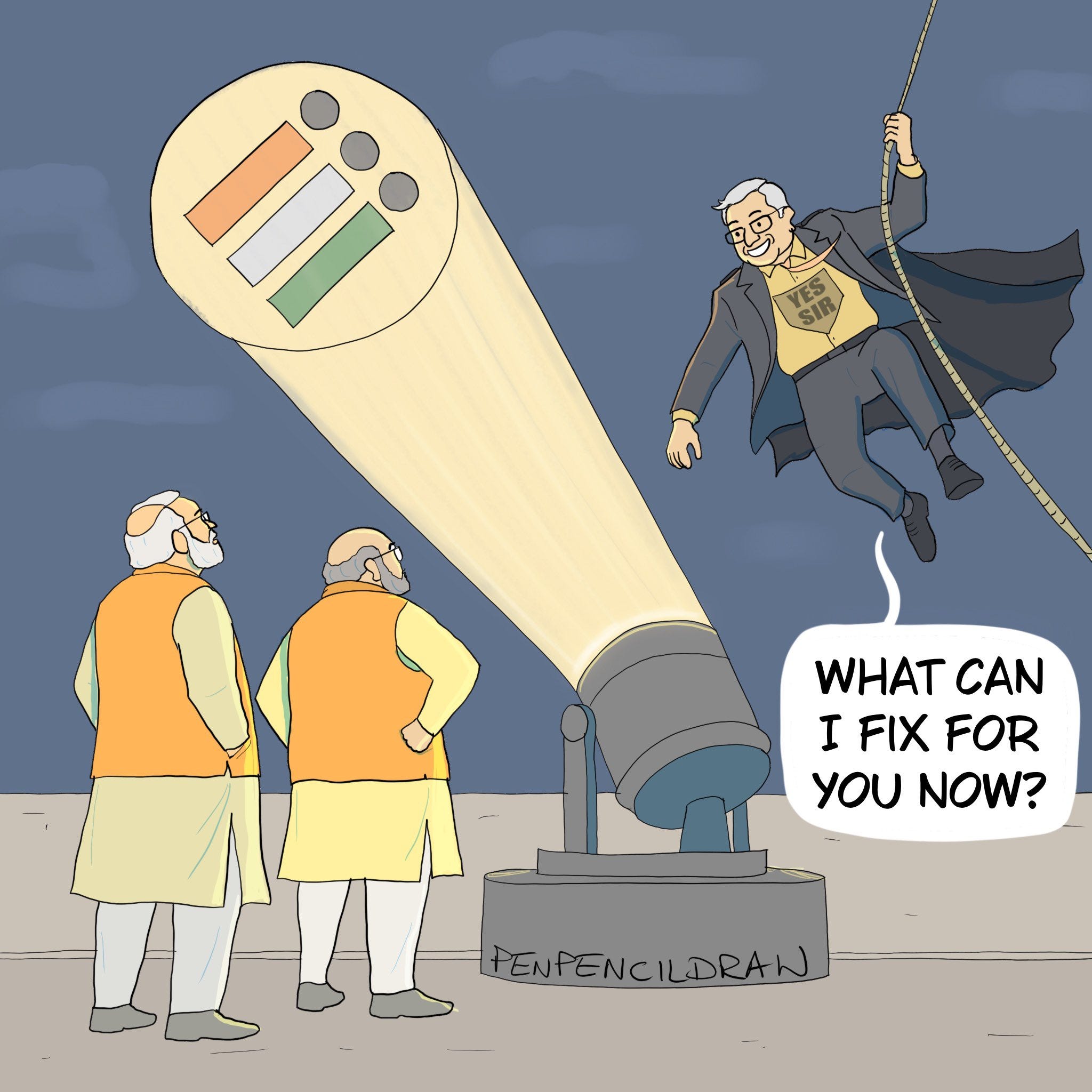
“Vote Chori”, SIR and Current Outburst
Where is the Movement Headed and What Must We Do?