
Anuradha Ghandy: The Woman Who Showed Us The Path To Revolutionary Activism
Today, as we sit under the suffocating bulk of information and in an era of social-media, story-posting activism, we find it increasingly difficult to identify the correct channels through which to direct our anger and energy against the oppression of this system. Being an activist, being someone who recognises their role in the political space, often brings with it confusion: where does one begin, what should one do, what is the right thing to do? Surrounded by these questions, what we often forget to consider is what truly brings impact. Our deeply ingrained social conditioning, combined with the constant visibility and judgment enabled by digital life, makes people hesitant, afraid of saying the wrong thing, unsure of how to respond. In this noise, many fall prey to propaganda or the loudest opinion, burying their own empathy and reason.
Early Life and Political Influences
In such a complex world, it becomes important to look back at the lives of those who grappled with similar questions, though under very different conditions. Anuradha Ghandy, born on March 28, 1954, to a Gujarati mother and Kannadiga father in a politically active family, offers a powerful example. With her parents and maternal aunts all associated with the Communist Party of India (CPI), she grew up in an environment shaped by political consciousness. Her life reflects a deep and unwavering commitment to working alongside the masses in their struggle against capitalist and imperialist forces.
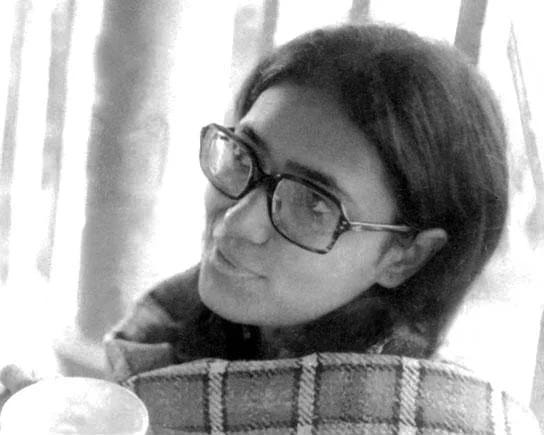
Anuradha Ghandy began her political journey at Elphinstone College, Mumbai, in 1972. At the time, large parts of rural Maharashtra were reeling under one of the worst famines in recent history. Witnessing this suffering firsthand compelled her to search for answers and to act. Her exposure to global struggles, the Vietnam War, resistance in Indo-China against U.S. aggression, and the Great Proletarian Cultural Revolution in China, shaped her understanding of imperialism and resistance. Around the same time, the Naxalbari Movement in West Bengal had begun to inspire a generation of revolutionaries. Deeply moved by the sacrifices and determination of the first generation of Naxalite revolutionaries, Anuradha found direction in their struggle.
Motivated by these influences, she joined PROYOM (Progressive Youth Movement), a student organisation inspired by the Naxalite movement. As an active member and later a leader, she worked closely in slum areas, where she witnessed the brutal realities of caste oppression and untouchability. Already familiar with Marxist theory, she began to examine caste and other social injustices through a materialist lens, seeking to understand their structural roots.
If this section helped you think differently, support independent political writing.
Academic Life and Civil Liberties Work
She went on to complete her Master’s and M.Phil in Sociology, while also teaching at Wilson College and later Jhunjhunwala College. Known as a thoughtful and committed teacher, she earned the respect of both students and colleagues. During the post-Emergency period (1975–77), she emerged as a significant figure in the civil liberties movement. This was a time when thousands of Naxalites across the country had faced brutal repression, killings, imprisonment, and torture. In response, several civil rights organisations were formed. Anuradha played a key role in initiating the Committee for the Protection of Democratic Rights (CPDR) in Maharashtra and actively participated in national efforts demanding the release of political prisoners. Her clarity of thought and structured arguments brought together intellectuals and prominent citizens to speak out against draconian laws and violations of democratic rights.
Organising in Vidarbha
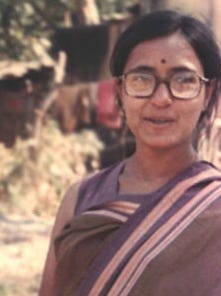
In 1982, she moved to Nagpur, answering the call to expand revolutionary work in the Vidarbha region, particularly in Gadchiroli. There, she immersed herself in organising both trade unions and Dalit communities. She worked extensively among construction workers and led militant struggles, most notably the prolonged strike at the Khaparkheda thermal power plant, where nearly 5,000 workers were engaged. The struggle faced severe repression, including police firing and curfews. She also organised domestic workers (molkarins), workers in MIDC industries in Hingna, railway workers, beedi workers in Bhandara, and power loom workers in Kamptee, along with many others in the unorganised sector. Later, she expanded her work to Chandrapur, organising coal mine and construction workers while building links with progressive trade union leaders across Nagpur, Chandrapur, Amravati, Yavatmal, and other centres. These years were marked by intense struggle, repeated arrests, and sustained grassroots engagement.
Writings on Caste and Society
She was also a prolific and rigorous writer. Her sociological writings on the caste question, viewed through a Marxist framework, drew large sections of youth toward revolutionary politics. In works such as Caste Question in India, The Caste Question Returns, Movements against Caste in Maharashtra, When Maharashtra Burned for Four Days, Dalit Fury Scorches Maharashtra: Gruesome Massacre of Dalits, and Mahars as Landholders, she presented a deeply grounded analysis of caste as a system rooted in material conditions. She challenged not only postmodern interpretations but also incorrect Marxist readings that reduced caste to a secondary or purely superstructural issue.
She argued that caste is integrally linked to the relations of production and manifests itself in both the economic base and the ideological superstructure. Drawing from Indian history, she showed how the feudal system in India was fundamentally caste-linked, with Brahmanism serving as its ideological backbone. She emphasised that the oppression of Dalits and the practice of untouchability are not incidental but central to maintaining this system. Through this lens, she insisted that the destruction of caste is inseparable from any anti-feudal, New Democratic revolutionary process aimed at building a truly democratic society.
If this section helped you think differently, support independent political writing.
If this work matters to you, consider supporting us. It helps us continue building political education and independent media.
Support UsHer work among Dalit communities in Vidarbha reflected this analysis in practice. She lived and worked closely with them, striving to declass herself, to learn from their lived realities, and to organise alongside them. Her efforts helped build a powerful revolutionary movement among Dalits, linking their struggles against caste oppression with broader class struggles. Over her fifteen years in the region, she also contributed to building a strong working-class movement, organising trade unions, developing a vibrant student movement, and drawing in intellectuals, journalists, playwrights, and lawyers into the fold of progressive politics.
Work in Bastar and Revolutionary Practice
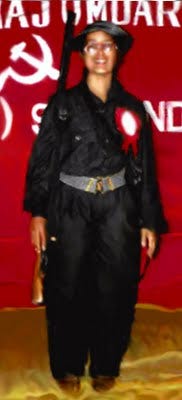
She later moved to Bastar, responding to the call of the revolutionary movement in the Dandakaranya region. Despite being diagnosed with multiple sclerosis, she spent years working deep in the forests among Adivasi communities and alongside the People’s Liberation Guerrilla Army (PLGA). She closely observed and studied the movement, particularly focusing on the role of women, their organisations, their participation in struggle, and their leadership. She worked extensively in areas such as Byramgarh and the National Park region, both of which faced intense violence during operations like Salwa Judum.
During this time, she conducted political education classes, helped draft handbills, and wrote extensively for the movement. She paid particular attention to the lives of Adivasi women, their cultural expressions, and their role within the revolutionary struggle. Her engagement deepened her understanding of the intersection of gender, class, and caste in conditions of armed resistance.
If this section helped you think differently, support independent political writing.
Feminist Thought and Contributions
Her writings on the women’s movement reflect this depth of analysis. In works such as Philosophical Trends in the Feminist Movement, The Revolutionary Women’s Movement in India, 8 March and the Women’s Movement in India, International Women’s Day: Past and Present, Fascism, Fundamentalism and Patriarchy, Changes in Rape Law: How far will they help?, and Working Class Women: Making the Invisible Visible, she critically examined different strands of feminism. She argued that approaches which treat patriarchy as an isolated system weaken the struggle by detaching it from capitalism and feudalism. She also critiqued tendencies that elevate reproduction to the same level as production in the economic base, thereby obscuring women’s central role in production.
Her most significant contribution lies in her insistence that women’s liberation must be rooted in participation in broader revolutionary struggles. She argued that while patriarchy does exist within revolutionary movements, the task is to confront and transform it from within, rather than withdraw from the struggle. Her formulation that “women need revolution and the revolution needs women” captures this understanding, of a dialectical relationship between gender emancipation and systemic transformation.
If this work matters to you, consider supporting us. It helps us continue building political education and independent media.
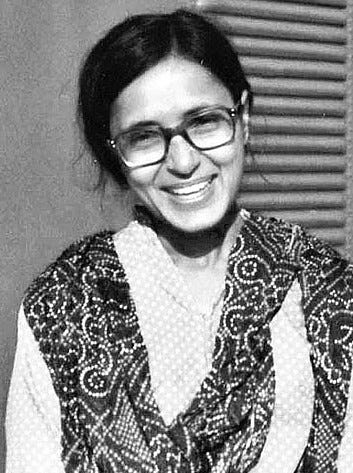
Support UsThroughout her life, she was involved in building numerous organisations, including Vidyarthi Pragati Sangathana (VPS), the Committee for the Protection of Democratic Rights (CPDR), the All-India League for Revolutionary Culture (AILRC), Stree Chetna, and the Akhil Maharashtra Kamgar Union (AMKU). Her work consistently bridged theory and practice, combining intellectual clarity with deep grassroots engagement.
If this section helped you think differently, support independent political writing.
When she contracted a high fever and went to a hospital in Mumbai to have her blood tested, she left a false name and a false phone number with the doctor who treated her. As a result, the doctor could not reach her to inform her that she had contracted the potentially fatal falciparum malaria. Her condition worsened rapidly, and her organs began to fail one by one. By the time she was admitted to hospital on April 11, it was too late. She died on April 12, 2008.
Her life remains a powerful and fiercely growing source of inspiration for those who aspire to make meaningful change. For young people searching for direction in a world marked by confusion and injustice, her journey offers both clarity and conviction. Her writings and her work continue to guide those who seek to understand the structures of oppression and to challenge them. It is only by continuing the path of struggle forged by revolutionaries like Anuradha Ghandy that we can truly honour their contributions and move closer to a world free of exploitation and inequality.
Enjoyed this article?
If this helped you understand something better, consider supporting our work.